BPH Diet is one of the most commonly searched topics among men diagnosed with Benign Prostatic Hyperplasia (BPH). While a BPH Diet cannot cure an enlarged prostate, healthy eating habits may support overall prostate health and complement the treatment plan recommended by your urologist.
If you’ve been diagnosed with Benign Prostatic Hyperplasia (BPH), you may wonder whether changing your diet can improve your urinary symptoms.
While diet alone cannot cure BPH, eating a healthy, balanced diet may support overall prostate health, help maintain a healthy weight, and complement the treatment plan recommended by your urologist.
Many men ask:
- Which foods are good for an enlarged prostate?
- What foods should I avoid?
- Can certain drinks make urinary symptoms worse?
- Does diet really help BPH?
In this comprehensive guide, you’ll learn which foods may support prostate health, which dietary habits may aggravate urinary symptoms, and practical nutrition tips to help you make informed choices.
Quick Facts About the BPH Diet
- A balanced diet may support overall prostate and bladder health.
- Fruits, vegetables, whole grains, lean protein, and healthy fats are recommended as part of a healthy eating pattern.
- Some men find reducing caffeine and alcohol helps lessen urinary symptoms.
- Diet alone cannot cure or shrink an enlarged prostate.
- Persistent urinary symptoms should be evaluated by a qualified urologist.
What Is the Best Diet for BPH?
A healthy diet for BPH focuses on:
- Fruits
- Vegetables
- Whole grains
- Lean protein
- Fish rich in omega-3 fatty acids
- Nuts and seeds
- Healthy fats
- Adequate hydration
Many men also find it helpful to reduce highly processed foods, sugary drinks, and excessive caffeine or alcohol if these worsen urinary symptoms.
Diet should always be considered one part of a comprehensive BPH management plan.
Can a BPH Diet Improve Enlarged Prostate Symptoms?
Diet cannot shrink the prostate or cure Benign Prostatic Hyperplasia (BPH). However, maintaining healthy eating habits may support overall health and may help reduce symptom severity in some individuals.
A balanced diet may help by:
- Supporting a healthy body weight
- Promoting cardiovascular health
- Helping control blood sugar levels
- Reducing inflammation as part of an overall healthy lifestyle
- Supporting bladder health
If urinary symptoms persist, medical evaluation is important because diet alone is not a substitute for professional treatment.
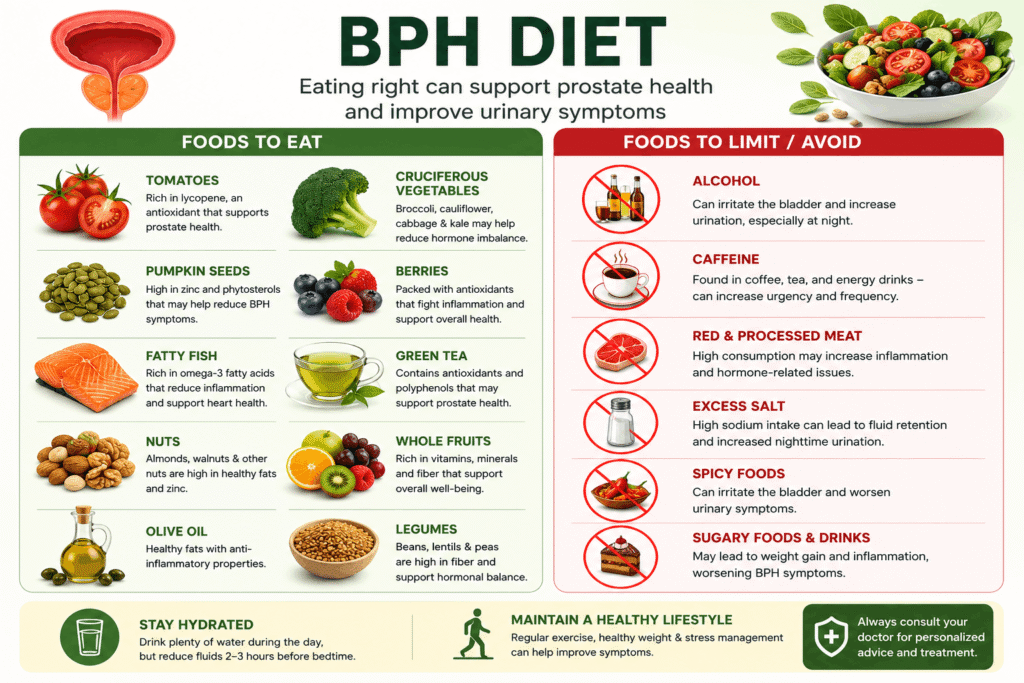
Best BPH Diet Foods to Eat for an Enlarged Prostate
Several nutrient-rich foods can be included as part of a healthy eating pattern.
1. Tomatoes
Tomatoes contain lycopene, an antioxidant that has been studied for its potential role in supporting prostate health.
Good sources include:
- Fresh tomatoes
- Tomato soup
- Tomato sauce
- Cooked tomatoes
2. Salmon
Salmon provides omega-3 fatty acids, which support heart health and overall wellness.
Other options include:
- Sardines
- Tuna
- Mackerel
Aim for fish as part of a balanced weekly diet if appropriate for your nutritional needs.
3. Leafy Green Vegetables
Leafy greens provide vitamins, minerals, and dietary fiber.
Examples:
- Spinach
- Kale
- Broccoli
- Swiss chard
4. Pumpkin Seeds
Pumpkin seeds contain magnesium, zinc, and healthy fats, making them a nutritious snack when eaten in moderation.
5. Walnuts
Walnuts provide healthy fats and can be included as part of a balanced diet.
Other options include:
- Almonds
- Pistachios
- Cashews
6. Berries
Berries are rich in antioxidants.
Examples include:
- Blueberries
- Strawberries
- Blackberries
- Raspberries
7. Citrus Fruits
Vitamin C-rich fruits may support overall health.
Examples:
- Oranges
- Sweet lime
- Grapefruit
- Lemons
8. Whole Grains
Choose:
- Oats
- Brown rice
- Whole wheat
- Quinoa
These foods provide fiber and support digestive health.
9. Beans and Lentils
Excellent plant-based protein sources include:
- Kidney beans
- Chickpeas
- Lentils
- Black beans
10. Green Tea
Some men choose green tea as part of a healthy lifestyle because it contains natural antioxidants.
However, those who notice worsening urinary urgency from caffeine may wish to discuss beverage choices with their doctor.
Best Fruits in a BPH Diet
Recommended fruits include:
- Apples
- Pears
- Oranges
- Blueberries
- Strawberries
- Kiwi
- Papaya
- Pomegranate
Fresh fruit is generally preferable to sugary fruit juices.
Best Vegetables in a BPH Diet
Examples include:
- Broccoli
- Cauliflower
- Cabbage
- Spinach
- Kale
- Carrots
- Tomatoes
- Bell peppers
Aim to include a variety of colorful vegetables in your daily meals.
Foods Rich in Zinc
Zinc-containing foods include:
- Pumpkin seeds
- Beans
- Lentils
- Yogurt
- Eggs
- Seafood
Zinc should come from a balanced diet unless supplementation is recommended by a healthcare professional.
Doctor’s Advice
A healthy diet supports overall wellness and may help some men manage urinary symptoms, but it should not replace medical evaluation or treatment for Benign Prostatic Hyperplasia. Persistent or bothersome symptoms should always be assessed by a qualified urologist.
Foods to Avoid in a BPH Diet
Although no specific food directly causes Benign Prostatic Hyperplasia (BPH), some foods and beverages may worsen urinary symptoms in certain individuals. Identifying personal triggers and maintaining a balanced diet can help improve overall comfort.
1. Processed Foods
Highly processed foods often contain excessive sodium, unhealthy fats, and preservatives.
Examples include:
- Packaged snacks
- Instant noodles
- Processed meats
- Frozen fast foods
- Chips
2. Fried Foods
Deep-fried foods are typically high in saturated and trans fats.
Examples:
- French fries
- Fried chicken
- Fried snacks
- Fast food meals
Replacing fried foods with grilled, baked, or steamed options may support overall health.
3. Sugary Foods and Drinks
Foods high in added sugars may contribute to weight gain and poor metabolic health.
Limit:
- Soft drinks
- Candy
- Cakes
- Cookies
- Sweetened beverages
4. Excess Salt
A high-sodium diet may contribute to fluid retention and can worsen urinary frequency in some people.
Try to reduce:
- Pickles
- Processed snacks
- Instant soups
- Packaged sauces
5. Red and Processed Meat
Some men choose to limit processed meats as part of a heart-healthy eating pattern.
Examples:
- Sausages
- Bacon
- Salami
- Processed deli meats
Lean protein sources such as fish, skinless poultry, beans, and lentils are healthier alternatives.
Drinks That May Worsen BPH Symptoms
Some beverages may irritate the bladder or increase urinary frequency in sensitive individuals.
Coffee
Coffee contains caffeine, which may increase urinary urgency and frequency in some men.
Tea
Black tea and some green teas also contain caffeine.
If caffeine worsens your symptoms, consider reducing intake or switching to caffeine-free alternatives.
Alcohol
Alcohol may increase urine production and can worsen nighttime urination (nocturia) for some individuals.
Moderation is recommended.
Energy Drinks
Energy drinks often contain large amounts of caffeine and sugar.
They are generally best avoided if they aggravate urinary symptoms.
Carbonated Soft Drinks
Some people notice increased bladder irritation after consuming carbonated beverages.
Foods That May Support Prostate Health
While no single food can cure BPH, these nutrient-rich options may support overall prostate health as part of a balanced diet.
Tomatoes
Source of lycopene.
Pumpkin Seeds
Contain zinc and magnesium.
Fatty Fish
Provide omega-3 fatty acids.
Leafy Greens
Rich in vitamins, minerals, and fiber.
Berries
Contain antioxidants.
Nuts
Provide healthy fats and plant nutrients.
Legumes
Excellent source of plant protein and fiber.
Olive Oil
A healthier alternative to saturated fats.
Best BPH Diet Meal Plan
Breakfast
- Oatmeal
- Fresh berries
- Walnuts
- Low-fat milk or unsweetened soy milk
Mid-Morning Snack
- Apple
- Handful of almonds
Lunch
- Grilled salmon
- Brown rice
- Mixed vegetables
- Salad
Evening Snack
- Green tea (if tolerated)
- Pumpkin seeds
Dinner
- Lentil soup
- Whole wheat chapati
- Steamed broccoli
- Cucumber salad
Before Bed
Avoid excessive fluid intake within 2–3 hours of bedtime if nighttime urination is troublesome, unless advised otherwise by your doctor.
Should You Take Supplements for BPH?
Many supplements are marketed for prostate health, but scientific evidence varies.
Common ingredients include:
- Saw Palmetto
- Beta-sitosterol
- Zinc
- Selenium
- Vitamin D
- Pumpkin Seed Extract
Do not start supplements without discussing them with your doctor, especially if you take other medications or have chronic medical conditions.
Can Weight Loss Improve BPH Symptoms?
Maintaining a healthy body weight may improve overall health and can reduce symptom burden in some men.
Healthy weight management includes:
- Balanced diet
- Regular exercise
- Adequate sleep
- Stress management
Crash diets or extreme calorie restriction are not recommended.
Hydration Tips for Men with BPH
Drinking enough water is important for overall health.
Helpful strategies include:
- Stay hydrated throughout the day.
- Reduce large fluid intake close to bedtime if nocturia is a concern.
- Avoid becoming dehydrated.
- Limit sugary beverages.
- Monitor which drinks worsen your symptoms.
Hydration should be individualized based on your overall health and medical advice.
Can Diet Replace BPH Treatment?
No.
A healthy diet may support overall wellness and complement medical treatment, but it cannot replace professional diagnosis or treatment for Benign Prostatic Hyperplasia.
If symptoms persist or worsen, consult a qualified urologist for evaluation and appropriate management.
Doctor’s Expert Advice
Healthy eating is an important part of overall prostate health, but there is no single “BPH diet” that cures an enlarged prostate. A balanced diet should be combined with appropriate medical evaluation, lifestyle measures, and treatment when required.
Best Indian Diet for Men with BPH
Many men ask whether they need to completely change their eating habits after being diagnosed with Benign Prostatic Hyperplasia (BPH). The good news is that a healthy Indian diet can support overall health when it includes balanced nutrition and portion control.
Healthy Indian food choices include:
Breakfast
- Vegetable oats
- Poha with vegetables
- Vegetable upma
- Idli with sambar
- Whole wheat vegetable sandwich
Lunch
- Whole wheat chapati
- Brown rice (in moderation)
- Dal or rajma
- Mixed vegetables
- Salad
- Low-fat curd
Dinner
- Grilled fish or skinless chicken
- Lentil soup
- Mixed vegetables
- Whole wheat chapati
- Green salad
Healthy Snacks
- Roasted chana
- Pumpkin seeds
- Walnuts
- Almonds
- Fresh fruits
A balanced Indian diet can provide fiber, vitamins, minerals, and healthy fats that support overall wellness.
Foods That May Help Reduce Inflammation
Inflammation is a natural immune response. While no specific food treats BPH, a diet rich in whole foods may support overall health.
Include more:
- Tomatoes
- Olive oil
- Fatty fish
- Leafy greens
- Berries
- Nuts
- Whole grains
- Beans
Limit highly processed foods and excessive added sugars whenever possible.
Does Coffee Make BPH Worse?
Coffee contains caffeine, which can increase urine production and irritate the bladder in some individuals.
Some men notice:
- Increased urinary urgency
- More frequent urination
- Worsening nighttime urination (nocturia)
If coffee appears to worsen your symptoms, reducing the amount you drink or choosing decaffeinated options may help.
Does Alcohol Affect an Enlarged Prostate?
Alcohol may temporarily increase urine production and contribute to more frequent trips to the bathroom in some men.
Some people experience:
- Increased urinary urgency
- More nighttime urination
- Poor sleep quality
Moderation is generally recommended, and men who notice symptom worsening should discuss alcohol intake with their healthcare provider.
Can Weight Loss Improve BPH?
Maintaining a healthy body weight supports overall health and may reduce the severity of urinary symptoms in some individuals.
Healthy weight management includes:
- Balanced nutrition
- Regular exercise
- Good sleep
- Stress management
Weight loss should be gradual and sustainable rather than achieved through extreme dieting.
Common Diet Myths About BPH
Myth 1: Tomatoes Can Cure BPH
Fact: Tomatoes contain lycopene and are part of a healthy diet, but there is no evidence that tomatoes alone cure Benign Prostatic Hyperplasia.
Myth 2: Drinking Less Water Will Cure Frequent Urination
Fact: Excessive fluid restriction can lead to dehydration and is not a treatment for BPH. Your doctor can advise you on appropriate fluid intake.
Myth 3: Herbal Supplements Are Always Safe
Fact: Herbal products may interact with medications or may not be suitable for everyone. Always discuss supplements with your healthcare provider.
Myth 4: Only Older Men Need to Worry About Diet
Fact: Healthy eating habits benefit men of all ages and support overall health, including prostate health.
Myth 5: Diet Alone Can Cure BPH
Fact: Diet can complement medical care but should not replace diagnosis or treatment recommended by a qualified urologist.
Can Diet Help Prevent BPH?
There is no guaranteed way to prevent Benign Prostatic Hyperplasia.
However, maintaining a healthy lifestyle may help support overall prostate health.
Helpful habits include:
- Healthy diet
- Regular exercise
- Weight management
- Blood sugar control
- Blood pressure control
- Regular medical check-ups
Questions to Ask Your Doctor About Diet
When discussing BPH with your doctor, consider asking:
- Which foods may worsen my urinary symptoms?
- Should I reduce caffeine?
- Can alcohol affect my condition?
- Do I need any supplements?
- Should I lose weight?
- How much water should I drink?
- Can diet reduce my need for medication?
- Should I consult a dietitian?
When Should Diet Alone Not Be Relied Upon?
Diet is an important part of a healthy lifestyle, but medical evaluation is essential if you experience:
- Blood in the urine
- Inability to urinate
- Severe urinary symptoms
- Fever with urinary symptoms
- Recurrent urinary tract infections
- Persistent pain
These symptoms require prompt medical assessment.
Practical Daily Tips for Men with BPH
✔ Eat plenty of vegetables.
✔ Choose whole grains.
✔ Include healthy fats.
✔ Stay physically active.
✔ Limit processed foods.
✔ Reduce sugary drinks.
✔ Monitor caffeine intake.
✔ Drink enough water during the day.
✔ Avoid heavy meals late at night.
✔ Maintain regular follow-up with your urologist.
Doctor’s Expert Advice
A healthy eating pattern is one component of effective BPH management. Dietary changes work best when combined with appropriate medical evaluation, lifestyle modifications, and treatment tailored to the patient’s symptoms and overall health.
Frequently Asked Questions (FAQs)
1. What is the best diet for BPH?
A healthy BPH diet includes plenty of vegetables, fruits, whole grains, legumes, lean protein, fish rich in omega-3 fatty acids, nuts, seeds, and healthy fats. While diet cannot cure BPH, it may support overall prostate health and complement medical treatment.
2. Can diet shrink an enlarged prostate?
No. There is currently no scientific evidence that diet alone can shrink an enlarged prostate. However, healthy eating habits may help support overall health and improve quality of life.
3. Which foods should men with BPH avoid?
Some men find it helpful to limit:
- Processed foods
- Fried foods
- Sugary drinks
- Excess salt
- Excess caffeine
- Alcohol (if it worsens symptoms)
Dietary triggers vary from person to person.
4. Are tomatoes good for BPH?
Tomatoes contain lycopene, an antioxidant that is part of a healthy diet. While tomatoes may support overall prostate health, they should not be considered a treatment for BPH.
5. Is coffee bad for an enlarged prostate?
Coffee contains caffeine, which may increase urinary urgency and frequency in some men. If coffee worsens your symptoms, reducing your intake may help.
6. Can alcohol worsen BPH symptoms?
Alcohol can increase urine production and may worsen nighttime urination (nocturia) in some individuals. Moderation is generally recommended.
7. Are supplements effective for BPH?
Some supplements have been studied, but results are mixed. Always consult your healthcare provider before starting supplements, especially if you take prescription medications.
8. Does drinking more water help BPH?
Adequate hydration is important for overall health. However, if nighttime urination is a problem, your doctor may recommend reducing large amounts of fluid close to bedtime.
9. Can losing weight improve urinary symptoms?
Maintaining a healthy weight may improve overall health and may reduce symptom severity in some men with BPH.
10. Should I see a doctor even if I follow a healthy diet?
Yes. A healthy diet supports overall health but does not replace medical evaluation. Persistent urinary symptoms should always be assessed by a qualified urologist.
Sample 7-Day BPH Diet Plan
Day 1
Breakfast: Oatmeal with berries and walnuts
Lunch: Brown rice, dal, mixed vegetables, salad
Dinner: Grilled salmon with steamed broccoli
Day 2
Breakfast: Vegetable poha
Lunch: Whole wheat chapati with rajma and salad
Dinner: Lentil soup with sautéed vegetables
Day 3
Breakfast: Idli with sambar
Lunch: Grilled chicken, vegetables, brown rice
Dinner: Vegetable khichdi with curd
Day 4
- Vegetable oats
- Chickpea salad
- Grilled fish
- Green vegetables
Day 5
- Whole wheat sandwich
- Dal
- Mixed vegetables
- Fresh fruit
Day 6
- Upma
- Vegetable soup
- Paneer with vegetables
- Whole wheat chapati
Day 7
- Fruit bowl with nuts
- Lentils
- Brown rice
- Mixed salad
- Grilled chicken or fish
Why Choose Dr. Priyaddarshi Ranjan?
Managing Benign Prostatic Hyperplasia (BPH) requires an individualized approach. While healthy eating habits support overall wellness, treatment decisions should be based on a thorough medical evaluation.
Dr. Priyaddarshi Ranjan provides comprehensive assessment and evidence-based management for men with BPH, offering personalized treatment plans based on symptom severity, prostate size, and overall health.
Why Patients Trust Him
- Experienced Consultant Urologist
- Expertise in BPH Diagnosis & Treatment
- Robotic & Minimally Invasive Urology
- Personalized Treatment Plans
- Advanced Diagnostic Evaluation
- Patient-Focused Care
- Long-Term Follow-up
Conclusion
Following a healthy BPH Diet can support overall prostate and bladder health. A balanced BPH Diet that includes fruits, vegetables, whole grains, lean proteins, healthy fats, and adequate hydration may help some men better manage urinary symptoms. However, a BPH Diet should always complement—not replace—professional medical evaluation and treatment.
However, diet alone cannot cure or reverse Benign Prostatic Hyperplasia. If you experience persistent urinary symptoms such as frequent urination, weak urine flow, urgency, or incomplete bladder emptying, consult a qualified urologist for an accurate diagnosis and personalized treatment plan.
Combining healthy nutrition with appropriate medical care offers the best approach to managing BPH and maintaining long-term quality of life.
Looking for Expert BPH Care?
If urinary symptoms are affecting your daily life, consult Dr. Priyaddarshi Ranjan for expert guidance on the right BPH Diet, lifestyle modifications, and personalized treatment options for an enlarged prostate.
Receive expert guidance on:
- Diet and lifestyle recommendations
- BPH diagnosis
- Medication options
- Minimally invasive treatments
- Advanced surgical care
Book Your Consultation Today
📞 Call: +91-9815978530