
BPH Diagnosis: How Is an Enlarged Prostate Diagnosed?
Accurate BPH Diagnosis Helps You Choose the Right Treatment
Benign Prostatic Hyperplasia (BPH) is one of the most common causes of urinary problems in men over the age of 50. While symptoms such as frequent urination, weak urine flow, urgency, and incomplete bladder emptying may suggest an enlarged prostate, an accurate diagnosis is essential before starting treatment.
Several conditions—including urinary tract infections, bladder disorders, kidney stones, and prostate cancer—can produce symptoms similar to BPH. A proper evaluation helps identify the underlying cause and allows your urologist to recommend the most appropriate treatment.
Modern BPH diagnosis combines medical history, physical examination, symptom assessment, blood tests, urine tests, imaging, and specialized urological investigations.
Early BPH diagnosis allows more treatment options and helps reduce the risk of complications such as urinary retention, bladder damage, and kidney problems.
How Is BPH Diagnosed??
BPH diagnosis is based on a combination of your symptoms, medical history, physical examination, Digital Rectal Examination (DRE), PSA blood test, urine analysis, ultrasound, uroflowmetry, and Post-Void Residual (PVR) measurement. Additional tests such as cystoscopy or urodynamic studies may be recommended for selected patients.
Key Takeaways
✅ BPH diagnosis does not rely on a single test.
✅ Multiple investigations help confirm prostate enlargement.
✅ Early diagnosis can prevent long-term urinary complications.
✅ PSA testing helps evaluate prostate health.
✅ Ultrasound measures prostate size and residual urine.
✅ Uroflowmetry assesses urine flow.
Why Is BPH DiagnosisImportant?
Many men assume that urinary symptoms are simply a normal part of ageing. However, similar symptoms may also occur due to:
- Prostate cancer
- Urinary tract infection (UTI)
- Overactive bladder
- Bladder stones
- Urethral stricture
- Neurological disorders affecting bladder function
Without proper diagnosis, treatment may be delayed or inappropriate.
An accurate diagnosis helps:
- Confirm whether symptoms are caused by BPH
- Assess the severity of prostate enlargement
- Rule out serious medical conditions
- Select the most appropriate treatment
- Monitor disease progression over time
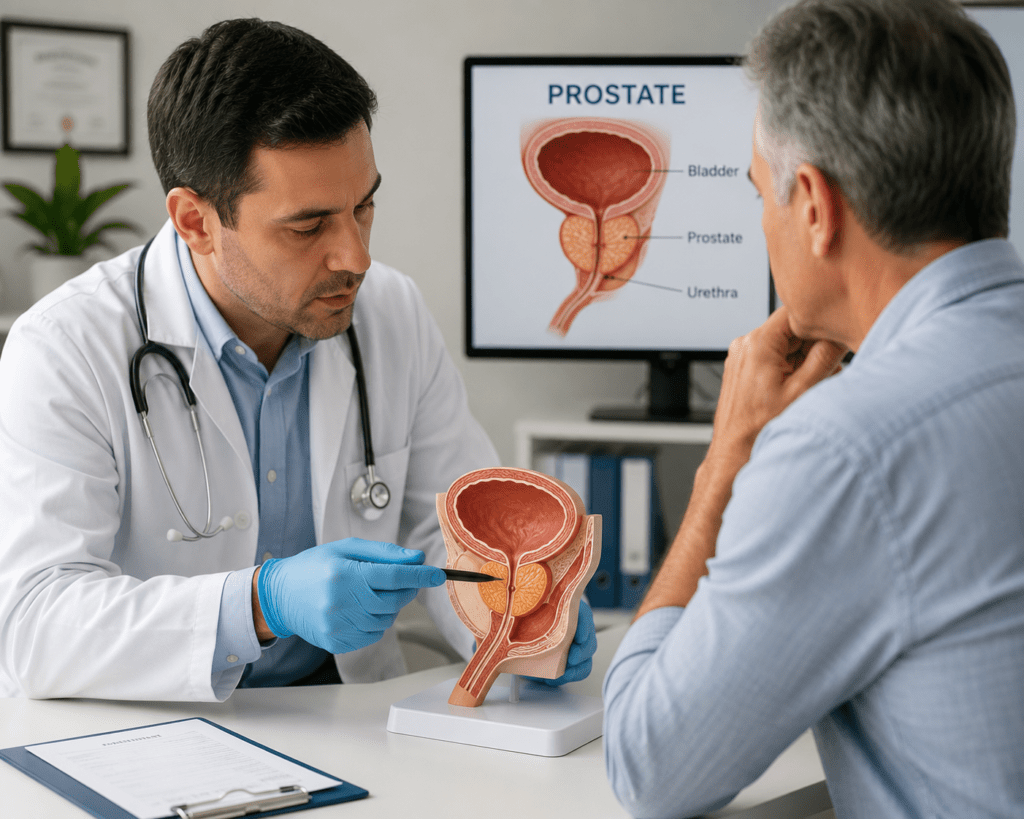
Who Should Get Evaluated for BPH?
Men should consider a prostate evaluation if they experience one or more of the following symptoms:
- Frequent urination during the day
- Waking up multiple times at night to urinate
- Weak urine stream
- Difficulty starting urination
- Interrupted urine flow
- Feeling that the bladder does not empty completely
- Urinary urgency
- Dribbling after urination
- Blood in urine
- Pain during urination
Men over the age of 50 with persistent urinary symptoms should not delay medical consultation.
Risk Assessment Box
Are You at Risk?
Are you above 50 years of age?
✔ Do you wake up more than twice at night to urinate?
✔ Is your urine stream weaker than before?
✔ Do you frequently feel that your bladder is not empty?
✔ Has anyone in your family been diagnosed with an enlarged prostate?
✔ Do you have diabetes or obesity?
If you answered “Yes” to two or more questions, consider scheduling a comprehensive BPH evaluation.
What Happens During Your First Consultation?
During your first visit, your urologist will discuss:
- Your urinary symptoms
- Medical history
- Current medications
- Family history
- Lifestyle habits
- Previous prostate-related problems
This information helps determine which diagnostic tests are appropriate.
Statistics
- Around 50% of men over 50 years have evidence of prostate enlargement.
- The prevalence increases with age and affects up to 80–90% of men over 80 years.
- Early diagnosis significantly improves treatment planning and outcomes.
Medical Review Box
Senior Consultant Urologist
Robotic Uro-Oncology & Minimally Invasive Urology Specialist
Prostate Excellence Centre
How Is BPH Diagnosed?
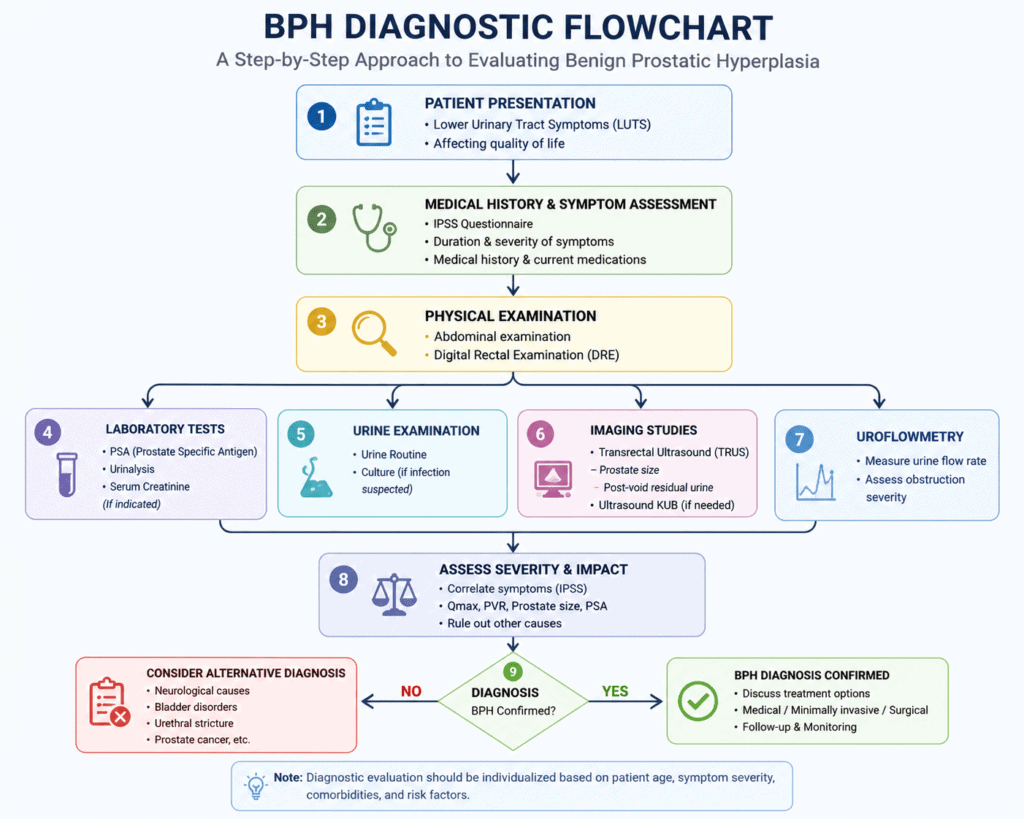
There is no single test that can confirm Benign Prostatic Hyperplasia (BPH). Instead, urologists use a combination of your medical history, symptom assessment, physical examination, laboratory investigations, and imaging tests to determine whether an enlarged prostate is causing your urinary symptoms.
The goal of BPH diagnosis is to:
- Confirm whether symptoms are caused by an enlarged prostate
- Assess the severity of urinary obstruction
- Measure the size of the prostate gland
- Rule out prostate cancer, urinary tract infections, bladder disorders, and kidney problems
- Select the most appropriate treatment plan
1.Medical History and Symptom Assessment
The first step in BPH diagnosis is a detailed discussion about your symptoms.
Your doctor may ask questions such as:
- How often do you urinate during the day?
- How many times do you wake up at night to urinate?
- Is your urine stream weak?
- Do you feel your bladder is completely empty after urinating?
- Have you noticed blood in your urine?
- Are your symptoms affecting your daily activities?
Understanding your symptoms helps determine the severity of BPH and guides further testing.
2. International Prostate Symptom Score (IPSS)
The International Prostate Symptom Score (IPSS) is a widely used questionnaire that helps assess the severity of urinary symptoms caused by BPH.
Patients answer seven questions related to:
- Frequent urination
- Urgency
- Weak urine stream
- Difficulty starting urination
- Intermittent urine flow
- Incomplete bladder emptying
- Night-time urination
IPSS Score Interpretation
| Score | Severity |
|---|---|
| 0–7 | Mild Symptoms |
| 8–19 | Moderate Symptoms |
| 20–35 | Severe Symptoms |
3. Physical Examination
A general physical examination helps identify possible causes of urinary symptoms and assess overall health.
Your doctor may evaluate:
- Abdomen
- Bladder distension
- Neurological function
- General health status
This examination is usually quick and painless.
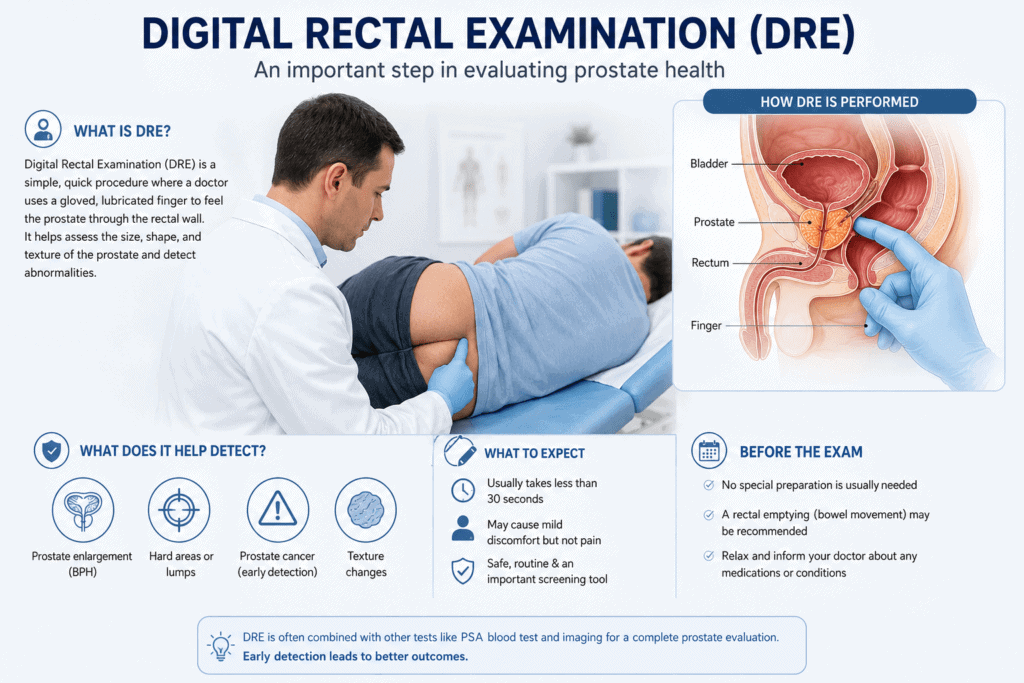
4. Digital Rectal Examination (DRE)
A Digital Rectal Examination (DRE) allows the urologist to assess the size, shape, and consistency of the prostate gland.
During the examination:
- A gloved, lubricated finger is gently inserted into the rectum.
- The doctor checks whether the prostate is enlarged.
- The examination also helps identify hard or irregular areas that may require further evaluation.
Although some patients feel embarrassed, the test usually takes less than a minute and provides valuable clinical information.
5. PSA Blood Test
The Prostate-Specific Antigen (PSA) blood test measures the level of PSA produced by the prostate gland.
An elevated PSA level does not necessarily indicate prostate cancer. It may also increase due to:
- Benign Prostatic Hyperplasia (BPH)
- Prostatitis (prostate inflammation)
- Urinary tract infection
- Recent prostate manipulation
Your doctor interprets PSA results together with your symptoms, examination findings, age, and other investigations.
6. Urine Analysis
A urine test helps rule out other conditions that can cause urinary symptoms.
Urine analysis may detect:
- Urinary tract infection
- Blood in urine
- Protein
- Glucose
- Kidney-related abnormalities
This simple test is often performed during the initial evaluation.
7. Ultrasound of the Prostate and Bladder
Ultrasound imaging helps visualize the urinary tract and provides important information about:
- Prostate size
- Bladder condition
- Kidney health
- Residual urine after urination
Ultrasound is painless, non-invasive, and commonly used in the diagnosis of enlarged prostate.
8. Uroflowmetry Test
Uroflowmetry measures how fast urine flows during urination.
The patient urinates into a specialized device that records:
- Maximum urine flow rate
- Average flow rate
- Total urine volume
- Time taken to empty the bladder
A reduced urine flow may indicate bladder outlet obstruction caused by an enlarged prostate.
9. Post-Void Residual (PVR) Test
The Post-Void Residual (PVR) test measures the amount of urine remaining in the bladder after urination.
This is usually performed using ultrasound.
A high residual urine volume may suggest:
- Bladder outlet obstruction
- Weak bladder muscles
- Advanced BPH
PVR helps determine the severity of urinary obstruction.
10. Cystoscopy
Cystoscopy is recommended in selected patients when additional evaluation is required.
During this procedure:
- A thin camera (cystoscope) is inserted through the urethra.
- The doctor examines the urethra, prostate, and bladder.
- Other conditions, such as strictures or bladder stones, can also be identified.
Cystoscopy is not required for every patient but may be useful before certain treatments or surgeries.
Common Tests Used in BPH Diagnosis
| Test | Purpose |
|---|---|
| Medical History | Understand symptoms and risk factors |
| IPSS Score | Measure symptom severity |
| Physical Examination | Assess overall health |
| Digital Rectal Examination (DRE) | Evaluate prostate size and texture |
| PSA Blood Test | Assess prostate health |
| Urine Analysis | Rule out infection or blood in urine |
| Ultrasound | Measure prostate size and residual urine |
| Uroflowmetry | Evaluate urine flow rate |
| PVR Test | Measure urine left in the bladder |
| Cystoscopy | Examine the urethra and bladder when needed |
Doctor's Expert Advice
No single test can diagnose BPH on its own. A combination of your symptoms, physical examination, laboratory tests, and imaging studies helps your urologist accurately diagnose the condition and recommend the most appropriate treatment.
Can BPH Be Diagnosed Without Surgery?
Yes. In most cases, Benign Prostatic Hyperplasia (BPH) can be accurately diagnosed without surgery.
Diagnosis is based on your symptoms, medical history, physical examination, blood tests, urine tests, ultrasound, and other non-invasive investigations. Surgery is not required to diagnose an enlarged prostate.
If additional evaluation is needed, your urologist may recommend specialized tests such as cystoscopy or urodynamic studies, but these are performed only in selected cases.
How to Prepare for BPH Diagnostic Tests
Preparing for BPH evaluation is simple and helps ensure accurate test results.
Before Your Appointment
- Bring a list of your current medications.
- Carry previous medical records or test reports.
- Inform your doctor about diabetes, hypertension, or heart disease.
- Write down your urinary symptoms and how long they have been present.
- Mention any previous prostate or urinary tract surgery.
Before a PSA Blood Test
Your doctor may advise you to:
- Avoid ejaculation for 24–48 hours before the test.
- Inform the doctor if you recently had a urinary infection.
- Tell your doctor if you recently underwent catheterization or cystoscopy.
Always follow the specific instructions provided by your healthcare team.
What Do BPH Test Results Mean?
After completing the recommended investigations, your urologist will interpret the findings together rather than relying on a single test.
A Typical BPH Evaluation May Show
| Test | Possible Finding |
|---|---|
| IPSS Score | Mild, Moderate, or Severe symptoms |
| DRE | Enlarged but smooth prostate |
| PSA Test | Normal or mildly elevated PSA |
| Ultrasound | Enlarged prostate with or without residual urine |
| Uroflowmetry | Reduced urine flow rate |
| PVR Test | Increased urine remaining after urination |
These findings help determine the most appropriate treatment plan.
BPH Diagnosis vs Prostate Cancer Diagnosis
Many patients worry that urinary symptoms automatically indicate prostate cancer. However, BPH and prostate cancer are different conditions.
| BPH | Prostate Cancer |
|---|---|
| Non-cancerous enlargement | Malignant tumour |
| Common after age 50 | Risk increases with age |
| Usually causes urinary symptoms | Early stages may have no symptoms |
| Does not spread | Can spread if untreated |
| Treatable with medication or minimally invasive procedures | Treatment depends on cancer stage |
Only a qualified urologist can determine the exact cause of your symptoms through appropriate evaluation.
When Should You Get Tested for BPH?
You should consider a BPH evaluation if you experience:
- Frequent urination
- Night-time urination (Nocturia)
- Weak urine stream
- Difficulty starting urination
- Urinary urgency
- Incomplete bladder emptying
- Dribbling after urination
- Blood in urine
- Recurrent urinary tract infections
Men over the age of 50 years with persistent urinary symptoms should schedule an evaluation without unnecessary delay.
Possible Complications of Delayed Diagnosis
Ignoring urinary symptoms for a prolonged period may increase the risk of complications.
Possible complications include:
- Acute urinary retention
- Recurrent urinary tract infections
- Bladder stones
- Bladder damage
- Kidney damage in advanced cases
- Reduced quality of life
Early diagnosis allows timely treatment and may help prevent these complications.
Common Myths About BPH Diagnosis
Myth 1: Every Man Needs Surgery for Diagnosis
Fact: Most men are diagnosed using non-invasive tests. Surgery is not part of routine diagnosis.
Myth 2: A High PSA Means Prostate Cancer
Fact: PSA levels can also increase because of BPH, prostatitis, or other non-cancerous conditions.
Myth 3: DRE Is Extremely Painful
Fact: A Digital Rectal Examination is usually brief and causes only mild discomfort for most patients.
Myth 4: Only Older Men Need Evaluation
Fact: Although BPH is more common after the age of 50, younger men with persistent urinary symptoms should also seek medical advice.
Myth 5: Urinary Symptoms Are a Normal Part of Ageing
Fact: While urinary symptoms become more common with age, they should not be ignored because they may indicate a treatable medical condition.
BPH Diagnosis Journey
Step 1
Symptoms Assessment
↓
Step 2
Medical History
↓
Step 3
Physical Examination
↓
Step 4
IPSS Score
↓
Step 5
DRE & PSA Test
↓
Step 6
Urine Test & Ultrasound
↓
Step 7
Uroflowmetry & PVR
↓
Step 8
Personalized Treatment Plan
Quick Facts
| Question | Answer |
|---|---|
| Is surgery required for diagnosis? | No |
| Is PSA enough to diagnose BPH? | No |
| Is ultrasound useful? | Yes |
| Is DRE necessary? | Often recommended |
| Can BPH be diagnosed early? | Yes |
| Should urinary symptoms be ignored? | No |
Doctor's Expert Advice
Many men delay evaluation because they believe urinary symptoms are simply a part of ageing. However, an early diagnosis provides more treatment options and may help prevent long-term complications. If your symptoms persist or worsen, consulting a qualified urologist is the best way to obtain an accurate diagnosis and a personalized treatment plan.
What Happens After a BPH Diagnosis?
Once your evaluation is complete, your urologist will review your symptoms, examination findings, and test results to develop a personalized treatment plan.
The recommended treatment depends on:
- Severity of urinary symptoms
- IPSS score
- Prostate size
- PSA level
- Urine flow rate
- Residual urine volume
- Age and overall health
- Personal treatment preferences
Not every patient requires medication or surgery. Many men benefit from lifestyle modifications or minimally invasive treatments depending on their condition.
Treatment Options after BPH
Lifestyle Modifications
Men with mild symptoms may benefit from:
- Reducing caffeine and alcohol intake
- Limiting fluids before bedtime
- Maintaining a healthy weight
- Regular exercise
- Bladder training
- Managing diabetes and blood pressure
2. Medications
Prescription medicines may help:
- Relax the muscles around the prostate
- Improve urine flow
- Reduce prostate enlargement in selected patients
Medication should always be taken under the guidance of a qualified urologist.
3. Minimally Invasive Treatments
Modern minimally invasive procedures are available for suitable patients.
These include:
- UroLift®
- Rezūm™ Water Vapor Therapy
- iTind®
- Laser Prostate Procedures (for selected cases)
These options may offer symptom relief with shorter recovery compared with traditional surgery, depending on the individual case.
4. Surgical Treatment
If symptoms are severe or complications develop, surgery may be recommended.
Your urologist will discuss the benefits, risks, and suitability of different surgical options based on your condition.
Questions to Ask Your Urologist
Preparing questions before your appointment can help you better understand your condition and treatment options.
Consider asking:
- What is causing my urinary symptoms?
- How enlarged is my prostate?
- Which tests do I need and why?
- Is my PSA level normal for my age?
- Do I need treatment immediately?
- Which treatment is most suitable for me?
- Will treatment affect sexual function?
- What are the benefits and risks of each option?
- How often should I have follow-up appointments?
Frequently Asked Questions
What is the best test for BPH diagnosis?
There is no single best test. Diagnosis usually involves a combination of medical history, symptom assessment, DRE, PSA testing, urine analysis, ultrasound, and uroflowmetry.
Is PSA enough to diagnose BPH?
No. PSA is only one part of the evaluation and cannot diagnose BPH on its own.
Is ultrasound necessary for BPH?
Ultrasound is commonly used because it helps assess prostate size, bladder health, and residual urine after urination.
Is DRE painful?
Most men experience only mild discomfort during a Digital Rectal Examination. The procedure is brief and provides valuable clinical information.
How long does a BPH evaluation take?
Most evaluations can be completed during one or two visits, depending on the tests required.
Do all men with BPH need surgery?
No. Many men can be managed with lifestyle changes, medications, or minimally invasive procedures. Surgery is recommended only when clinically appropriate.
Can BPH diagnosis rule out prostate cancer?
A BPH evaluation helps identify the likely cause of urinary symptoms, but additional investigations may sometimes be needed if prostate cancer is suspected.
Conclusion
An accurate diagnosis is the foundation of effective BPH treatment. Because urinary symptoms can have many different causes, a thorough evaluation is essential before choosing any treatment.
If you experience persistent urinary problems such as frequent urination, weak urine flow, urgency, or difficulty emptying your bladder, do not ignore these symptoms. Early evaluation allows more treatment options and may help prevent long-term complications.
Working with an experienced urologist ensures that you receive an individualized diagnosis and treatment plan based on your specific needs.
A New Era in Healthcare
- BPH Symptoms
- BPH Treatment
- UroLift Treatment
- Rezum Therapy
- iTind Treatment
- BPH Diet
- BPH Exercise
- BPH Recovery
- Contact Dr. Priyaddarshi Ranjan
Practicing At
Prostate Excellence centre, Meliora Institute of kidney, Urology and Men’s health, SCO-152, Ground Floor, Sector 24 D, Chandigarh
Need a Professional BPH Evaluation?
you are experiencing symptoms of an enlarged prostate, don’t wait for them to become more severe.
Dr. Priyaddarshi Ranjan provides comprehensive BPH diagnosis using modern evaluation techniques and personalized treatment planning.