
UroLift Treatment: A Modern Minimally Invasive Treatment for Enlarged Prostate
Regain Better Urinary Flow Without Major Surgery
If you are struggling with frequent urination, weak urine flow, interrupted sleep, or difficulty emptying your bladder due to an enlarged prostate, UroLift Treatment may be a minimally invasive option worth discussing with your urologist.
Unlike traditional prostate surgery, the UroLift® System is designed to relieve urinary obstruction without removing prostate tissue. Tiny permanent implants are placed to hold the enlarged prostate tissue away from the urethra, helping improve urine flow while preserving the natural anatomy of the prostate.
For appropriately selected patients, the procedure may provide significant symptom relief with a shorter recovery period compared with more invasive surgical procedures.
What Is UroLift Treatment?
UroLift Treatment is a minimally invasive procedure used to treat Benign Prostatic Hyperplasia (BPH). During the procedure, small implants are placed inside the prostate to lift and hold enlarged prostate tissue away from the urethra. This helps improve urine flow without removing prostate tissue. Suitability depends on prostate size, anatomy, and clinical evaluation by a qualified urologist.
Key Takeaways
✅ Minimally invasive treatment
✅ No cutting of prostate tissue
✅ No removal of prostate tissue
✅ Usually performed as a day-care procedure
✅ Short recovery period for many patients
✅ Designed to improve urine flow
What Is the UroLift System?
The UroLift® System is an FDA-cleared minimally invasive treatment developed for selected men with Benign Prostatic Hyperplasia (BPH).
Instead of removing or destroying prostate tissue, the procedure uses specially designed implants to gently retract enlarged prostate tissue away from the urethra. This creates a wider channel for urine to flow more freely.
Because the prostate tissue is not removed, the procedure follows a different approach from traditional surgical treatments.
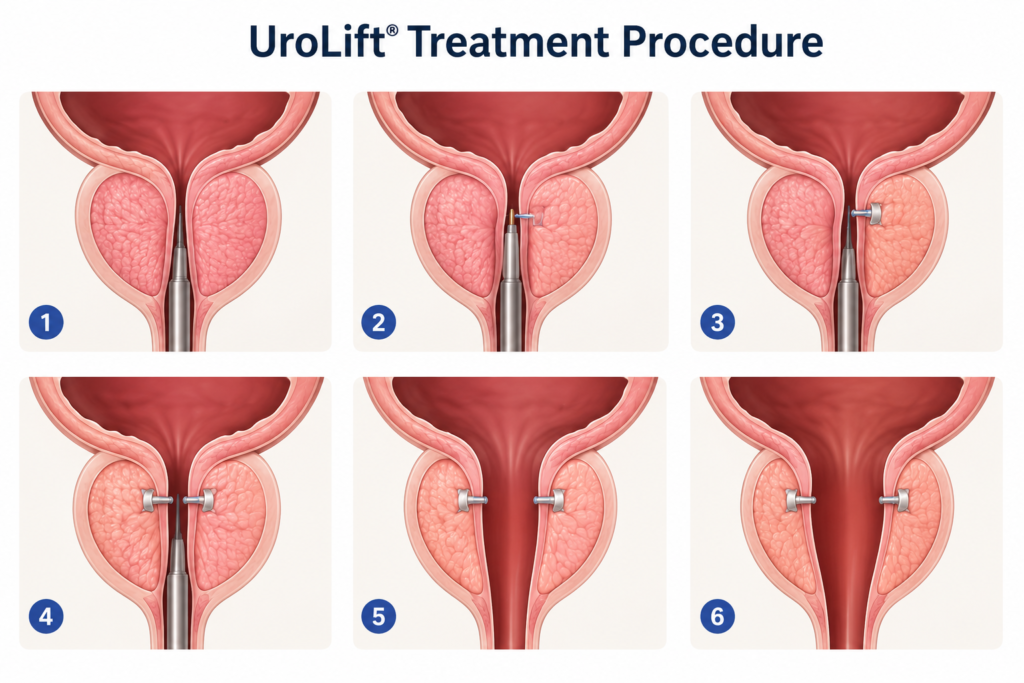
How Does UroLift Treatment Work?
The UroLift procedure follows a straightforward approach.
Step 1
The patient undergoes a detailed evaluation to determine whether UroLift is appropriate.
↓
Step 2
The procedure is performed using a specialized delivery device inserted through the urethra.
↓
Step 3
Small permanent implants are placed within the prostate.
↓
Step 4
The implants gently pull the enlarged prostate tissue away from the urethra.
↓
Step 5
Urine can pass through the widened channel with less obstruction.
Who Is a Good Candidate for UroLift Treatment?
A patient may be considered for UroLift after evaluation by a qualified urologist.
Suitability depends on several factors, including:
- Severity of urinary symptoms
- Prostate size
- Prostate anatomy
- Overall health
- Previous prostate procedures
- Presence of other urinary conditions
Not every patient with BPH is a candidate for UroLift, which is why individualized assessment is essential.
Benefits of UroLift Treatment
Potential benefits may include:
- Improved urine flow
- Relief from urinary symptoms
- No removal of prostate tissue
- Minimally invasive approach
- Usually performed as a day-care procedure
- Shorter recovery for many patients
- Reduced hospital stay compared with traditional surgery in suitable cases
Individual outcomes vary, and treatment suitability should always be discussed with a urologist.
Doctor's Note
Choosing UroLift should be based on your prostate size, anatomy, symptoms, and overall health—not simply because it is a minimally invasive procedure. A detailed consultation is essential to determine whether it is the right treatment for you.
How Is the UroLift Procedure Performed?
The UroLift® procedure is designed to relieve urinary obstruction caused by an enlarged prostate without removing prostate tissue. It is typically performed by a qualified urologist after confirming that the patient is a suitable candidate.
The procedure generally follows these steps:
Step 1: Initial Evaluation
Before recommending UroLift, your urologist will perform a detailed evaluation, which may include:
- Medical history
- Physical examination
- Digital Rectal Examination (DRE)
- PSA blood test (when appropriate)
- Ultrasound
- Uroflowmetry
- IPSS Symptom Score
These tests help determine whether the UroLift System is suitable for your prostate size and anatomy.
1. Lifestyle Changes for Mild BPH
Men with mild symptoms may benefit from simple lifestyle modifications before considering medication or procedures.
Recommended Lifestyle Changes
- Reduce caffeine intake
- Limit alcohol consumption
- Avoid drinking excessive fluids before bedtime
- Maintain a healthy body weight
- Exercise regularly
- Avoid delaying urination
- Practice bladder training
- Manage diabetes and high blood pressure
These measures do not shrink the prostate but may reduce symptom severity and improve bladder function.
Step 2: Preparation
On the day of the procedure:
- You may be advised to avoid eating or drinking for a few hours if sedation is planned.
- Your doctor will review your medications and provide instructions regarding blood thinners if applicable.
- The procedure may be performed using local anesthesia, sedation, or general anesthesia depending on the clinical situation and treating center.
Step 3: Placement of UroLift Implants
A specialized delivery device is inserted through the urethra.
Small permanent implants are then placed to gently retract the enlarged prostate tissue away from the urethra.
No prostate tissue is cut, removed, or destroyed during the procedure.
Step 4: Improved Urine Flow
Once the implants are in place, the urethra becomes less compressed, allowing urine to pass more freely.
Many patients notice symptom improvement during the recovery period, although individual results vary.
How Long Does the UroLift Procedure Take?
The UroLift procedure is generally completed in less than one hour, although the exact duration depends on the patient’s anatomy and the number of implants required.
Many patients return home the same day if clinically appropriate.
Recovery After UroLift Treatment
Recovery varies from patient to patient.
Many men are able to resume light daily activities within a few days, although your urologist may recommend avoiding strenuous exercise and heavy lifting during the initial recovery period.
Temporary urinary symptoms may occur after the procedure, including:
- Mild burning during urination
- Increased urinary frequency
- Small amounts of blood in the urine
- Mild pelvic discomfort
- Temporary urgency
These symptoms usually improve as healing progresses. If symptoms worsen or persist, patients should contact their treating urologist.
Advantages of UroLift Treatment
Compared with more invasive surgical procedures, UroLift offers several potential advantages for appropriately selected patients.
Potential Benefits
- Minimally invasive procedure
- No removal of prostate tissue
- Usually performed as a day-care procedure
- Short recovery period for many patients
- Minimal bleeding
- Rapid return to normal activities for many patients
- Designed to preserve sexual function in appropriately selected patients
Individual outcomes vary depending on prostate anatomy, symptom severity, and overall health.
Possible Risks and Side Effects
As with any medical procedure, UroLift has potential risks and side effects.
Temporary side effects may include:
- Burning during urination
- Blood in urine
- Pelvic discomfort
- Increased urinary frequency
- Urinary urgency
- Temporary difficulty urinating
Serious complications are uncommon but can occur. Your urologist will discuss the potential benefits and risks before the procedure.
Who May Not Be Suitable for UroLift?
Although UroLift is an effective option for many patients, it is not appropriate for everyone.
It may not be suitable for patients with:
- Certain prostate anatomies
- Very large prostates
- Active urinary tract infection
- Certain urethral conditions
- Other medical conditions identified during evaluation
A comprehensive consultation is necessary to determine eligibility.
Success of UroLift Treatment
Clinical studies have shown that many appropriately selected patients experience meaningful improvement in urinary symptoms and quality of life after UroLift.
Treatment outcomes vary depending on:
- Prostate size
- Severity of symptoms
- Overall health
- Accurate patient selection
- Experience of the treating urologist
Regular follow-up helps assess treatment success and long-term symptom improvement.
UroLift Recovery Timeline
| Time | What to Expect |
|---|---|
| Day 1 | Rest, hydration, mild urinary symptoms may occur |
| Days 2–7 | Gradual improvement, resume light activities as advised |
| Week 2 | Most temporary urinary symptoms continue to improve |
| Weeks 4–6 | Continued recovery and symptom improvement |
| Long-term | Follow-up evaluation with your urologist |
When Should You Contact Your Doctor?
Seek medical advice promptly if you experience:
- Fever
- Severe pain
- Heavy bleeding
- Inability to urinate
- Symptoms of infection
- Persistent worsening urinary symptoms
Early communication with your healthcare provider helps address potential complications.
Doctor's Expert Advice
UroLift is an excellent option for many men with BPH, but it is not the right choice for every patient. The best outcomes are achieved when treatment is selected after a comprehensive evaluation of symptoms, prostate anatomy, and overall health.
Is UroLift Better Than Other BPH Treatments?
There is no single treatment that is considered the best for every man with Benign Prostatic Hyperplasia (BPH). The most appropriate treatment depends on several factors, including prostate size, symptom severity, overall health, and individual treatment goals.
The UroLift® System is one of several treatment options available for BPH. Your urologist will recommend the most suitable option after a comprehensive evaluation.
UroLift vs Other BPH Treatments
| Feature | UroLift® | Medication | Rezūm™ | iTind® | TURP | Laser Surgery |
|---|---|---|---|---|---|---|
| Minimally Invasive | ✅ Yes | ✅ Yes | ✅ Yes | ✅ Yes | ❌ No | ❌ No |
| Removes Prostate Tissue | ❌ No | ❌ No | Uses steam to ablate tissue | ❌ No | ✅ Yes | ✅ Yes |
| Hospital Stay | Usually Day Care | Not Required | Usually Day Care | Usually Day Care | Usually 2–3 Days | Usually 1–2 Days |
| Recovery | Fast | No Recovery | Moderate | Fast | Longer | Moderate |
| Long-Term Medication Required | Usually No | Often Yes | Usually No | Usually No | Usually No | Usually No |
Is UroLift Painful?
The procedure is generally performed under appropriate anesthesia or sedation, so patients should not expect significant pain during the treatment itself.
After the procedure, some men may experience temporary discomfort such as:
- Mild burning during urination
- Increased urinary frequency
- Mild pelvic discomfort
- Blood in the urine
- Temporary urgency
These symptoms usually improve during recovery.
Does UroLift Affect Sexual Function?
One of the reasons UroLift has gained attention is that it is designed to treat urinary obstruction without removing prostate tissue.
For appropriately selected patients, the procedure is intended to preserve sexual function. However, outcomes vary between individuals, and your urologist will discuss expected benefits and potential risks before treatment.
How Successful Is UroLift?
Clinical studies have shown that many appropriately selected patients experience significant improvement in urinary symptoms and quality of life following the UroLift procedure.
Success depends on factors such as:
- Correct patient selection
- Prostate anatomy
- Severity of symptoms
- Experience of the treating urologist
- Follow-up care
No treatment guarantees identical results for every patient.
How Long Do UroLift Results Last?
Many patients experience sustained improvement in urinary symptoms after treatment.
However, long-term outcomes depend on:
- Age
- Prostate growth over time
- Overall health
- Lifestyle
- Follow-up care
Some patients may require additional treatment in the future depending on disease progression.
Can UroLift Replace Surgery?
For selected patients, UroLift may provide an effective alternative to traditional surgery.
However, patients with:
- Very large prostates
- Significant urinary retention
- Certain prostate anatomies
- Other complex urological conditions
may benefit more from other treatment options.
Only a detailed evaluation can determine whether surgery or a minimally invasive procedure is more appropriate.
Who Should Consider UroLift?
UroLift may be considered for men who:
- Have bothersome urinary symptoms due to BPH
- Wish to avoid long-term medication (where appropriate)
- Are looking for a minimally invasive treatment option
- Prefer a shorter recovery period
- Are considered suitable candidates after evaluation
Not every patient is eligible, making a specialist consultation essential.
Common Myths About UroLift
Myth 1: UroLift Is Suitable for Everyone
Fact: Eligibility depends on prostate size, anatomy, and clinical findings.
Myth 2: UroLift Is the Same as Traditional Surgery
Fact: UroLift does not remove prostate tissue and follows a different treatment approach.
Myth 3: Recovery Takes Months
Fact: Many patients return to normal daily activities within a relatively short period, depending on individual recovery and medical advice.
Myth 4: Medication Is Always Better
Fact: Medication is effective for many patients, while others may benefit more from minimally invasive procedures after appropriate evaluation.
Questions to Ask Your Urologist Before UroLift
Before choosing treatment, consider asking:
- Am I a suitable candidate for UroLift?
- What are the benefits in my specific case?
- Are there alternative treatment options?
- How long will recovery take?
- How many UroLift procedures have you performed?
- What results can I realistically expect?
- What follow-up care will I need?
Doctor's Recommendation
The best outcomes with UroLift are achieved when the procedure is performed on carefully selected patients after a thorough clinical evaluation. Choosing the right treatment is more important than choosing the newest treatment.
Frequently Asked Questions
1. What is UroLift Treatment?
UroLift Treatment is a minimally invasive procedure for Benign Prostatic Hyperplasia (BPH). Small permanent implants are placed to hold enlarged prostate tissue away from the urethra, improving urine flow without removing prostate tissue.
2. Who is a good candidate for UroLift?
UroLift may be suitable for men with bothersome urinary symptoms caused by BPH who meet specific clinical criteria. Eligibility depends on prostate size, anatomy, overall health, and findings from a urological evaluation.
3. Is UroLift a surgery?
UroLift is generally considered a minimally invasive procedure rather than traditional surgery because it does not involve cutting or removing prostate tissue.
4. How long does the UroLift procedure take?
The procedure is often completed in less than one hour, although the exact duration depends on individual anatomy and clinical requirements.
5. Is hospitalization required?
Many patients undergo UroLift as a day-care procedure and return home the same day if clinically appropriate.
6. How long is the recovery period?
Many patients resume light daily activities within a few days. Recovery varies depending on individual health and your urologist’s advice.
7. Does UroLift remove prostate tissue?
No. UroLift works by retracting enlarged prostate tissue using small implants. The prostate tissue is not removed.
8. Does UroLift affect sexual function?
For appropriately selected patients, UroLift is designed to preserve sexual function. Individual outcomes vary, and your urologist will discuss expected benefits and possible risks.
9. Are the implants permanent?
Yes. The implants are designed to remain in place permanently unless future medical management requires otherwise.
10. Can BPH return after UroLift?
Benign Prostatic Hyperplasia is a progressive condition. Some patients may require additional treatment in the future depending on prostate growth, symptom progression, and other clinical factors.
11. Is UroLift better than medication?
The answer depends on the individual patient. Medication works well for many men, while others may benefit from a minimally invasive procedure. The most suitable option should be determined after evaluation by a urologist.
What are the possible side effects?
Temporary side effects may include:
- Mild burning during urination
- Blood in the urine
- Increased urinary frequency
- Pelvic discomfort
- Temporary urgency
These symptoms generally improve as recovery progresses.
Why Choose Dr. Priyaddarshi Ranjan for UroLift Treatment?
Choosing the right specialist is just as important as choosing the right treatment.
Dr. Priyaddarshi Ranjan provides evidence-based evaluation and personalized treatment planning for patients with Benign Prostatic Hyperplasia.
Why Patients Choose Him
- Experienced Consultant Urologist
- Advanced BPH Management
- Personalized Treatment Planning
- Comprehensive Diagnostic Evaluation
- Focus on Patient Education
- Modern Minimally Invasive Treatment Options
- Long-Term Follow-up Car.
Your UroLift Treatment Journey
Symptoms
↓
Consultation
↓
Diagnosis
↓
Eligibility Assessment
↓
UroLift Procedure
↓
Recovery
↓
Follow-up
↓
Improved Quality of Life
Conclusion
UroLift Treatment is an effective minimally invasive option for many men with Benign Prostatic Hyperplasia who are looking for symptom relief without traditional prostate surgery.
Because every patient is different, the decision to undergo UroLift should always be based on a thorough medical evaluation, prostate anatomy, symptom severity, and treatment goals.
If you are experiencing urinary symptoms due to an enlarged prostate, consulting an experienced urologist can help determine whether UroLift or another treatment option is most appropriate for your condition.
A New Era in Healthcare
Practicing At
Prostate Excellence centre, Meliora Institute of kidney, Urology and Men’s health, SCO-152, Ground Floor, Sector 24 D, Chandigarh
Looking for Expert UroLift Treatment?
If frequent urination, weak urine flow, or difficulty emptying your bladder is affecting your daily life, schedule a comprehensive evaluation with Dr. Priyaddarshi Ranjan.
Receive a personalized assessment and discuss whether UroLift is the right treatment option for your condition.