Early Signs of Enlarged Prostate are often ignored because many men believe urinary problems are a normal part of ageing. However, these symptoms may indicate Benign Prostatic Hyperplasia (BPH), a common condition that affects millions of men as they grow older.
Recognising the early signs of enlarged prostate can help you seek timely medical evaluation, prevent complications, and explore effective treatment options before symptoms become more severe.
In this guide, you’ll learn the 10 early signs of an enlarged prostate, what causes BPH, when to see a urologist, and the latest treatment options available.
Early Signs of Enlarged Prostate are often ignored because many men believe urinary problems are a normal part of ageing.
Key Takeaways
- Frequent urination, weak urine flow, nocturia, and urgency are among the earliest signs of an enlarged prostate.
- Benign Prostatic Hyperplasia (BPH) is a common, non-cancerous condition in aging men.
- Early diagnosis can help prevent complications such as urinary retention, bladder stones, and kidney damage.
- Several effective treatment options are available, ranging from lifestyle changes and medications to minimally invasive procedures and surgery.
- Persistent urinary symptoms should be evaluated by a qualified urologist rather than being dismissed as a normal part of aging.
What Are the Early Signs of Enlarged Prostate?
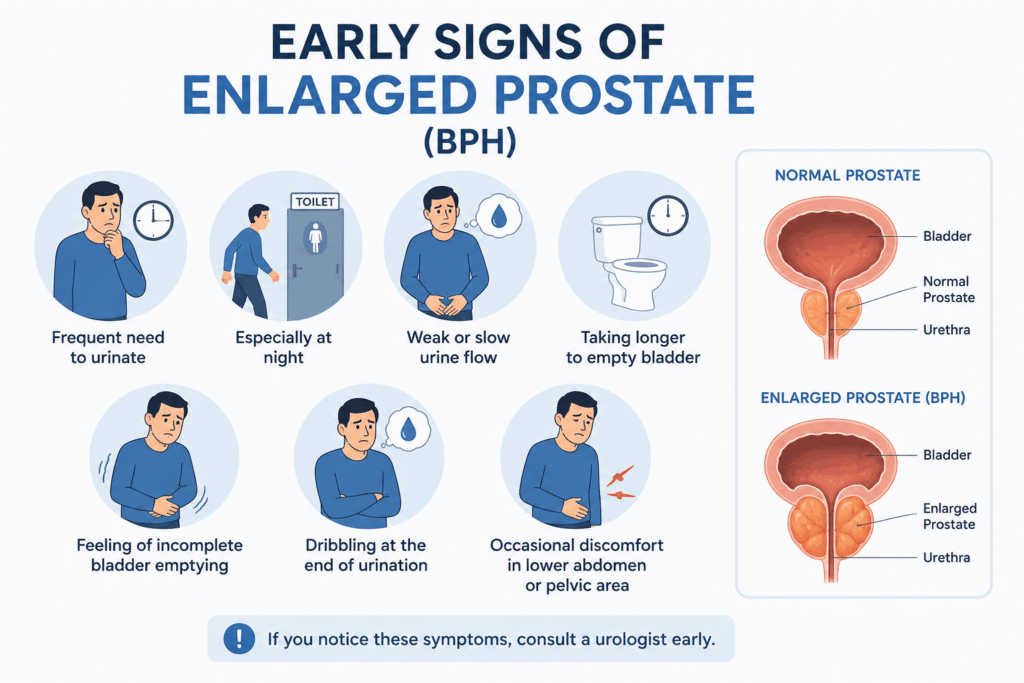
The earliest signs of Benign Prostatic Hyperplasia (BPH) commonly include:
- Frequent urination
- Waking up at night to urinate (nocturia)
- Weak urine stream
- Difficulty starting urination
- Feeling that the bladder is not completely empty
- Sudden urge to urinate
- Dribbling after urination
- Interrupted urine flow
- Straining during urination
- Taking longer than usual to empty the bladder
These symptoms vary from person to person and should be evaluated by a qualified urologist if they persist.
What Is an Enlarged Prostate?
The prostate is a small gland located below the bladder and surrounding the urethra. As men age, the prostate commonly increases in size.
This non-cancerous enlargement is known as Benign Prostatic Hyperplasia (BPH).
When the enlarged prostate compresses the urethra, it restricts urine flow and causes urinary symptoms.
BPH is not prostate cancer, although both conditions can produce similar symptoms. A medical evaluation is important to determine the underlying cause.
Why Early Detection Matters
Early diagnosis can help:
- Improve quality of life
- Reduce bothersome urinary symptoms
- Prevent urinary retention
- Lower the risk of bladder damage
- Reduce the chance of kidney complications
- Allow more treatment options
Ignoring symptoms may lead to worsening urinary problems over time.
1. Frequent Urination
One of the earliest symptoms of BPH is needing to urinate more often than usual.
Many men notice:
- Visiting the bathroom every hour
- Increased daytime urination
- Frequent interruptions during work
- Difficulty completing long trips
2. Waking Up at Night to Urinate (Nocturia)
Getting up two or more times each night to urinate can disturb sleep and affect overall health.
Nocturia is often one of the first symptoms noticed by men with BPH.
Poor sleep may lead to:
- Daytime fatigue
- Difficulty concentrating
- Reduced productivity
- Mood changes
3. Weak Urine Stream
An enlarged prostate narrows the urethra, reducing urine flow.
Many patients describe:
- Slow urine stream
- Thin stream
- Reduced pressure
- Difficulty emptying the bladder
4. Difficulty Starting Urination
Some men need several seconds before urine begins flowing.
This hesitation occurs because the enlarged prostate obstructs the urethra.
5. Feeling That the Bladder Is Not Empty
Even after urinating, many men still feel urine remains inside the bladder.
Incomplete emptying increases the risk of urinary tract infections and bladder stones if left untreated.
6. Sudden Urge to Urinate
Many men experience a strong, sudden need to urinate that is difficult to postpone.
This symptom is commonly associated with bladder irritation caused by urinary obstruction.
7. Dribbling After Urination
Small amounts of urine may continue leaking after finishing urination.
This occurs because urine remains trapped inside the urethra.
8. Interrupted Urine Flow
Instead of a continuous stream, urine may repeatedly stop and start.
This symptom often indicates increasing obstruction caused by prostate enlargement.
9. Straining While Urinating
Many men unconsciously push harder to empty their bladder.
Persistent straining is not normal and should be medically evaluated.
10. Taking Longer to Finish Urinating
A bladder that once emptied quickly may now require significantly more time.
This change often develops gradually and may be overlooked until symptoms become more severe.
Common Early Signs of Enlarged Prostate After Age 50
The exact cause of Benign Prostatic Hyperplasia (BPH) is not completely understood. However, experts believe that age-related hormonal changes play an important role in prostate enlargement.
As men grow older, changes in testosterone and other hormones can stimulate the prostate gland to enlarge gradually. When the enlarged prostate presses against the urethra, it restricts the normal flow of urine and causes urinary symptoms.
Although BPH is common with aging, not every man develops troublesome symptoms.
Who Is at Risk of Developing BPH?
Several factors may increase the likelihood of developing an enlarged prostate.
Increasing Age
Age is the strongest known risk factor.
The condition becomes more common after the age of 50 and continues to increase with advancing age.
Family History
Men with close family members who have experienced BPH may have a higher likelihood of developing the condition.
Diabetes
Some studies suggest that men with diabetes may be more likely to experience urinary symptoms associated with BPH.
Obesity
Excess body weight may contribute to worsening urinary symptoms.
Lack of Physical Activity
Regular physical activity supports overall health and may help reduce the severity of urinary symptoms in some men.
When Should You See a Urologist for Early Signs of Enlarged Prostate?
Many men delay seeking medical care because they believe urinary symptoms are simply a part of aging.
You should consult a urologist if you experience:
- Frequent urination
- Nighttime urination
- Weak urine stream
- Difficulty starting urination
- Incomplete bladder emptying
- Sudden urinary urgency
- Blood in the urine
- Pain while urinating
- Inability to urinate
Early evaluation may help prevent complications and provide more treatment options.
Can an Enlarged Prostate Become Serious?
Yes.
Although BPH is not cancer, untreated urinary obstruction can lead to complications in some patients.
Possible complications include:
- Acute urinary retention
- Recurrent urinary tract infections
- Bladder stones
- Bladder damage
- Kidney damage in severe cases
Prompt diagnosis and treatment can reduce the risk of these complications.
How Are Early Signs of Enlarged Prostate Diagnosed?
Your urologist may recommend several tests to determine the cause of your symptoms.
These may include:
Medical History
A discussion about urinary symptoms, medications, and general health.
Physical Examination
Including a Digital Rectal Examination (DRE) when appropriate.
PSA Blood Test
May be recommended to help evaluate prostate health alongside other clinical findings.
Urine Test
To rule out infection or blood in the urine.
Ultrasound
To assess prostate size and evaluate the bladder and kidneys when indicated.
Uroflowmetry
Measures the speed and strength of urine flow.
Post-Void Residual (PVR) Test
Determines how much urine remains in the bladder after urination.
IPSS Questionnaire
A standardized symptom score used to assess the severity of urinary symptoms and monitor treatment progress.
Can Early Signs of Enlarged Prostate Be Treated Without Surgery?
Many men wonder whether early treatment can help avoid surgery.
The answer depends on:
- Symptom severity
- Prostate size
- Overall health
- Response to medications
- Presence of complications
For some patients, lifestyle changes and medications may effectively manage symptoms. Others may eventually benefit from minimally invasive procedures or surgery if symptoms worsen or complications develop.
Treatment Options for Enlarged Prostate
Treatment is individualized based on symptom severity, prostate size, overall health, and patient preferences.
Common options include:
Lifestyle Changes
- Reducing evening fluid intake
- Limiting caffeine and alcohol
- Maintaining a healthy weight
- Staying physically active
- Bladder training strategies
Medications
Doctors may prescribe medicines to relax the muscles around the prostate or reduce prostate size, depending on the patient’s condition.
Minimally Invasive Treatments
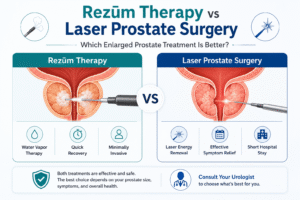
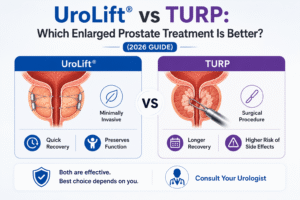
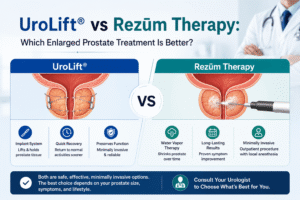
Several minimally invasive procedures are available for selected patients, including:
Surgical Treatments
When symptoms are severe or complications develop, surgery may be recommended.
Options include:
- TURP (Transurethral Resection of the Prostate)
- Laser Prostate Surgery
- Aquablation Therapy
The most appropriate treatment should always be selected after consultation with an experienced urologist.
Can Lifestyle Changes Improve Early BPH Symptoms?
For some men with mild symptoms, healthy lifestyle habits may help improve quality of life.
These include:
- Maintaining a healthy weight
- Exercising regularly
- Limiting caffeine
- Limiting alcohol
- Avoiding excessive fluids before bedtime
- Emptying the bladder completely when urinating
- Managing diabetes and blood pressure effectively
Lifestyle changes should complement—not replace—medical advice when symptoms are persistent or worsening.
Doctor’s Expert Advice
The earlier Benign Prostatic Hyperplasia is diagnosed, the more treatment options are typically available. Men experiencing persistent urinary symptoms should seek evaluation rather than assuming these changes are a normal part of aging.
Can You Prevent Early Signs of Enlarged Prostate?
There is no guaranteed way to prevent Benign Prostatic Hyperplasia (BPH), as aging and hormonal changes play a significant role in its development. However, adopting a healthy lifestyle may help support prostate health and reduce the severity of urinary symptoms.
Healthy habits that may help include:
- Maintaining a healthy weight
- Exercising regularly
- Eating a balanced diet rich in fruits and vegetables
- Staying hydrated throughout the day
- Limiting caffeine and alcohol, especially in the evening
- Managing diabetes and high blood pressure
- Scheduling regular health check-ups after the age of 50
Although these measures cannot prevent BPH entirely, they may contribute to better urinary health.
Early Signs of Enlarged Prostate vs Prostate Cancer
Many men worry that urinary symptoms automatically mean prostate cancer. However, Benign Prostatic Hyperplasia (BPH) and prostate cancer are different conditions.
| Enlarged Prostate (BPH) | Prostate Cancer |
|---|---|
| Non-cancerous enlargement | Cancerous growth |
| Very common with aging | Less common than BPH |
| Usually causes urinary symptoms | May not cause symptoms in early stages |
| Does not spread to other organs | Can spread if untreated |
| Often managed with medication or procedures | Treatment depends on cancer stage |
Because symptoms can overlap, it is important to seek medical evaluation rather than self-diagnosing.
What Happens If You Ignore the Early Signs of Enlarged Prostate?
Ignoring early symptoms may allow urinary obstruction to worsen over time.
Potential complications include:
- Acute urinary retention
- Recurrent urinary tract infections
- Bladder stones
- Bladder muscle damage
- Kidney damage in severe cases
- Reduced quality of life
Early evaluation often provides more treatment options and may help avoid complications.
Common Myths About Enlarged Prostate
Myth 1: Frequent urination is a normal part of aging.
Fact: Although urinary symptoms become more common with age, persistent symptoms should always be evaluated to determine the underlying cause.
Myth 2: BPH always requires surgery.
Fact: Many men are successfully managed with lifestyle changes, medication, or minimally invasive treatments. Surgery is recommended only when appropriate based on symptoms and clinical findings.
Myth 3: Enlarged prostate means prostate cancer.
Fact: BPH is a non-cancerous condition. However, a medical evaluation is important because prostate cancer and BPH can sometimes produce similar urinary symptoms.
Myth 4: Drinking less water will solve urinary problems.
Fact: Severely restricting fluids can lead to dehydration and is not an appropriate long-term solution. Your doctor can advise you on healthy fluid intake based on your condition.
Myth 5: Urinary symptoms will disappear on their own.
Fact: Some symptoms remain stable, but others may gradually worsen over time. Persistent symptoms should be assessed by a urologist.
Questions to Ask Your Urologist
If you’re experiencing urinary symptoms, consider asking:
- What is causing my urinary symptoms?
- Could these symptoms be due to BPH?
- Do I need any diagnostic tests?
- Is a PSA test recommended in my case?
- What treatment options are available?
- Can lifestyle changes improve my symptoms?
- Will I need medication or a procedure?
- How often should I have follow-up appointments?
When Is It an Emergency?
Seek immediate medical attention if you experience:
- Complete inability to urinate
- Severe lower abdominal pain
- Heavy blood in the urine
- Fever with urinary symptoms
- Severe pain during urination
- Confusion or signs of serious illness
These symptoms require urgent medical evaluation.
Tips to Support Prostate Health
Healthy habits may help support urinary and prostate health:
- Maintain a healthy body weight.
- Stay physically active.
- Eat more fruits, vegetables, and whole grains.
- Reduce caffeine and alcohol if they worsen symptoms.
- Avoid delaying urination for long periods.
- Stay well hydrated during the day.
- Schedule routine health check-ups after age 50.
When Should You Get Checked for Early Signs of Enlarged Prostate?
Book an appointment with a urologist if you notice:
- Frequent urination
- Waking up several times at night to urinate
- Weak urine flow
- Difficulty starting urination
- Urgency or leakage
- Blood in the urine
- Persistent urinary discomfort
Early diagnosis may improve symptom management and reduce the risk of complications.
Doctor’s Expert Advice
Early urinary symptoms should never be ignored. Timely evaluation helps identify the cause, rule out more serious conditions, and ensure that treatment is tailored to the patient’s needs. Early diagnosis often provides the widest range of management options.
Frequently Asked Questions (FAQs)
1. What are the first signs of an enlarged prostate?
The earliest signs of an enlarged prostate (BPH) often include frequent urination, waking up at night to urinate (nocturia), weak urine flow, difficulty starting urination, urgency, and the feeling that the bladder is not empty after urinating. These symptoms usually develop gradually and should be evaluated by a urologist if they persist.
2. At what age do enlarged prostate symptoms usually begin?
BPH is uncommon before the age of 40. Symptoms most often begin after age 50, and the likelihood of developing BPH increases with advancing age.
3. Is frequent urination always a sign of BPH?
No. Frequent urination can also be caused by urinary tract infections, diabetes, overactive bladder, certain medications, or other medical conditions. A proper evaluation is necessary to identify the exact cause.
4. Can an enlarged prostate become cancer?
No. Benign Prostatic Hyperplasia (BPH) is a non-cancerous condition and does not turn into prostate cancer. However, because both conditions may cause similar urinary symptoms, medical evaluation is important.
5. Can early treatment prevent surgery?
For many men with mild to moderate symptoms, early diagnosis and appropriate management with lifestyle changes or medications may delay or reduce the need for surgery. Treatment depends on symptom severity and clinical evaluation.
6. Which doctor should I consult for enlarged prostate symptoms?
A urologist specializes in diagnosing and treating prostate conditions, including Benign Prostatic Hyperplasia (BPH).
7. Can lifestyle changes improve early BPH symptoms?
Healthy habits such as maintaining a healthy weight, exercising regularly, limiting caffeine and alcohol, staying hydrated, and managing chronic health conditions may help improve symptoms for some men.
8. What tests are used to diagnose BPH?
Your doctor may recommend:
- Medical history
- Physical examination
- Digital Rectal Examination (DRE)
- PSA Blood Test (when appropriate)
- Urine analysis
- Ultrasound
- Uroflowmetry
- Post-Void Residual (PVR) Test
- IPSS Symptom Score
The exact tests depend on your symptoms and medical history.
9. Is an enlarged prostate dangerous?
BPH itself is not cancer, but if left untreated it can lead to complications such as urinary retention, bladder stones, recurrent urinary tract infections, bladder damage, or kidney damage in some patients.
10. When should I seek emergency medical care?
Seek immediate medical attention if you experience:
- Complete inability to urinate
- Severe lower abdominal pain
- Heavy blood in the urine
- Fever with urinary symptoms
- Severe pain during urination
Why Choose Dr. Priyaddarshi Ranjan?
Choosing an experienced urologist is essential for accurate diagnosis and personalized treatment.
Dr. Priyaddarshi Ranjan specializes in evaluating and managing Benign Prostatic Hyperplasia (BPH) using evidence-based diagnostic methods and a wide range of treatment options, including medications, minimally invasive procedures, and advanced surgical techniques when appropriate.
Why Patients Trust Him
- Experienced Consultant Urologist
- Expertise in BPH Diagnosis & Treatment
- Robotic & Minimally Invasive Urology
- Personalized Treatment Plans
- Advanced Diagnostic Evaluation
- Patient-Centered Care
- Long-Term Follow-up
What Should You Do If You Notice Early Symptoms?
Do not ignore persistent urinary symptoms.
If you experience:
- Frequent urination
- Weak urine stream
- Nocturia
- Difficulty starting urination
- Urinary urgency
- Feeling that your bladder is not empty
schedule an appointment with a qualified urologist for a complete evaluation.
Early diagnosis often allows more treatment options and may help prevent complications.
Conclusion
Recognizing the Early Signs of Enlarged Prostate can help you receive timely diagnosis and treatment before symptoms become more severe. If you notice persistent urinary symptoms, consult an experienced urologist for a complete evaluation.
Seeking medical advice early can help identify the underlying cause, rule out more serious conditions, and provide timely treatment tailored to your needs. Whether your symptoms are mild or more bothersome, effective management options are available, ranging from lifestyle changes and medication to minimally invasive procedures and surgery.
If you notice persistent urinary symptoms, consult an experienced urologist to receive an accurate diagnosis and discuss the treatment approach that is right for you.
Concerned About Early Signs of an Enlarged Prostate?
If you’re experiencing frequent urination, weak urine flow, difficulty emptying your bladder, or other urinary symptoms, don’t wait for them to worsen.
Schedule a Consultation with Dr. Priyaddarshi Ranjan
✔ Comprehensive Evaluation
✔ Advanced BPH Diagnosis
✔ Personalized Treatment Plan
✔ Minimally Invasive & Surgical Treatment Options