
Finding the Best Doctor for Enlarged Prostate Treatment in India is one of the most important decisions you can make if you are experiencing symptoms of Benign Prostatic Hyperplasia (BPH). Frequent urination, difficulty passing urine, waking up several times at night, or a weak urine stream can significantly affect your quality of life. While these symptoms are common among aging men, choosing the right urologist can make a major difference in diagnosis, treatment, recovery, and long-term outcomes.
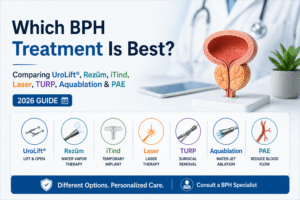
Today, BPH treatment has advanced far beyond traditional surgery. Experienced urologists now offer a wide range of treatment options, including lifestyle management, medications, and minimally invasive procedures such as UroLift®, Rezūm™, iTind, Prostatic Artery Embolisation (PAE), Laser Prostate Surgery, TURP, and Aquablation Therapy. The best treatment depends on your prostate size, urinary symptoms, medical history, and personal preferences.
However, selecting the right doctor is just as important as selecting the right treatment. A specialist with extensive experience in diagnosing and treating BPH can accurately evaluate your condition, explain all available treatment options, and recommend a personalized treatment plan rather than a one-size-fits-all solution.
This comprehensive guide explains how to choose the best doctor for enlarged prostate treatment in India, what qualifications to look for, when to consult a urologist, and what to expect during your evaluation.
Best Doctor for Enlarged Prostate Treatment in India
The best doctor for enlarged prostate treatment is a qualified urologist experienced in diagnosing and managing Benign Prostatic Hyperplasia (BPH). Evaluation typically includes a medical history, physical examination, PSA testing (when appropriate), ultrasound, uroflowmetry, and symptom assessment. Treatment options range from lifestyle changes and medications to minimally invasive procedures such as UroLift®, Rezūm™, iTind, Prostatic Artery Embolisation (PAE), Laser Prostate Surgery, TURP, and Aquablation Therapy. The most appropriate treatment depends on prostate size, symptom severity, and the patient’s overall health and preferences.
Who is the best doctor for enlarged prostate treatment in India?
The best doctor for enlarged prostate treatment is a qualified urologist with experience in managing Benign Prostatic Hyperplasia (BPH) using both medical and minimally invasive treatment options. Look for a specialist who offers comprehensive evaluation, discusses all suitable treatment choices, and tailors treatment to your prostate size, symptoms, and overall health.
What Is an Enlarged Prostate (BPH)?
An enlarged prostate, medically known as Benign Prostatic Hyperplasia (BPH), is a non-cancerous enlargement of the prostate gland that commonly affects men over the age of 50.
The prostate surrounds the urethra, which carries urine from the bladder out of the body. As the prostate enlarges, it can compress the urethra and obstruct urine flow, leading to bothersome urinary symptoms.
Although BPH is not prostate cancer, untreated BPH can lead to complications such as:
- Acute urinary retention
- Recurrent urinary tract infections (UTIs)
- Bladder stones
- Bladder damage
- Kidney damage in severe cases
- Reduced quality of life
Early consultation with an experienced urologist allows timely diagnosis and helps prevent these complications.
Common Symptoms of an Enlarged Prostate
Many men ignore early urinary symptoms, assuming they are a normal part of aging. However, persistent symptoms should always be evaluated by a specialist.
Common symptoms include:
- Frequent urination during the day
- Waking up multiple times at night to urinate (nocturia)
- Weak urine stream
- Difficulty starting urination
- Straining while passing urine
- Interrupted urine flow
- Dribbling after urination
- Sudden urgency to urinate
- Feeling that the bladder is not completely empty
- Urinary retention in severe cases
If these symptoms interfere with your daily routine, work, sleep, or travel, it is time to seek medical advice.
Why Choosing the Right Doctor Matters
Not every patient with BPH requires surgery, and not every enlarged prostate should be treated in the same way.
An experienced urologist evaluates several factors before recommending treatment, including:
- Age
- Prostate size
- Severity of symptoms
- Overall health
- Current medications
- Sexual health concerns
- Lifestyle
- Patient preferences
A personalized approach ensures that you receive the most appropriate treatment rather than undergoing an unnecessary procedure.
Who Treats an Enlarged Prostate?
The primary specialist for diagnosing and treating BPH is a urologist.
A urologist specializes in diseases of the:
- Kidneys
- Bladder
- Ureters
- Prostate
- Male reproductive system
These specialists are trained to manage both simple and complex prostate conditions using medical, minimally invasive, and surgical techniques.
General Physician vs Urologist
Many men initially consult a general physician for urinary symptoms.
While a general physician can:
- Recognize symptoms
- Perform initial evaluation
- Prescribe basic medications
- Refer patients when needed
A urologist provides specialized care, including:
- Advanced prostate evaluation
- Specialized diagnostic testing
- Minimally invasive BPH procedures
- Surgical treatment when required
- Long-term follow-up
For persistent urinary symptoms, consulting a urologist is usually the most appropriate next step.
When Should You See a Urologist?
You should schedule a consultation if you experience:
- Frequent urination
- Nighttime urination disrupting sleep
- Difficulty emptying your bladder
- Weak urine stream
- Blood in urine
- Pain while urinating
- Recurrent urinary tract infections
- Sudden inability to urinate
- Symptoms that do not improve with medication
Seeking medical attention early often leads to more treatment options and better outcomes.
Qualities of the Best Doctor for Enlarged Prostate Treatment
Choosing a specialist is about more than credentials alone. Consider the following qualities:
1. Specialized Training in Urology
The doctor should have formal training in diagnosing and treating diseases of the urinary tract and prostate.
2. Extensive Experience Treating BPH
A physician who regularly manages enlarged prostate cases is more likely to be familiar with the latest diagnostic methods and treatment options.
3. Expertise in Multiple Treatment Options
The best specialists discuss all appropriate treatments rather than recommending only one procedure. Depending on the patient’s condition, this may include:
- Lifestyle modifications
- Medications
- UroLift®
- Rezūm™ Water Vapor Therapy
- iTind
- Prostatic Artery Embolisation (PAE)
- Laser Prostate Surgery
- TURP
- Aquablation Therapy
A broader range of expertise allows treatment to be tailored to each patient’s needs.
4. Patient-Centered Communication
A good doctor takes time to:
- Explain the diagnosis clearly
- Discuss benefits and limitations of each treatment
- Answer questions
- Address concerns about recovery and sexual function
- Involve the patient in treatment decisions
This collaborative approach helps patients make informed choices.
5. Evidence-Based Practice
The best urologists stay current with modern guidelines and advancements in BPH management, ensuring that treatment recommendations are based on current medical evidence.
6. Access to Advanced Technology
Hospitals and clinics equipped with modern diagnostic tools and minimally invasive treatment technologies may offer a wider range of treatment options for suitable patients.
Can the Right Doctor Help You Avoid Surgery?
Yes, in many cases.
Many men believe surgery is the only treatment for an enlarged prostate. However, after a thorough evaluation, an experienced urologist may recommend:
- Lifestyle changes
- Medications
- UroLift®
- Rezūm™
- iTind
- Prostatic Artery Embolisation (PAE)
These options can provide effective symptom relief for appropriately selected patients and may help avoid traditional surgery.
Key Takeaways
- A urologist is the appropriate specialist for diagnosing and treating enlarged prostate (BPH).
- Early evaluation can help prevent complications and expand treatment options.
- The best doctor considers prostate size, symptoms, overall health, and personal preferences before recommending treatment.
- Experience with both minimally invasive procedures and surgical options allows for more personalized care.
- Choosing a knowledgeable, patient-focused specialist is an important step toward achieving the best possible outcome.
How Does the Best Doctor Diagnose an Enlarged Prostate?
Choosing the right treatment begins with an accurate diagnosis. An experienced urologist does much more than simply prescribe medication. The goal is to identify the exact cause of your urinary symptoms, assess the severity of the condition, evaluate prostate size, and determine whether complications are present.
Many urinary symptoms can also be caused by urinary tract infections, bladder disorders, prostate cancer, or neurological conditions. A thorough evaluation helps ensure you receive the most appropriate treatment.
Step 1: Detailed Medical History
Your consultation usually begins with a discussion about your symptoms and overall health.
Your doctor may ask:
- When did your urinary symptoms begin?
- How often do you urinate during the day?
- How many times do you wake up at night to urinate?
- Do you have difficulty starting urination?
- Is your urine stream weak?
- Do you ever feel your bladder isn’t completely empty?
- Have you noticed blood in your urine?
- Are you currently taking any medications?
- Do you have diabetes, hypertension, or heart disease?
- Have you undergone any previous prostate or urinary tract procedures?
This information helps your urologist understand the severity of your condition and plan further evaluation.
Step 2: International Prostate Symptom Score (IPSS)
One of the most commonly used tools for evaluating BPH symptoms is the International Prostate Symptom Score (IPSS).
The questionnaire assesses:
- Frequency
- Urgency
- Weak urine stream
- Intermittent urination
- Straining
- Incomplete bladder emptying
- Night-time urination (Nocturia)
The score helps classify symptoms as:
- Mild
- Moderate
- Severe
It also serves as a baseline for measuring improvement after treatment.
Step 3: Physical Examination
A general physical examination is performed to evaluate your overall health.
The doctor may assess:
- Blood pressure
- Weight
- Abdominal swelling
- Bladder enlargement
- Signs of urinary retention
- General physical condition
Step 4: Digital Rectal Examination (DRE)
A Digital Rectal Examination (DRE) is a quick clinical examination used to assess the prostate gland.
During the examination, the doctor gently inserts a gloved, lubricated finger into the rectum to evaluate:
- Prostate size
- Shape
- Surface
- Consistency
- Tenderness
- Presence of suspicious nodules
Although a DRE cannot confirm BPH on its own, it provides valuable information and helps identify whether further investigation is needed.
Step 5: PSA Blood Test
A Prostate-Specific Antigen (PSA) blood test measures the level of PSA produced by the prostate.
The test may help:
- Evaluate prostate enlargement
- Assess overall prostate health
- Determine whether additional investigations are needed
Because PSA levels can be influenced by several factors, results should always be interpreted by an experienced urologist in the context of your symptoms and examination findings.
Step 6: Urine Analysis
A urine test is commonly performed to rule out other causes of urinary symptoms.
It can help detect:
- Urinary tract infection
- Blood in urine
- Kidney disorders
- Diabetes-related changes
This ensures that symptoms are not being caused by another underlying condition.
Step 7: Ultrasound Examination
Ultrasound is a painless imaging test that provides detailed information about the urinary tract and prostate.
It helps assess:
- Prostate size
- Bladder condition
- Kidneys
- Residual urine after urination
- Bladder wall changes
Ultrasound findings play an important role in selecting the most suitable treatment.
Step 8: Uroflowmetry
Uroflowmetry measures how quickly urine flows during urination.
The test evaluates:
- Maximum urine flow rate
- Average flow rate
- Voided urine volume
- Urination pattern
Reduced flow rates often suggest obstruction caused by an enlarged prostate.
Step 9: Post-Void Residual (PVR) Measurement
After you finish urinating, an ultrasound is used to determine how much urine remains in the bladder.
A high residual volume may indicate:
- Bladder outlet obstruction
- Weak bladder muscles
- Advanced BPH
This information helps guide treatment decisions.
Step 10: Cystoscopy (When Needed)
Not every patient requires cystoscopy.
Your urologist may recommend this procedure if:
- Symptoms are severe
- Blood is present in the urine
- Previous treatments have failed
- Another urinary condition is suspected
A thin camera is passed through the urethra to examine:
- Urethra
- Prostate
- Bladder
- Bladder neck
Treatment Options Recommended by Experienced BPH Specialists
After completing the evaluation, your doctor will recommend the treatment that best matches your condition.
1. Lifestyle Modifications
For mild symptoms, doctors often recommend:
- Reducing caffeine
- Limiting alcohol
- Maintaining a healthy weight
- Regular exercise
- Avoiding excessive fluids before bedtime
- Bladder training
- Managing constipation
These changes may significantly improve symptoms in selected patients.
2. Medications
When symptoms become more bothersome, medications may be prescribed.
Common categories include:
Alpha-Blockers
These relax the muscles around the prostate and bladder neck to improve urine flow.
Examples include:
- Tamsulosin
- Alfuzosin
- Silodosin
5-Alpha Reductase Inhibitors
These medications gradually reduce prostate size over time.
Examples include:
- Finasteride
- Dutasteride
Medication may be suitable for many men with mild to moderate symptoms, although some patients eventually require procedural treatment.
3. UroLift® System
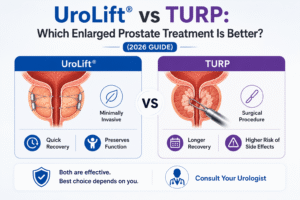
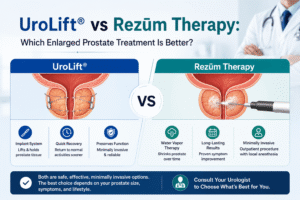
UroLift is a minimally invasive procedure that uses tiny implants to hold enlarged prostate tissue away from the urethra.
Advantages
- No tissue removal
- Same-day procedure
- Fast recovery
- Usually preserves erectile function
- Usually preserves ejaculation
- Minimal downtime
It is often recommended for men seeking symptom relief while maintaining sexual function.
4. Rezūm™ Water Vapor Therapy
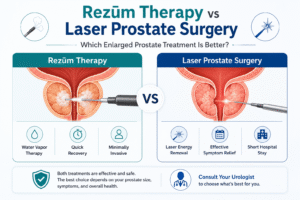
Rezūm uses targeted water vapor (steam) to shrink enlarged prostate tissue.
Benefits
- Minimally invasive
- No surgical incision
- Durable symptom relief
- Short hospital stay
- Suitable for many men with moderate BPH
Improvement typically develops gradually as the body absorbs treated tissue.
5. iTind Procedure
The iTind device temporarily reshapes the prostate opening to improve urine flow.
Benefits
- No permanent implant
- No tissue removal
- Short recovery
- Preserves sexual function in appropriate patients
- Outpatient procedure
6. Prostatic Artery Embolisation (PAE)
PAE is performed by an interventional radiologist and reduces blood supply to the prostate, allowing it to shrink over time.
Advantages
- No surgical incision
- Local anesthesia
- Suitable for selected patients with larger prostates
- Short recovery
- Minimal bleeding
7. Laser Prostate Surgery
Laser surgery removes excess prostate tissue using high-energy laser technology.
It is commonly recommended for:
- Larger prostates
- Severe urinary obstruction
- Patients at higher risk of bleeding
9. Aquablation Therapy
Aquablation combines robotic precision with a high-pressure water jet to remove excess prostate tissue.
Benefits include:
- High accuracy
- Effective treatment for larger prostates
- Lower thermal injury
- Excellent urinary symptom improvement
How Does a Specialist Choose the Right Treatment?
There is no single treatment suitable for every patient.
The decision is based on several important factors:
- Age
- Symptom severity
- Prostate size
- Bladder function
- PSA level
- General health
- Existing medical conditions
- Recovery expectations
- Sexual health priorities
- Personal treatment preferences
A personalized treatment plan helps achieve the best possible outcomes while minimizing unnecessary interventions.
Why Experience Matters
Doctors who regularly manage enlarged prostate cases are often more familiar with:
- Advanced diagnostic techniques
- Modern minimally invasive procedures
- Patient selection for different treatments
- Managing complications
- Long-term follow-up
Experience also supports better decision-making when comparing multiple treatment options.
Key Takeaways
- Accurate diagnosis is the foundation of effective BPH treatment.
- Experienced urologists use a combination of clinical assessment, laboratory tests, imaging, and functional studies to determine the most appropriate treatment.
- Modern treatment options range from lifestyle changes and medications to minimally invasive procedures and surgery.
- Individualized care based on prostate size, symptoms, and patient goals is essential for achieving the best outcome
How to Choose the Best Doctor for Enlarged Prostate Treatment in India
Choosing the right doctor is about more than finding a specialist with impressive qualifications. The best urologist is someone who carefully evaluates your condition, explains your treatment options, and recommends a personalized approach based on your symptoms, prostate size, lifestyle, and long-term health goals.
Here are the most important factors to consider before making your decision.
1. Choose a Qualified Urologist
A urologist is the medical specialist trained to diagnose and treat conditions affecting the urinary tract and male reproductive system, including Benign Prostatic Hyperplasia (BPH).
Unlike general physicians, urologists have specialized expertise in:
- Enlarged prostate (BPH)
- Urinary retention
- Bladder disorders
- Kidney stones
- Prostate cancer
- Male urinary health
- Minimally invasive prostate procedures
If your urinary symptoms persist despite medication, consulting a urologist is usually the next step.
2. Look for Experience in BPH Treatment
Experience matters because every enlarged prostate is different.
An experienced BPH specialist understands:
- Which patients respond well to medications
- When minimally invasive treatment is appropriate
- When surgery is necessary
- How to manage complex cases
- How to minimize treatment-related complications
Doctors who routinely treat enlarged prostate patients are generally more familiar with modern techniques and individualized treatment planning.
3. Choose a Doctor Who Offers Multiple Treatment Options
One of the most important signs of an experienced BPH specialist is the ability to offer a range of treatment options rather than recommending a single approach for every patient.
Depending on your condition, treatment may include:
- Lifestyle modifications
- Medication
- UroLift®
- Rezūm™ Water Vapor Therapy
- iTind
- Prostatic Artery Embolisation (PAE)
- Laser Prostate Surgery
- TURP
- Aquablation Therapy
A doctor who can discuss the advantages and limitations of each option is better positioned to recommend the most appropriate treatment for your individual needs.
4. Does the Doctor Use Modern Diagnostic Technology?
Accurate diagnosis is essential before selecting any treatment.
Modern BPH specialists often use advanced diagnostic tools such as:
- Digital Rectal Examination (DRE)
- PSA Blood Test
- Ultrasound
- Uroflowmetry
- Post-Void Residual (PVR) Measurement
- Cystoscopy (when indicated)
- IPSS Symptom Assessment
These tests provide a comprehensive understanding of your condition and support evidence-based treatment decisions.
5. Does the Doctor Explain Every Treatment Option?
The best doctors encourage patients to participate in treatment decisions.
Your urologist should clearly explain:
- Your diagnosis
- Why symptoms are occurring
- Available treatment options
- Expected benefits
- Possible risks
- Recovery time
- Long-term outcomes
Understanding your options allows you to make an informed decision rather than feeling pressured into a particular procedure.
6. Is the Treatment Plan Personalized?
Every patient’s situation is unique.
A personalized treatment plan considers:
- Age
- Symptom severity
- Prostate size
- Overall health
- Medical history
- Current medications
- Sexual health concerns
- Lifestyle
- Personal preferences
The best treatment is the one that aligns with your clinical condition and personal priorities.
7. Does the Doctor Prioritize Quality of Life?
Successful BPH treatment is about more than improving urine flow.
An experienced specialist also considers:
- Sleep quality
- Daily activities
- Work performance
- Travel comfort
- Emotional well-being
- Sexual health
- Long-term bladder function
Improving overall quality of life is one of the primary goals of modern BPH management.
Questions to Ask During Your Consultation
Before choosing a treatment, consider asking your doctor the following questions:
About Your Diagnosis
- What is causing my urinary symptoms?
- How enlarged is my prostate?
- Are there any complications?
- Do I need additional tests?
About Treatment
- Which treatment do you recommend?
- Why is this treatment suitable for me?
- Are there non-surgical options?
- Will medication alone be enough?
- What happens if I delay treatment?
About Recovery
- How long is recovery?
- Will I need a catheter?
- When can I return to work?
- Are there activity restrictions?
About Sexual Function
Many men hesitate to ask these questions, but they are important.
You may want to discuss:
- Will treatment affect erections?
- Will ejaculation change?
- Which treatment best preserves sexual function?
- Are these changes temporary or permanent?
Should You Get a Second Opinion?
Seeking a second opinion can be helpful in certain situations, especially if:
- Surgery has been recommended.
- You are unsure about the diagnosis.
- Multiple treatment options are available.
- Your symptoms persist despite treatment.
- You would like to understand all available alternatives.
A second opinion often provides additional clarity and helps patients make more informed decisions.
Common Mistakes Patients Make
Avoiding these common mistakes can improve treatment outcomes.
Ignoring Symptoms
Many men delay seeking medical care, assuming urinary problems are a normal part of aging.
Early diagnosis allows more treatment options and may help prevent complications.
Self-Medicating
Taking medications without proper evaluation may mask symptoms while delaying appropriate treatment.
Choosing Treatment Based Only on Cost
The least expensive treatment is not always the most appropriate.
Treatment decisions should also consider:
- Effectiveness
- Recovery
- Long-term outcomes
- Quality of life
Waiting Until Urinary Retention Develops
Complete urinary retention is a medical emergency.
Seeking treatment before symptoms become severe often results in better outcomes.
Not Asking Questions
Patients who understand their diagnosis and treatment options are better prepared to participate in their care and make confident decisions.
What Results Can You Expect After Treatment?
Expected outcomes vary depending on the chosen treatment and individual factors.
Many patients experience improvements such as:
- Stronger urine flow
- Reduced urinary frequency
- Less urgency
- Better bladder emptying
- Fewer nighttime bathroom visits
- Improved sleep quality
- Greater confidence during travel and social activities
- Better overall quality of life
Recovery timelines differ between medications, minimally invasive procedures, and surgery, so your doctor will provide personalized guidance.
Why Early Treatment Matters
Many men wait months or even years before consulting a specialist.
Unfortunately, delaying treatment can increase the risk of:
- Urinary retention
- Bladder damage
- Recurrent urinary tract infections
- Bladder stones
- Kidney damage
- Reduced bladder function
Early diagnosis often provides more treatment choices and may reduce the need for more invasive procedures.
Expert Advice
If urinary symptoms are affecting your daily life, seeking timely evaluation from a qualified urologist is an important first step.
The best doctor is not simply the one who performs the most procedures, but the one who carefully evaluates your condition, discusses all appropriate treatment options, and develops a personalized treatment plan based on your health, preferences, and long-term goals.
Modern BPH management focuses on improving quality of life while preserving bladder function and, whenever appropriate, maintaining sexual function.
Key Takeaways
- Choose a qualified urologist with experience in managing enlarged prostate (BPH).
- Look for a specialist who offers a full range of treatment options, including minimally invasive procedures and surgery.
- A personalized treatment plan should consider your symptoms, prostate size, health status, and personal priorities.
- Asking questions and understanding your options helps you make informed decisions.
- Early evaluation can prevent complications and improve long-term outcomes.
Frequently Asked Questions (FAQs)
1. Which doctor should I consult for an enlarged prostate?
A urologist is the specialist who diagnoses and treats enlarged prostate (Benign Prostatic Hyperplasia or BPH). Urologists are trained to evaluate urinary symptoms, perform specialized tests, and recommend treatments ranging from lifestyle changes and medications to minimally invasive procedures and surgery.
2. When should I see a doctor for enlarged prostate symptoms?
You should consult a doctor if you experience:
- Frequent urination
- Waking up multiple times at night to urinate
- Weak urine stream
- Difficulty starting urination
- Feeling that your bladder is not completely empty
- Sudden urgency to urinate
- Blood in urine
- Pain while urinating
- Inability to urinate
Early evaluation can help prevent complications and expand your treatment options.
3. Can an enlarged prostate be treated without surgery?
Yes. Many men can be managed with lifestyle modifications, medications, or minimally invasive procedures such as UroLift®, Rezūm™, iTind, or Prostatic Artery Embolisation (PAE). The most appropriate treatment depends on your symptoms, prostate size, and overall health.
4. How does a urologist diagnose BPH?
Diagnosis usually involves:
- Medical history
- Physical examination
- Digital Rectal Examination (DRE)
- PSA blood test (when appropriate)
- Urine analysis
- Ultrasound
- Uroflowmetry
- Post-Void Residual (PVR) measurement
- IPSS symptom questionnaire
Additional tests such as cystoscopy may be recommended in selected cases.
5. What is the best treatment for an enlarged prostate?
There is no single “best” treatment for everyone. Depending on your condition, your doctor may recommend:
- Lifestyle changes
- Medications
- UroLift®
- Rezūm™
- iTind
- PAE
- Laser Prostate Surgery
- TURP
- Aquablation Therapy
The ideal treatment is based on your individual needs and clinical findings.
6. Is surgery always necessary for BPH?
No. Surgery is generally considered when symptoms are severe, complications develop, or other treatments have not provided adequate relief. Many patients achieve good results with medications or minimally invasive procedures.
7. Can BPH come back after treatment?
The long-term outcome depends on the treatment used, prostate size, and individual factors. Regular follow-up with your urologist helps monitor your condition and address any recurrence of symptoms if needed.
8. Does enlarged prostate increase the risk of prostate cancer?
No. Benign Prostatic Hyperplasia (BPH) and prostate cancer are different conditions. However, they can occur in the same person. If indicated, your doctor may recommend PSA testing and other evaluations to assess overall prostate health.
9. Will BPH treatment affect sexual function?
The impact on sexual function varies depending on the treatment. Some minimally invasive procedures are designed to preserve erectile and ejaculatory function in appropriate patients. Your doctor will discuss the potential benefits and risks of each option.
10. How long does recovery take after enlarged prostate treatment?
Recovery depends on the treatment performed. Some minimally invasive procedures allow patients to resume normal activities within a few days, while surgical treatments may require a longer recovery period. Your urologist will provide personalized guidance.
11. Can lifestyle changes improve enlarged prostate symptoms?
Yes. Healthy habits such as reducing caffeine and alcohol intake, maintaining a healthy weight, exercising regularly, managing fluid intake before bedtime, and avoiding constipation may help improve mild urinary symptoms.
12. How do I choose the best doctor for enlarged prostate treatment?
Choose a qualified urologist who:
- Has experience treating BPH.
- Offers a range of treatment options.
- Uses evidence-based diagnostic methods.
- Explains all available treatments clearly.
- Develops a personalized treatment plan based on your symptoms, health, and preferences.
Conclusion
Choosing the best doctor for enlarged prostate treatment in India is an important step toward improving your urinary health and overall quality of life. While BPH is a common condition among aging men, timely evaluation by an experienced urologist can help identify the underlying cause of your symptoms and guide you toward the most appropriate treatment.
Modern BPH management includes far more than traditional surgery. Depending on your individual needs, treatment may involve lifestyle modifications, medications, or minimally invasive procedures such as UroLift®, Rezūm™, iTind, Prostatic Artery Embolisation (PAE), Laser Prostate Surgery, TURP, or Aquablation Therapy. The right treatment is the one that matches your prostate size, symptom severity, overall health, and personal goals.
If urinary symptoms are affecting your sleep, work, travel, or daily activities, don’t ignore them. Early consultation with a qualified urologist can improve outcomes, reduce the risk of complications, and help you regain confidence in your daily life.
Looking for Expert Enlarged Prostate Treatment?
If you are experiencing symptoms of an enlarged prostate, consult an experienced urologist for a comprehensive evaluation. A personalized treatment plan based on your symptoms, prostate size, and overall health can help you find the most suitable solution and improve your quality of life.