
BPH Symptoms: Early Signs and Warning Symptoms of an Enlarged Prostate
Advanced, Minimally Invasive Solutions for Prostate Health
Don't Ignore the Early Symptoms of an Enlarged Prostate
Benign Prostatic Hyperplasia (BPH), commonly known as an enlarged prostate, is one of the most common urological conditions affecting men over the age of 50. Although BPH is a non-cancerous condition, its symptoms can gradually interfere with daily activities, sleep, work, and overall quality of life if left untreated.
The early symptoms of BPH often develop slowly, making them easy to ignore. Many men assume that frequent urination or a weak urine stream is simply a part of ageing. However, these symptoms may indicate an enlarged prostate that requires timely medical evaluation.
Recognizing BPH symptoms early allows patients to explore advanced treatment options such as UroLift®, Rezūm™, iTind®, medication, or other minimally invasive procedures, helping prevent complications while preserving urinary and sexual function.
If you are experiencing persistent urinary symptoms, consult Dr. Priyaddarshi Ranjan for a comprehensive evaluation and personalized treatment plan.
What Are BPH Symptoms?
Benign Prostatic Hyperplasia (BPH) occurs when the prostate gland enlarges and begins to compress the urethra—the tube that carries urine from the bladder out of the body. This narrowing restricts urine flow and creates a range of urinary symptoms known as Lower Urinary Tract Symptoms (LUTS).
The severity of BPH symptoms varies from person to person. Some men experience only mild discomfort, while others develop significant urinary difficulties that affect their quality of life. Symptoms generally worsen gradually over time if appropriate treatment is not initiated.
Common symptoms of an enlarged prostate include:
- Frequent urination, especially during the day
- Waking up multiple times at night to urinate (Nocturia)
- Difficulty starting urination
- Weak or interrupted urine stream
- Straining while urinating
- Feeling that the bladder is not completely empty
- Sudden and urgent need to urinate
- Dribbling of urine after finishing
- Urinary retention in severe cases
These symptoms are not always caused by BPH alone. Similar symptoms may also occur due to urinary tract infections, bladder disorders, neurological conditions, or prostate cancer. Therefore, a proper medical evaluation is essential to determine the exact cause.
Why Do BPH Symptoms Occur?
The prostate gland surrounds the urethra just below the bladder. As men age, hormonal changes can cause the prostate to enlarge gradually.
When the enlarged prostate presses against the urethra, it restricts the normal flow of urine. At the same time, the bladder muscles must work harder to push urine through the narrowed passage. Over time, this increased strain can weaken the bladder and lead to worsening urinary symptoms.
Without appropriate treatment, progressive prostate enlargement may increase the risk of:
- Acute urinary retention
- Recurrent urinary tract infections
- Bladder stones
- Blood in the urine
- Kidney damage in severe untreated cases
Early diagnosis and timely treatment can significantly reduce these risks while improving urinary function and overall quality of life.
Quick Symptom Checklist
You may have BPH if you experience one or more of the following:
✅ Frequent urination (more than 8 times a day)
✅ Waking up two or more times at night to urinate
✅ Weak urine stream
✅ Difficulty starting urination
✅ Stopping and starting during urination
✅ Feeling that your bladder never empties completely
✅ Sudden urge to urinate
✅ Dribbling after urination
If these symptoms persist or become bothersome, consult a urologist for a proper diagnosis.
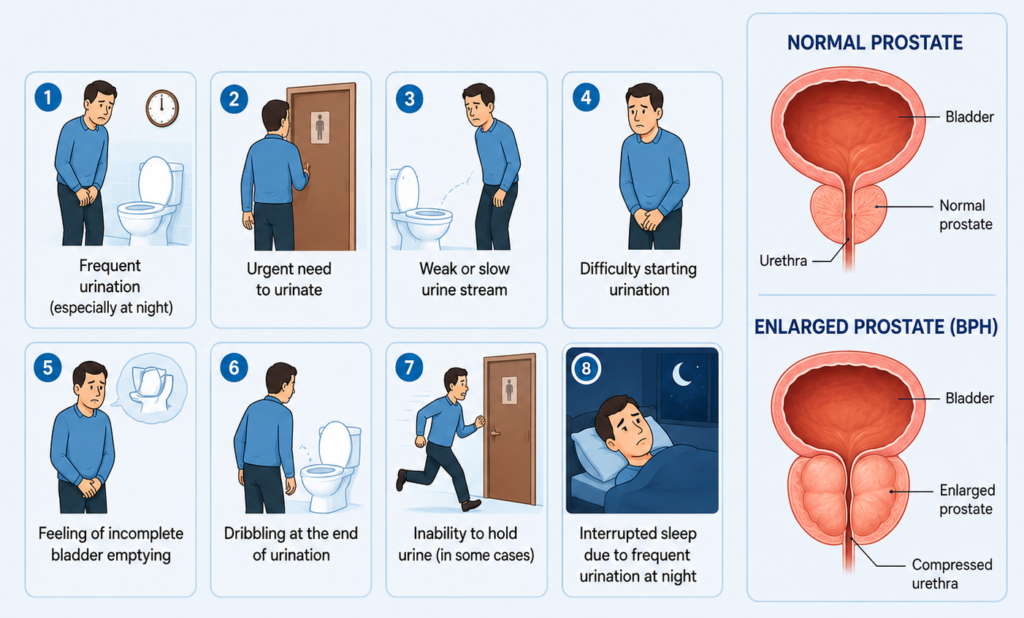
Early Symptoms of an Enlarged Prostate
One of the biggest challenges with Benign Prostatic Hyperplasia (BPH) is that its symptoms usually develop slowly over time. In the early stages, many men ignore these changes because they believe they are a normal part of ageing. However, recognizing the early symptoms of an enlarged prostate and seeking timely medical advice can help prevent complications and improve long-term urinary health.
Early symptoms often begin with mild urinary changes that gradually become more noticeable. These symptoms may come and go initially, but they usually worsen as the prostate continues to enlarge.
The most common early symptoms include:
- Frequent urination, especially during the day
- Waking up at night to urinate (Nocturia)
- Difficulty starting urination
- Weak urine stream
- A feeling of incomplete bladder emptying
- Sudden urge to urinate
- Dribbling after urination
If these symptoms persist for more than a few weeks or begin affecting your sleep or daily routine, it is advisable to consult a urologist for evaluation.
10 Common BPH Symptoms Explained
1. Frequent Urination
Frequent urination is one of the earliest and most common symptoms of BPH. As the enlarged prostate presses against the urethra, the bladder becomes more sensitive and signals the need to urinate more often, even when it is not completely full.
You may notice:
- Visiting the bathroom more than 8 times a day
- Frequent interruptions during work or travel
- Difficulty sitting through long meetings or journeys.
2. Waking Up at Night to Urinate (Nocturia)
Nocturia refers to waking up one or more times during the night to urinate. This symptom is particularly troublesome because it disrupts sleep and can lead to fatigue, reduced concentration, and poor quality of life.
If you regularly wake up two or more times every night to urinate, it may indicate an enlarged prostate and should be evaluated by a specialist.
3. Weak Urine Stream
A weak urine stream occurs because the enlarged prostate narrows the urethra, reducing the force of urine flow.
Common signs include:
- Slow urine flow
- Reduced pressure while urinating
- Longer time to empty the bladder
4. Difficulty Starting Urination
Many men with BPH experience hesitation before urine begins to flow. Even when the bladder is full, it may take several seconds before urination starts.
This symptom becomes more noticeable as prostate enlargement progresses.
5. Feeling That the Bladder Is Not Completely Empty
After urinating, many men still feel as though some urine remains in the bladder. This sensation occurs because bladder emptying becomes less efficient due to obstruction caused by the enlarged prostate.
Persistent incomplete emptying increases the risk of urinary tract infections and bladder stones.
6. Sudden Urge to Urinate
BPH can make the bladder overly sensitive, leading to a sudden and urgent need to urinate. Some men may find it difficult to reach the bathroom in time, particularly when travelling or away from home.
7. Interrupted Urine Flow
Instead of a continuous stream, urine flow may stop and start multiple times during urination. This symptom usually indicates increasing obstruction of the urethra.
8. Dribbling After Urination
Many men notice urine dripping after they believe they have finished urinating. This occurs because urine remains trapped in the urethra due to incomplete bladder emptying.
9. Straining While Urinating
As the bladder works harder to overcome the blockage caused by an enlarged prostate, some men find themselves pushing or straining to pass urine. Continuous straining may weaken bladder muscles over time.
10. Acute Urinary Retention
Acute urinary retention is the most severe symptom of BPH. It occurs when a person is suddenly unable to pass urine despite having a full bladder.
This is a medical emergency and requires immediate treatment.
Seek urgent medical attention if you experience:
- Severe lower abdominal pain
- Complete inability to urinate
- Swelling in the lower abdomen
| Symptom | Mild | Moderate | Severe |
|---|---|---|---|
| Frequent urination | Occasionally | Daily | Every hour |
| Night urination | Once | 2–3 times | 4+ times |
| Weak urine stream | Mild | Noticeable | Very weak |
| Urgency | Occasional | Frequent | Difficult to control |
| Bladder emptying | Slight sensation | Regular incomplete emptying | Significant urine retention |
BPH Symptoms by Age
In Your 40s
Some men may begin noticing mild urinary changes, particularly if they have a family history of prostate enlargement.
In Your 50s
Symptoms such as frequent urination, nocturia, and reduced urine flow become more common.
In Your 60s
Many men experience worsening urinary symptoms, including urgency, incomplete bladder emptying, and interrupted urine flow.
Age 70 and Above
Without treatment, symptoms may become severe and increase the risk of urinary retention, bladder infections, and kidney complications.
What Causes BPH Symptoms?
Benign Prostatic Hyperplasia (BPH) symptoms develop because the prostate gland gradually enlarges with age. The prostate surrounds the urethra, the tube that carries urine from the bladder. As the prostate grows, it compresses the urethra, making it more difficult for urine to pass normally.
Initially, the bladder muscles compensate by working harder to push urine through the narrowed urethra. Over time, the bladder becomes thicker, weaker, and less efficient, resulting in worsening urinary symptoms.
Although the exact cause of BPH is not fully understood, hormonal changes associated with ageing are considered the primary reason for prostate enlargement.
Risk Factors for Developing BPH
Several factors increase the likelihood of developing Benign Prostatic Hyperplasia.
Age
Age is the biggest risk factor. BPH is uncommon before the age of 40, but its prevalence increases significantly after 50.
Approximate prevalence:
- 40–49 years: Around 20%
- 50–59 years: Around 40%
- 60–69 years: Around 60%
- Above 70 years: More than 80%
Family History
Men whose father or brother has BPH are at a higher risk of developing enlarged prostate symptoms.
Obesity
Excess body weight has been linked to an increased risk of prostate enlargement and worsening urinary symptoms.
Maintaining a healthy weight through diet and regular exercise may help reduce symptom progression.
Diabetes
Men with diabetes are more likely to develop urinary symptoms because high blood sugar levels can affect bladder function and nerve health.
Lack of Physical Activity
A sedentary lifestyle may contribute to obesity, poor metabolic health, and worsening BPH symptoms.
Regular physical activity supports urinary and prostate health.
Hormonal Changes
Age-related changes in testosterone and other hormones are believed to contribute to gradual enlargement of the prostate gland.
Can BPH Symptoms Get Worse Over Time?
Yes.
BPH is usually a progressive condition, which means symptoms may gradually worsen if left untreated.
Early-stage symptoms may include:
- Mild increase in urinary frequency
- Occasional night-time urination
- Slightly weaker urine stream
As the condition progresses, symptoms may become more severe, including:
- Difficulty emptying the bladder
- Frequent urgency
- Interrupted urine flow
- Recurrent urinary tract infections
- Acute urinary retention
Fortunately, modern BPH treatments can effectively relieve symptoms and slow disease progression.
When Should You See a Doctor?
Many men delay seeking treatment because they believe urinary symptoms are a normal part of ageing. However, persistent urinary problems should never be ignored.
Consult a urologist if you experience:
- Frequent urination affecting your daily routine
- Waking up two or more times every night to urinate
- Weak urine stream
- Difficulty starting urination
- Feeling that your bladder never empties completely
- Blood in the urine
- Burning sensation during urination
- Sudden inability to urinate
Early diagnosis allows your doctor to recommend the most appropriate treatment before complications develop.
Possible Complications of Untreated BPH
Ignoring enlarged prostate symptoms can increase the risk of serious health problems.
Possible complications include:
Urinary Retention
The enlarged prostate may completely block urine flow, making it impossible to urinate.
Recurrent Urinary Tract Infections
Incomplete bladder emptying allows bacteria to grow, increasing the risk of repeated infections.
Bladder Stones
Urine remaining in the bladder for long periods may lead to stone formation.
Bladder Damage
Overworked bladder muscles gradually lose their ability to contract properly.
Kidney Damage
Severe untreated urinary obstruction may eventually affect kidney function.
Although this complication is uncommon, it highlights the importance of timely medical evaluation.
How Are BPH Symptoms Diagnosed?
If you experience symptoms suggestive of an enlarged prostate, your urologist may recommend several tests to determine the cause and severity.
Common diagnostic tests include:
- Detailed medical history
- Physical examination
- Digital Rectal Examination (DRE)
- Urine analysis
- PSA (Prostate-Specific Antigen) blood test
- Ultrasound of the prostate and bladder
- Uroflowmetry (urine flow test)
- Post-Void Residual (PVR) urine measurement
- Cystoscopy (when indicated)
These investigations help differentiate BPH from prostate cancer, urinary tract infections, bladder disorders, and other conditions that may cause similar symptoms.
Can BPH Symptoms Be Prevented?
Although BPH cannot always be prevented, healthy lifestyle habits may help reduce symptom severity and support better prostate health.
Recommended lifestyle measures include:
- Stay physically active.
- Maintain a healthy body weight.
- Limit caffeine and alcohol intake, especially in the evening.
- Drink adequate water during the day but reduce fluids before bedtime.
- Eat a balanced diet rich in fruits, vegetables, whole grains, and healthy fats.
- Schedule regular prostate check-ups after the age of 50 or earlier if you have a family history of prostate disease.
These measures complement medical treatment but should not replace professional evaluation if symptoms persist.
Expert Advice
Any persistent urinary symptom should be evaluated by a qualified urologist. Early diagnosis can help identify the underlying cause and determine whether lifestyle changes, medication, or minimally invasive treatments such as UroLift®, Rezūm™, or iTind® are appropriate.
BPH Symptoms vs Prostate Cancer Symptoms
One of the biggest concerns among men experiencing urinary problems is whether these symptoms indicate Benign Prostatic Hyperplasia (BPH) or prostate cancer. While both conditions can cause similar urinary symptoms, they are different medical conditions.
BPH is a non-cancerous enlargement of the prostate gland, whereas prostate cancer is the uncontrolled growth of abnormal cells in the prostate. Having BPH does not mean you have prostate cancer, and BPH does not turn into prostate cancer.
However, because both conditions may cause similar symptoms, it is important to consult a urologist for an accurate diagnosis.
Symptoms Common to Both Conditions
- Frequent urination
- Weak urine stream
- Difficulty starting urination
- Interrupted urine flow
- Feeling of incomplete bladder emptying
- Waking up multiple times at night to urinate
Symptoms That May Need Further Investigation
While these symptoms do not always mean cancer, they should never be ignored:
- Blood in urine
- Blood in semen
- Unexplained weight loss
- Persistent bone pain
- Severe lower back pain
- Persistent pelvic discomfort
If you experience any of these symptoms, seek medical evaluation as soon as possible.
Comparison Table
| Feature | BPH | Prostate Cancer |
|---|---|---|
| Nature | Non-cancerous enlargement | Cancerous growth |
| Common after age | 50+ years | Usually 55+ years |
| Urinary symptoms | Very common | May occur |
| Blood in urine | Rare | Possible |
| Bone pain | No | Possible in advanced cases |
| PSA Test | May be mildly elevated | Can be elevated |
| Treatment | Medication or minimally invasive procedures | Depends on cancer stage |
BPH Symptoms vs Urinary Tract Infection (UTI)
Urinary Tract Infections (UTIs) can also produce symptoms similar to an enlarged prostate. However, UTIs usually develop suddenly and are often associated with infection.
BPH Symptoms
- Slow progression
- Weak urine stream
- Frequent urination
- Night urination
- Difficulty emptying bladder
UTI Symptoms
- Burning while urinating
- Fever
- Chills
- Cloudy urine
- Foul-smelling urine
- Pain during urination
If fever or severe pain accompanies urinary symptoms, medical evaluation is essential because these symptoms are more suggestive of infection than BPH.
BPH Symptoms vs Overactive Bladder
Many patients confuse Overactive Bladder (OAB) with BPH because both conditions can cause urgency and frequent urination.
Overactive Bladder
- Sudden urge to urinate
- Frequent daytime urination
- Urge incontinence
- No obstruction of urine flow
BPH
- Weak urine stream
- Difficulty starting urination
- Interrupted urine flow
- Bladder outlet obstruction due to enlarged prostate
A urologist can differentiate between these conditions using clinical evaluation and appropriate investigations.
Symptoms That Require Immediate Medical Attention
Although most BPH symptoms develop gradually, some situations require urgent medical care.
Seek immediate medical attention if you experience:
- Complete inability to urinate
- Severe lower abdominal pain
- High fever with urinary symptoms
- Heavy blood in the urine
- Severe back pain with urinary retention
- Confusion or inability to pass urine
These symptoms may indicate acute urinary retention, severe infection, or another serious medical condition.
How Are BPH Symptoms Evaluated?
Your urologist will perform a comprehensive evaluation to determine the severity of your symptoms and recommend the most appropriate treatment.
The evaluation may include:
- Medical history
- International Prostate Symptom Score (IPSS)
- Physical examination
- Digital Rectal Examination (DRE)
- Urine routine examination
- PSA blood test
- Ultrasound
- Uroflowmetry
- Post-Void Residual (PVR) measurement
These tests help determine whether symptoms are due to BPH or another condition.
Treatment Based on Symptom Severity?
Treatment for BPH is individualized and depends on symptom severity, prostate size, overall health, and patient preferences.
Mild Symptoms
Patients with mild symptoms may benefit from:
- Lifestyle modifications
- Fluid management
- Reducing caffeine and alcohol
- Regular follow-up
Moderate Symptoms
Moderate symptoms may require:
- Prescription medications
- Combination therapy
- Regular monitoring
Moderate to Severe Symptoms
Patients with bothersome symptoms may be candidates for advanced minimally invasive procedures such as:
- UroLift®
- Rezūm™ Water Vapor Therapy
- iTind®
- Laser prostate surgery (in selected cases)
The choice of treatment depends on clinical evaluation and should be discussed with a qualified urologist.
Expert Opinion
Early evaluation is the key to successful management of BPH. Many men wait until symptoms become severe, but timely diagnosis allows access to modern treatment options that may improve urinary symptoms while minimizing recovery time.
Frequently Asked Questions (FAQs)
1. What are the first symptoms of BPH?
The earliest symptoms of Benign Prostatic Hyperplasia (BPH) usually include frequent urination, especially at night (nocturia), a weak urine stream, difficulty starting urination, and the feeling that the bladder is not completely empty. These symptoms often develop gradually and should not be ignored.
2. Can BPH symptoms come and go?
Yes. Mild BPH symptoms may come and go in the early stages. However, the condition is generally progressive, and symptoms often become more frequent or severe over time if left untreated.
3. Is frequent urination always caused by BPH?
No. Frequent urination can also be caused by urinary tract infections, diabetes, overactive bladder, kidney conditions, or certain medications. A proper evaluation by a urologist is necessary to determine the exact cause.
4. Does BPH always require surgery?
No. Many men with mild to moderate BPH symptoms can be treated with lifestyle changes, medication, or minimally invasive procedures such as UroLift®, Rezūm™, and iTind®. Surgery is generally reserved for selected cases where other treatments are not suitable or symptoms are severe.
5. Can BPH symptoms be treated without surgery?
Yes. Depending on the severity of the condition, BPH symptoms may be managed with medications, lifestyle modifications, and minimally invasive procedures. Your urologist will recommend the most appropriate treatment based on your symptoms and prostate size.
6. At what age do BPH symptoms usually begin?
BPH is uncommon before the age of 40. Symptoms most commonly begin after the age of 50 and become more prevalent as men grow older.
7. Can BPH affect sleep?
Yes. Frequent night-time urination (Nocturia) is one of the most common symptoms of BPH and can significantly disrupt sleep, leading to daytime fatigue and reduced quality of life.
8. Is BPH a type of prostate cancer?
No. BPH is a non-cancerous enlargement of the prostate gland. It does not develop into prostate cancer, although both conditions can occur in the same individual.
9. When should I consult a doctor for BPH symptoms?
You should consult a urologist if urinary symptoms become frequent, interfere with your daily activities, disturb your sleep, or if you experience blood in the urine, severe pain, or difficulty passing urine.
10. What is the best treatment for BPH symptoms?
The best treatment depends on the severity of symptoms, prostate size, age, and overall health. Treatment options range from lifestyle changes and medications to advanced minimally invasive procedures such as UroLift®, Rezūm™, and iTind®.
When Should You Seek Immediate Medical Care?
Seek emergency medical attention if you experience:
- Complete inability to pass urine
- Severe lower abdominal pain
- Heavy blood in the urine
- High fever with urinary symptoms
- Severe pain in the back or pelvic region
- Sudden swelling of the lower abdomen
These symptoms require prompt evaluation and should not be delayed.
Conclusion
Benign Prostatic Hyperplasia is a common condition that affects millions of men worldwide. Although it is not cancerous, untreated BPH can significantly impact urinary function and overall quality of life.
Recognizing the early symptoms of an enlarged prostate and seeking timely medical advice can help prevent complications and allow access to modern treatment options. Whether your symptoms are mild or severe, early diagnosis plays an important role in selecting the most appropriate treatment.
If you are experiencing frequent urination, weak urine flow, or other urinary symptoms, consult an experienced urologist to receive an accurate diagnosis and a personalized treatment plan.
A New Era in Healthcare
- BPH Causes
- BPH Diagnosis
- BPH Treatment
- UroLift Treatment
- Rezum Therapy
- iTind Treatment
- BPH Diet
- BPH Exercise
- BPH Recovery
- Contact Dr. Priyaddarshi Ranjan
Practicing At
Prostate Excellence centre, Meliora Institute of kidney, Urology and Men’s health, SCO-152, Ground Floor, Sector 24 D, Chandigarh
Experiencing Symptoms of an Enlarged Prostate?
Don’t ignore persistent urinary symptoms.
Consult Dr. Priyaddarshi Ranjan, an experienced urologist specializing in advanced BPH management and minimally invasive treatment options.