If you’ve been diagnosed with an enlarged prostate, one of the first questions that probably comes to mind is, “How much does enlarged prostate treatment cost in India?“ While cost is an important factor, choosing the right treatment should involve much more than comparing prices. The most suitable option depends on your prostate size, the severity of your symptoms, your overall health, and the treatment recommended by an experienced urologist.
Benign Prostatic Hyperplasia (BPH) is a common condition that affects millions of men, especially after the age of 50. Symptoms such as frequent urination, weak urine flow, difficulty emptying the bladder, and waking up multiple times at night can significantly impact quality of life. Fortunately, modern medicine offers a wide range of treatment options—from lifestyle modifications and medications to minimally invasive procedures and advanced surgical techniques.
Because there are several effective treatments available, the overall cost can vary depending on factors such as the procedure chosen, the hospital, the technology used, the city, and the patient’s medical condition. Understanding these factors helps patients make informed decisions rather than focusing only on the initial treatment expense.
In this guide, you’ll learn what influences enlarged prostate treatment costs in India, how different treatment options compare, and what to consider before making a treatment decision.
What is the cost of enlarged prostate treatment in India?
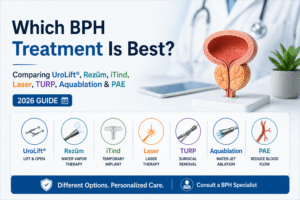
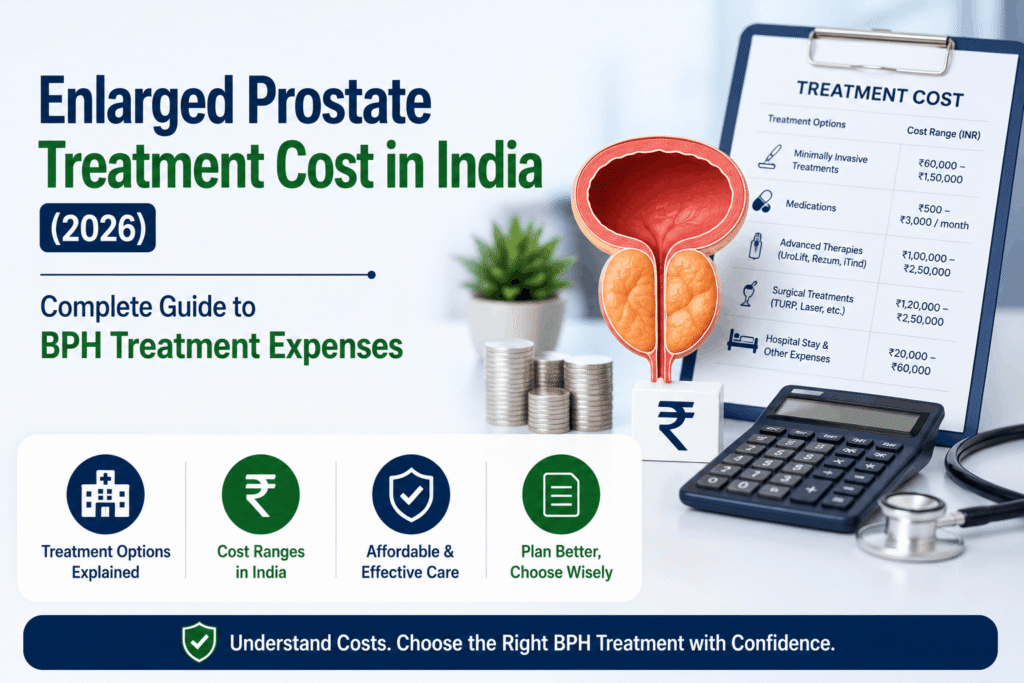
The cost of enlarged prostate treatment in India varies depending on the type of treatment, hospital infrastructure, surgeon’s experience, city, prostate size, hospital stay, and additional diagnostic tests. Treatment options may include lifestyle management, medications, minimally invasive procedures such as UroLift®, Rezūm™, iTind, or Prostatic Artery Embolisation (PAE), as well as surgical procedures like Laser Prostate Surgery, TURP, and Aquablation Therapy. Your urologist can recommend the most appropriate treatment after evaluating your condition.
What Is Benign Prostatic Hyperplasia (BPH)?
Benign Prostatic Hyperplasia (BPH), commonly known as an enlarged prostate, is a non-cancerous increase in the size of the prostate gland. As the prostate enlarges, it may compress the urethra, making it difficult for urine to flow freely.
BPH becomes increasingly common with age and can cause symptoms that interfere with daily activities, sleep, travel, and overall quality of life.
Common symptoms include:
- Frequent urination
- Urinating multiple times at night (Nocturia)
- Weak urine stream
- Difficulty starting urination
- Dribbling after urination
- Feeling that the bladder does not empty completely
- Sudden urge to urinate
- Interrupted urine flow
- Straining while urinating
- Urinary retention in severe cases
Although BPH is not cancer, untreated symptoms may lead to bladder damage, urinary tract infections, bladder stones, or kidney complications in some patients.
When Should You Consider Treatment?
Not every man diagnosed with BPH requires immediate surgery or a procedure. The decision to begin treatment depends on the severity of symptoms and how much they affect daily life.
Treatment is usually recommended when:
- Urinary symptoms become bothersome.
- Medications are no longer effective.
- Frequent nighttime urination affects sleep.
- The bladder is not emptying properly.
- Recurrent urinary tract infections occur.
- Blood appears in the urine.
- Bladder stones develop.
- Urinary retention occurs.
- Kidney function is affected due to bladder outlet obstruction.
Seeking medical advice early often provides more treatment choices and may help avoid complications.
Why Does Enlarged Prostate Treatment Cost Vary?
There is no single cost for enlarged prostate treatment because every patient’s condition is different. Several medical and non-medical factors influence the overall expense.
The most common factors include:
1. Type of Treatment
Different treatments involve different technologies, equipment, hospital resources, and recovery requirements.
Options may include:
- Lifestyle management
- Medications
- UroLift®
- Rezūm™ Water Vapor Therapy
- iTind
- Prostatic Artery Embolisation (PAE)
- Laser Prostate Surgery
- TURP
- Aquablation Therapy
Each treatment has its own clinical indications, recovery timeline, and associated costs.
2. Severity of Symptoms
Patients with mild symptoms may only require lifestyle modifications or medications, while those with severe obstruction or complications may need a minimally invasive procedure or surgery.
More advanced conditions often require additional investigations, longer procedures, and closer follow-up.
3. Prostate Size
The size of the prostate plays an important role in determining the most suitable treatment.
Some procedures are better suited for smaller prostates, while others may be recommended for larger glands.
The treatment selected based on prostate size can influence the overall cost.
4. Hospital Infrastructure
Costs may vary depending on the healthcare facility.
Factors include:
- Advanced operation theatres
- Modern diagnostic equipment
- Robotic or image-guided technology
- Intensive care facilities (if required)
- Private or shared hospital rooms
- Nursing care
- Post-operative monitoring
Hospitals with advanced infrastructure may offer access to newer technologies and specialized care.
5. Doctor’s Experience
The expertise of the treating urologist is another important consideration.
Experienced specialists often:
- Evaluate patients more comprehensively.
- Offer multiple treatment options.
- Perform advanced minimally invasive procedures.
- Manage complex cases.
- Provide individualized treatment planning.
While experience may influence consultation or procedural fees, it is also associated with informed decision-making and comprehensive patient care.
6. Diagnostic Tests
Before recommending treatment, your doctor may advise investigations such as:
- PSA blood test
- Urine analysis
- Ultrasound
- Uroflowmetry
- Post-Void Residual (PVR) measurement
- IPSS symptom assessment
- Cystoscopy (when indicated)
The number and type of investigations required vary from one patient to another.
7. Hospital Stay
Some BPH treatments are performed as day-care procedures, while others may require a short hospital stay depending on the treatment and the patient’s medical condition.
Hospital stay may include:
- Room charges
- Nursing care
- Medications
- Monitoring
- Follow-up assessments
8. Follow-Up Care
Treatment does not end after the procedure.
Follow-up appointments may include:
- Symptom evaluation
- Recovery monitoring
- Catheter removal (if required)
- Medication adjustments
- Repeat investigations
Long-term follow-up helps ensure the best possible outcome.
Does Treatment Cost Differ Between Cities?
Yes. Treatment expenses may vary depending on the city where care is provided.
Several factors contribute to regional differences, including:
- Hospital infrastructure
- Availability of advanced technology
- Specialist experience
- Local healthcare costs
- Type of healthcare facility
Major metropolitan areas often have access to a wider range of treatment options and specialized centers, while many regional hospitals also provide high-quality BPH care. The most appropriate choice depends on the patient’s medical needs rather than location alone.
Government Hospital vs Private Hospital
Both government and private hospitals play an important role in managing enlarged prostate.
Government Hospitals
Potential advantages:
- Lower treatment expenses
- Access to experienced specialists
- Suitable for many standard BPH procedures
Possible considerations:
- Longer waiting periods
- Limited availability of certain newer technologies in some centers
Private Hospitals
Potential advantages:
- Shorter waiting times
- Access to advanced minimally invasive technologies
- Personalized patient care
- Flexible scheduling
- Modern infrastructure
Possible considerations:
- Costs may vary depending on the hospital, treatment, and facilities used
The right choice depends on your medical condition, treatment goals, and personal preferences.
Should You Choose the Cheapest Treatment?
Not necessarily.
The least expensive treatment may not always provide the best long-term outcome for every patient.
Treatment decisions should consider:
- Symptom severity
- Prostate size
- Recovery expectations
- Long-term effectiveness
- Risk of complications
- Impact on quality of life
- Overall value rather than cost alone
An experienced urologist can help determine which option is most appropriate for your specific condition.
Key Takeaways
- Enlarged prostate treatment costs vary based on the type of treatment, hospital, diagnostic tests, and individual medical needs.
- There is no one-size-fits-all treatment or standard cost.
- Choosing treatment based solely on price may not provide the best long-term outcome.
- A comprehensive evaluation by an experienced urologist is essential before making a treatment decision.
- Understanding the factors that influence cost helps patients make informed healthcare choices.
Treatment-Wise Cost Factors for Enlarged Prostate (BPH)
Modern medicine offers several treatment options for Benign Prostatic Hyperplasia (BPH). However, each treatment differs in terms of technology, hospital stay, recovery time, suitability, and the factors that influence its overall cost.
Rather than focusing only on the price, it is important to understand the overall value each treatment offers based on your symptoms, prostate size, lifestyle, and long-term treatment goals.
1. Lifestyle Modifications
For men with mild urinary symptoms, doctors may initially recommend lifestyle changes before considering medication or procedures.
Suitable For
- Mild BPH symptoms
- Early-stage enlarged prostate
- Patients without complications
Common Recommendations
- Reduce caffeine intake
- Limit alcohol consumption
- Avoid excessive fluids before bedtime
- Maintain a healthy weight
- Exercise regularly
- Manage constipation
- Practice bladder training
Cost Factors
Lifestyle management generally involves consultation and follow-up visits rather than procedural expenses. Costs may vary depending on the number of consultations and any recommended diagnostic tests.
Advantages
- Non-invasive
- No recovery period
- Improves overall health
- Can delay progression in some patients
Limitations
Lifestyle changes alone may not provide sufficient relief for moderate or severe BPH.
2. Medication Therapy
Medication is often recommended when symptoms become more noticeable but surgery is not yet required.
Suitable For
- Mild to moderate symptoms
- Patients without significant obstruction
- Individuals preferring non-surgical treatment
Common Medicines
Alpha-Blockers
Examples include:
- Tamsulosin
- Alfuzosin
- Silodosin
These medications relax the muscles around the prostate and bladder neck, helping improve urine flow.
5-Alpha Reductase Inhibitors
Examples include:
- Finasteride
- Dutasteride
These medicines gradually reduce prostate size in selected patients.
Cost Factors
Medication costs depend on:
- Type of medicine
- Duration of treatment
- Combination therapy
- Follow-up visits
- Repeat investigations
Since medications are usually taken over an extended period, long-term treatment costs should also be considered.
Advantages
- Widely available
- Non-surgical
- Suitable for many patients
- Easy to begin after diagnosis
Limitations
- Symptom improvement may take time.
- Some patients eventually require procedural treatment.
- Long-term medication use may not be appropriate for everyone.
3. UroLift® System
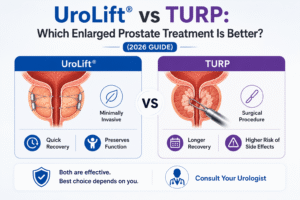
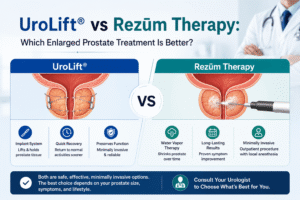
The UroLift® System is a minimally invasive treatment that uses small implants to lift enlarged prostate tissue away from the urethra without removing tissue.
Suitable For
- Men with mild to moderate BPH
- Patients seeking quick recovery
- Those wishing to preserve sexual function
- Selected patients based on prostate anatomy
Cost Factors
The overall cost may be influenced by:
- Number of implants required
- Hospital facilities
- Doctor’s expertise
- Day-care or hospital admission
- Diagnostic evaluation
- Follow-up care
Hospital Stay
Usually performed as a day-care or short-stay procedure.
Recovery
Many patients return to routine activities within a few days, although recovery varies.
Advantages
- No tissue removal
- Minimally invasive
- Quick recovery
- Minimal bleeding
- Usually preserves erectile and ejaculatory function
Limitations
Not suitable for every prostate size or anatomy.
4. Rezūm™ Water Vapor Therapy
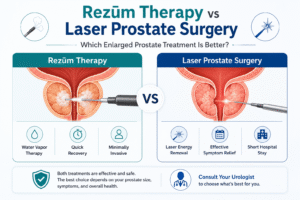
Rezūm uses targeted water vapor (steam) to shrink enlarged prostate tissue over time.
Suitable For
- Moderate BPH symptoms
- Patients seeking a minimally invasive option
- Men wishing to avoid traditional surgery
Cost Factors
Treatment costs depend on:
- Hospital infrastructure
- Technology used
- Specialist experience
- Diagnostic tests
- Follow-up visits
Hospital Stay
Usually requires only a short stay or may be performed as a day-care procedure.
Recovery
Most patients recover within a few days, while symptom improvement develops gradually over several weeks as treated tissue is naturally absorbed.
Advantages
- No surgical incision
- Minimally invasive
- Durable symptom relief
- Short recovery
- Outpatient-friendly
Limitations
Symptom improvement is gradual rather than immediate.
5. iTind Procedure
The iTind procedure temporarily reshapes the prostate opening to improve urine flow without permanently implanting a device.
Suitable For
- Mild to moderate BPH
- Selected prostate anatomies
- Patients looking for minimally invasive treatment
Cost Factors
The overall cost depends on:
- Temporary implant device
- Hospital facilities
- Specialist expertise
- Follow-up care
- Diagnostic work-up
Hospital Stay
Usually completed as a day-care procedure.
Recovery
Recovery is generally quick, and many patients resume normal activities within a few days.
Advantages
- No permanent implant
- No tissue removal
- Preserves sexual function in appropriate patients
- Short downtime
Limitations
Not suitable for every patient.
6. Prostatic Artery Embolisation (PAE)
PAE is a minimally invasive procedure performed by an interventional radiologist to reduce blood supply to the prostate, allowing it to shrink gradually.
Suitable For
- Selected patients with larger prostates
- Individuals seeking a non-surgical option
- Patients who may not be ideal candidates for surgery
Cost Factors
Treatment expenses may vary based on:
- Imaging technology
- Specialized equipment
- Interventional radiology expertise
- Hospital infrastructure
- Follow-up imaging
Hospital Stay
Usually short, depending on the patient’s overall condition.
Recovery
Recovery is generally quicker than many traditional surgical procedures, although individual experiences vary.
Advantages
- No surgical incision
- Minimal blood loss
- Suitable for selected larger prostates
- Short recovery
Limitations
Patient selection is important, and not every individual is a suitable candidate.
7. Laser Prostate Surgery
Laser surgery removes or vaporizes excess prostate tissue using advanced laser technology to relieve urinary obstruction.
Suitable For
- Moderate to severe BPH
- Larger prostates
- Patients at higher risk of bleeding
- Individuals requiring significant tissue removal
Cost Factors
Overall expenses depend on:
- Laser technology used
- Operating theatre facilities
- Hospital stay
- Surgeon experience
- Anesthesia
- Post-operative care
Hospital Stay
Often requires a short hospital stay, although this varies depending on the procedure and patient recovery.
Recovery
Many patients experience significant improvement in urinary flow after recovery, with timelines varying by individual.
Advantages
- Effective symptom relief
- Suitable for larger prostates
- Reduced bleeding compared with some traditional techniques
- Proven long-term results
Limitations
Recovery may take longer than some minimally invasive procedures.
8. TURP (Transurethral Resection of the Prostate)
TURP has long been considered one of the standard surgical treatments for BPH.
Suitable For
- Moderate to severe urinary obstruction
- Patients who have not responded to medication
- Men with significant urinary symptoms
Cost Factors
Costs may include:
- Surgical procedure
- Hospital stay
- Anesthesia
- Diagnostic tests
- Catheter care
- Follow-up appointments
Hospital Stay
Usually involves a short hospital admission.
Recovery
Most patients gradually resume normal activities over several weeks, depending on their overall health and recovery progress.
Advantages
- Well-established procedure
- Effective long-term symptom relief
- Improved urine flow
- Extensive clinical experience
Limitations
Recovery may be longer than with some minimally invasive treatments.
9. Aquablation Therapy
Aquablation Therapy combines robotic guidance with a high-pressure water jet to precisely remove excess prostate tissue.
Suitable For
- Moderate to severe BPH
- Larger prostates
- Patients seeking a technology-assisted treatment option
Cost Factors
Treatment expenses may depend on:
- Robotic technology
- Hospital facilities
- Surgical team expertise
- Hospital stay
- Diagnostic evaluation
Hospital Stay
Typically requires a short admission, depending on recovery.
Recovery
Many patients experience significant symptom improvement, with recovery timelines varying based on individual health and the extent of treatment.
Advantages
- Robotic precision
- Heat-free tissue removal
- Effective for a range of prostate sizes
- Improved urinary flow
- Modern technology-assisted procedure
Limitations
Availability may vary by healthcare center.
Comparing Treatment Value Beyond Cost
When comparing enlarged prostate treatments, consider more than the initial expense. Discuss the following factors with your urologist:
- Expected symptom relief
- Recovery time
- Hospital stay
- Need for future treatment
- Suitability for your prostate size
- Effect on sexual function
- Potential risks and complications
- Long-term durability
- Overall quality of life after treatment
Choosing the right treatment based on medical suitability rather than cost alone often leads to better long-term outcomes.
Key Takeaways
- Each BPH treatment has different factors that influence overall cost.
- The most appropriate treatment depends on your symptoms, prostate size, and overall health.
- Minimally invasive procedures and surgical options each have unique advantages and limitations.
- Discuss both the short-term and long-term value of treatment with your urologist before making a decision.
Which Enlarged Prostate Treatment Offers the Best Value?
One of the most common questions patients ask is:
“Which enlarged prostate treatment gives the best value for money?”
The answer depends on your individual condition. The treatment that provides the best value is not necessarily the least expensive—it is the one that effectively relieves symptoms, suits your prostate size, aligns with your health goals, and provides durable results.
When comparing treatments, consider factors such as:
- Long-term symptom relief
- Recovery time
- Hospital stay
- Need for repeat treatment
- Impact on sexual function
- Return to daily activities
- Overall quality of life
- Suitability for your prostate size
Your urologist will help determine which option provides the greatest benefit based on your specific medical needs.
Is the Cheapest Treatment Always the Best Choice?
No.
Choosing treatment based solely on price can sometimes lead to less satisfactory outcomes.
For example, a lower-cost treatment may not be suitable if:
- Your prostate is significantly enlarged.
- You have severe urinary obstruction.
- You have recurrent urinary retention.
- Previous medications have failed.
- You have bladder complications.
Similarly, the most advanced treatment is not automatically the right choice for every patient.
The best approach is to balance effectiveness, safety, recovery, and long-term outcomes.
Understanding the Total Cost of Treatment
Many patients focus only on the procedure itself, but the total cost of enlarged prostate treatment may include several components.
These may include:
- Initial consultation
- Specialist consultation
- Diagnostic tests
- Imaging
- Laboratory investigations
- Procedure charges
- Operation theatre charges
- Anesthesia (when required)
- Hospital stay
- Medications
- Catheter care
- Follow-up visits
- Repeat investigations if needed
Discussing the complete treatment plan with your doctor beforehand helps avoid unexpected expenses.
Hidden Costs Patients Often Overlook
Patients sometimes compare treatment options without considering additional indirect costs.
Examples include:
Time Away From Work
Recovery time varies between treatments.
A quicker recovery may reduce:
- Loss of income
- Leave from work
- Business interruption
Travel Expenses
Patients travelling to another city may need to consider:
- Transportation
- Hotel accommodation
- Meals
- Follow-up visits
Caregiver Costs
Some patients require assistance during recovery.
Family members may need to:
- Take leave from work
- Arrange transportation
- Provide home support
Repeat Treatment
Some patients may eventually require additional treatment depending on:
- Disease progression
- Response to therapy
- Individual medical factors
Understanding long-term treatment planning is often more valuable than focusing only on the initial expense.
Does Health Insurance Cover Enlarged Prostate Treatment?
Many health insurance policies provide coverage for medically necessary treatment for Benign Prostatic Hyperplasia (BPH), but the extent of coverage varies depending on the insurer, policy terms, waiting periods, exclusions, and the specific procedure recommended.
Coverage may differ based on factors such as:
- Type of health insurance plan
- Network hospital availability
- Hospitalization requirements
- Procedure performed
- Pre-authorization requirements
- Policy inclusions and exclusions
Before scheduling treatment, it is advisable to:
- Contact your insurance provider.
- Confirm coverage details.
- Check whether the hospital offers cashless treatment.
- Understand any out-of-pocket expenses.
Your hospital’s insurance desk can often assist with documentation and pre-authorization.
Government Hospital vs Private Hospital: Which Offers Better Value?
Both government and private hospitals can provide effective enlarged prostate treatment.
Government Hospitals
Benefits may include:
- Lower treatment expenses
- Experienced specialists
- Access to standard BPH procedures
Possible considerations:
- Longer waiting periods
- High patient volumes
- Limited availability of certain advanced technologies in some centers
Private Hospitals
Benefits may include:
- Faster appointments
- Shorter waiting periods
- Modern diagnostic equipment
- Access to minimally invasive technologies
- Personalized care
- Flexible scheduling
Possible considerations:
- Treatment expenses vary depending on the hospital and procedure.
The best choice depends on your medical condition, treatment needs, and personal preferences.
Should You Travel to Another City for Treatment?
Some patients choose to travel for specialized BPH care, particularly if they are seeking:
- Advanced minimally invasive procedures
- An experienced urologist
- Access to newer technologies
- A second opinion
Before making this decision, consider:
- Travel expenses
- Accommodation
- Follow-up visits
- Recovery requirements
- Convenience for family members
In many cases, travelling may be worthwhile if it provides access to treatment that better matches your medical needs.
Questions to Ask Your Doctor About Treatment Costs
Being informed helps you plan your treatment with confidence.
Consider asking:
- Which treatment do you recommend and why?
- What factors influence the overall cost?
- Are there any alternative treatment options?
- Will I need hospitalization?
- How long is recovery?
- Will I need a catheter after treatment?
- How many follow-up visits are required?
- What investigations are included?
- Does my insurance cover this procedure?
- Are there any additional expenses I should expect?
Choosing the Right Treatment—Not Just the Cheapest
Every enlarged prostate is different.
The right treatment depends on:
- Your age
- Severity of symptoms
- Prostate size
- General health
- Existing medical conditions
- Lifestyle
- Personal expectations
- Recovery goals
- Sexual health priorities
A personalized treatment plan developed by an experienced urologist provides the best chance of achieving long-term symptom relief.
How an Experienced Urologist Helps Reduce Long-Term Costs
While the initial consultation with an experienced specialist may seem like an additional expense, expert evaluation can help patients avoid:
- Unnecessary investigations
- Inappropriate treatments
- Delayed diagnosis
- Disease progression
- Preventable complications
- Repeat procedures
Selecting the most suitable treatment from the beginning can improve outcomes and reduce the likelihood of additional interventions.
Planning Your Budget for Enlarged Prostate Treatment
When preparing for treatment, it is helpful to consider:
- Consultation fees
- Diagnostic tests
- Procedure costs
- Hospital stay
- Medications
- Transportation
- Accommodation (if travelling)
- Follow-up visits
- Time away from work
- Insurance coverage
A clear understanding of these factors allows you to plan more effectively and focus on recovery.
Expert Advice
Cost is an important consideration, but it should never be the only factor influencing your treatment decision.
The most appropriate treatment is one that:
- Effectively relieves symptoms.
- Matches your prostate size and condition.
- Supports your lifestyle and long-term goals.
- Is recommended after a thorough evaluation by an experienced urologist.
Discuss all available options with your doctor, ask questions, and choose a treatment plan based on both medical suitability and overall value.
Key Takeaways
- The best value treatment is the one that is most appropriate for your individual condition, not necessarily the least expensive.
- Total treatment costs include more than the procedure itself and may involve consultations, investigations, hospital stay, medications, and follow-up care.
- Insurance coverage varies, so it is important to verify your policy details before treatment.
- A personalized treatment plan can improve long-term outcomes and help avoid unnecessary costs.
- Consulting an experienced urologist ensures that treatment decisions are based on your symptoms, prostate size, and overall health.
Frequently Asked Questions (FAQs)
1. How much does enlarged prostate treatment cost in India?
The cost of enlarged prostate treatment in India varies depending on several factors, including the type of treatment, hospital, city, doctor’s experience, diagnostic tests, hospital stay, and your overall medical condition. A urologist can recommend the most appropriate treatment after a complete evaluation.
2. Which enlarged prostate treatment is the most affordable?
The most affordable option depends on your symptoms and medical needs. Lifestyle changes and medications may be suitable for some patients, while others may benefit from minimally invasive procedures or surgery. The right treatment should be based on medical suitability rather than cost alone.
3. Does health insurance cover enlarged prostate treatment?
Many health insurance plans cover medically necessary BPH treatment, but coverage depends on your insurer, policy terms, waiting periods, and the procedure being performed. Always confirm coverage details with your insurance provider before treatment.
4. Is medication less expensive than surgery?
Medication generally has lower initial costs, but it may involve ongoing expenses over months or years. In some cases, a procedure or surgery may provide longer-lasting symptom relief. Your doctor can help determine the most appropriate option based on your condition.
5. Which BPH treatment has the shortest recovery time?
Several minimally invasive procedures, such as UroLift®, Rezūm™, iTind, and Prostatic Artery Embolisation (PAE), are designed to support quicker recovery in appropriately selected patients. Recovery time varies depending on the individual and the treatment performed.
6. Is laser prostate surgery more expensive than TURP?
The overall cost depends on the type of laser technology used, hospital facilities, surgeon expertise, and other treatment-related factors. Your doctor can explain the differences between these procedures and help you choose the most suitable option.
7. Are diagnostic tests included in treatment costs?
This varies by hospital and treatment package. Diagnostic tests such as PSA, ultrasound, uroflowmetry, urine analysis, and post-void residual measurement may be billed separately or included, depending on the provider.
8. Can lifestyle changes reduce treatment expenses?
Healthy lifestyle habits may help improve mild urinary symptoms and delay the need for more advanced treatments in some patients. However, lifestyle changes alone may not be sufficient for moderate or severe BPH.
9. Is it worth travelling to another city for treatment?
Some patients choose to travel to consult experienced urologists or access advanced treatment technologies. Consider travel costs, follow-up visits, recovery needs, and convenience before making a decision.
10. How can I choose the right treatment?
The most appropriate treatment depends on your prostate size, urinary symptoms, age, overall health, lifestyle, and personal preferences. A comprehensive evaluation by a qualified urologist is essential before selecting any treatment.
11. Will delaying treatment increase the overall cost?
Delaying treatment may allow symptoms to worsen and, in some cases, lead to complications that require additional investigations or more extensive treatment. Seeking medical advice early may provide more treatment options.
12. What should I discuss with my doctor before treatment?
Ask about:
- Your diagnosis
- Available treatment options
- Expected recovery
- Hospital stay
- Follow-up care
- Insurance coverage
- Possible risks
- Long-term outcomes
- Estimated overall treatment expenses
Being well-informed helps you make confident healthcare decisions.
Enlarged Prostate Treatment Cost in India
The cost of enlarged prostate treatment in India depends on several factors, including the type of treatment, hospital, city, doctor’s experience, diagnostic tests, hospital stay, and individual medical needs. Treatment options range from lifestyle modifications and medications to minimally invasive procedures such as UroLift®, Rezūm™, iTind, and Prostatic Artery Embolisation (PAE), as well as Laser Prostate Surgery, TURP, and Aquablation Therapy. Choosing the right treatment should be based on medical evaluation, symptom severity, prostate size, recovery goals, and long-term value rather than cost alone.
Conclusion
Understanding the enlarged prostate treatment cost in India is an important part of planning your healthcare journey. However, the right treatment should always be based on your symptoms, prostate size, overall health, and the recommendations of an experienced urologist rather than cost alone.
Today, patients have access to a wide range of effective treatment options, including lifestyle modifications, medications, minimally invasive procedures such as UroLift®, Rezūm™, iTind, and Prostatic Artery Embolisation (PAE), as well as advanced surgical techniques like Laser Prostate Surgery, TURP, and Aquablation Therapy.
Each option offers different benefits, recovery timelines, and long-term outcomes. A thorough evaluation helps identify the treatment that best matches your individual needs and treatment goals.
If urinary symptoms are affecting your quality of life, don’t delay seeking medical advice. Early diagnosis and personalized treatment can improve symptoms, reduce the risk of complications, and help you return to your daily routine with greater comfort and confidence.
Looking for the Right Enlarged Prostate Treatment?
Choosing the right treatment is about more than comparing costs. Consult an experienced urologist for a comprehensive evaluation and personalized treatment plan based on your symptoms, prostate size, and overall health.
Book a consultation today to explore the most appropriate enlarged prostate treatment options and take the first step toward better urinary health.