
Does Enlarged Prostate Cause Erectile Dysfunction? This is one of the most common questions men ask after being diagnosed with Benign Prostatic Hyperplasia (BPH). While an enlarged prostate does not directly cause erectile dysfunction (ED), the two conditions often occur together because they share common risk factors such as aging, diabetes, obesity, cardiovascular disease, and hormonal changes.
An enlarged prostate and erectile dysfunction (ED) are both common conditions in men over the age of 50. Because they often occur together, many people assume that BPH directly causes ED. However, the relationship between the two conditions is more complex.
While an enlarged prostate itself does not directly cause erectile dysfunction, the symptoms of BPH, associated health conditions, aging, stress, and some medications used to treat BPH may contribute to sexual problems in certain men.
The good news is that both conditions can usually be managed successfully with the right diagnosis and treatment. Modern therapies such as medications, lifestyle modifications, and minimally invasive procedures like UroLift®, Rezūm™, iTind, and Prostatic Artery Embolisation (PAE) allow many men to improve both urinary symptoms and quality of life while preserving sexual function.
In this guide, we’ll explain the connection between enlarged prostate and erectile dysfunction, why they often occur together, available treatment options, and when you should consult a urologist.
Does an enlarged prostate cause erectile dysfunction?
Not directly. Benign Prostatic Hyperplasia (BPH) does not usually damage the nerves or blood vessels responsible for erections. However, men with BPH are more likely to experience erectile dysfunction because both conditions share common risk factors such as aging, diabetes, obesity, cardiovascular disease, hormonal changes, and certain medications. Some BPH treatments may also affect sexual function, while newer minimally invasive procedures are designed to preserve it.
What Is an Enlarged Prostate (BPH)?
The prostate is a walnut-sized gland located below the bladder that surrounds the urethra.
Its primary function is to produce fluid that nourishes and transports sperm.
As men age, the prostate often grows larger. This non-cancerous enlargement is known as Benign Prostatic Hyperplasia (BPH).
An enlarged prostate can compress the urethra, making it difficult for urine to pass normally.
Common Symptoms of BPH
- Frequent urination
- Urgent need to urinate
- Weak urine stream
- Difficulty starting urination
- Dribbling after urination
- Feeling that the bladder has not emptied completely
- Waking up multiple times at night to urinate (nocturia)
- Interrupted urine flow
BPH is extremely common and becomes more prevalent with age. It is important to remember that BPH is not prostate cancer, although both conditions may produce similar urinary symptoms.
What Is Erectile Dysfunction (ED)?
Erectile Dysfunction (ED) is the inability to achieve or maintain an erection firm enough for satisfactory sexual activity.
Occasional erection problems are normal, especially during periods of stress or fatigue. However, persistent erectile dysfunction may indicate an underlying medical condition that requires evaluation.
Common Symptoms of ED
- Difficulty achieving an erection
- Trouble maintaining an erection
- Reduced firmness during intercourse
- Reduced sexual confidence
- Decreased sexual satisfaction
ED affects millions of men worldwide and becomes increasingly common with advancing age.
Does Enlarged Prostate Cause Erectile Dysfunction?
This is one of the most searched questions online.
The simple answer is:
An enlarged prostate itself usually does not directly cause erectile dysfunction.
The prostate does not control erections. Erections primarily depend on:
- Healthy blood flow
- Functional nerves
- Balanced hormone levels
- Psychological well-being
- Healthy blood vessels
However, many men with BPH also develop erectile dysfunction because both conditions are linked to the same underlying factors.
Researchers have found that men with moderate to severe lower urinary tract symptoms (LUTS) are more likely to report erectile dysfunction than men without urinary symptoms.
Why Do BPH and Erectile Dysfunction Often Occur Together?
Several factors explain why these conditions frequently occur at the same time.
1. Aging
Age is the strongest shared risk factor.
As men get older:
- The prostate naturally enlarges.
- Testosterone levels gradually decline.
- Blood vessel function changes.
- Nerve function may decrease.
- The risk of chronic diseases increases.
These age-related changes contribute to both urinary symptoms and erectile dysfunction.
2. Reduced Blood Flow
Healthy erections require good blood circulation.
Conditions such as:
- High blood pressure
- Atherosclerosis
- High cholesterol
- Diabetes
can reduce blood flow to the penis while also affecting prostate health and bladder function.
3. Nerve Changes
The nerves responsible for bladder function and sexual function are located close to the prostate.
Although BPH itself usually does not damage these nerves, chronic inflammation, certain medical conditions, or some treatments may affect nerve function over time.
4. Hormonal Changes
Hormones play an important role in both prostate growth and sexual function.
Age-related changes in:
- Testosterone
- Dihydrotestosterone (DHT)
- Estrogen balance
may contribute to enlarged prostate development while also influencing libido and erectile quality.
5. Chronic Inflammation
Research suggests that chronic inflammation may contribute to both BPH progression and erectile dysfunction.
Inflammation can affect:
- Blood vessels
- Nerve function
- Tissue health
- Bladder function
Reducing inflammation through a healthy lifestyle may support overall prostate and sexual health.
6. Psychological Stress
Living with bothersome urinary symptoms can affect emotional well-being.
Men who experience:
- Frequent nighttime urination
- Urinary urgency
- Interrupted sleep
- Anxiety about bladder control
may also develop stress, reduced confidence, and performance anxiety, all of which can negatively affect erections.
Can BPH Symptoms Affect Your Sex Life?
Even if BPH does not directly cause erectile dysfunction, its symptoms can interfere with intimacy and overall quality of life.
Many men report:
- Reduced sexual confidence
- Fear of urinary leakage during intimacy
- Fatigue due to poor sleep from nocturia
- Lower libido
- Relationship stress
- Reduced satisfaction with sexual activity
Treating bothersome urinary symptoms often helps improve confidence and overall well-being.
Common Symptoms That May Suggest Both BPH and ED
You should consider seeing a urologist if you experience a combination of urinary and sexual symptoms such as:
Urinary Symptoms
- Weak urine stream
- Frequent urination
- Nighttime urination
- Difficulty starting urination
- Incomplete bladder emptying
- Urinary urgency
Sexual Symptoms
- Difficulty achieving erections
- Difficulty maintaining erections
- Reduced sexual desire
- Problems with ejaculation
- Reduced confidence during intimacy
Early evaluation can help identify the underlying cause and guide appropriate treatment.
Who Is Most at Risk?
The likelihood of experiencing both BPH and erectile dysfunction increases if you:
- Are over 50 years of age
- Have diabetes
- Have high blood pressure
- Have heart disease
- Are overweight or obese
- Smoke cigarettes
- Consume excessive alcohol
- Live a sedentary lifestyle
- Have high cholesterol
- Experience chronic stress
Managing these risk factors may improve both urinary and sexual health.
Can Lifestyle Changes Help?
Yes. Healthy lifestyle habits can benefit both BPH symptoms and erectile function.
Doctors commonly recommend:
- Regular physical activity
- Maintaining a healthy weight
- Eating a balanced, prostate-friendly diet
- Quitting smoking
- Limiting alcohol intake
- Getting adequate sleep
- Managing stress
- Controlling diabetes and blood pressure
While these measures may not completely reverse BPH or ED, they can improve overall health and enhance treatment outcomes.
Key Takeaways
- An enlarged prostate does not usually cause erectile dysfunction directly.
- BPH and ED often occur together because they share common risk factors.
- Aging, diabetes, obesity, cardiovascular disease, and hormonal changes contribute to both conditions.
- Lifestyle improvements can help support urinary health, sexual function, and overall quality of life.
- Early consultation with a urologist allows timely diagnosis and access to effective treatment options.
Can BPH Medications Cause Erectile Dysfunction?
One of the biggest concerns men have after being diagnosed with Benign Prostatic Hyperplasia (BPH) is whether the medications used to treat it can affect their sexual performance.
The answer is yes, some medications may contribute to sexual side effects, but not every man experiences them. The likelihood depends on the type of medication, your overall health, age, and individual response to treatment.
Understanding the potential side effects can help you make informed decisions with your urologist.
Alpha-Blockers
Alpha-blockers are often the first medications prescribed for men with mild to moderate BPH.
They work by relaxing the muscles around the prostate and bladder neck, allowing urine to flow more easily.
Common Alpha-Blockers
- Tamsulosin
- Alfuzosin
- Silodosin
- Doxazosin
- Terazosin
Benefits
- Improve urine flow
- Reduce urinary frequency
- Relieve bladder outlet obstruction
- Improve quality of life
- Work within days to weeks
Do Alpha-Blockers Cause Erectile Dysfunction?
Generally, alpha-blockers do not directly cause erectile dysfunction.
However, some men may experience:
- Reduced ejaculation
- Retrograde ejaculation
- Decreased semen volume
- Mild dizziness during sexual activity due to lower blood pressure
Many men continue to have normal erections while taking alpha-blockers.
5-Alpha Reductase Inhibitors
These medications reduce the size of the prostate by blocking the conversion of testosterone into dihydrotestosterone (DHT), the hormone responsible for prostate growth.
Common Medications
- Finasteride
- Dutasteride
Benefits
- Shrink enlarged prostate
- Improve urine flow
- Reduce risk of urinary retention
- Lower need for future surgery
Possible Sexual Side Effects
Compared with alpha-blockers, these medicines are more likely to affect sexual function.
Possible side effects include:
- Reduced libido
- Erectile dysfunction
- Decreased semen volume
- Ejaculatory disorders
Fortunately, many men either do not experience these effects or notice improvement after adjusting treatment under medical supervision.
Combination Therapy
Doctors sometimes prescribe an alpha-blocker together with a 5-alpha reductase inhibitor for men with larger prostates or more severe symptoms.
Advantages
- Better symptom relief
- Lower risk of disease progression
- Reduced likelihood of urinary retention
- May delay or prevent surgery
Possible Drawbacks
Because combination therapy includes two medications, the chance of experiencing side effects—including sexual side effects—may be higher in some individuals.
Erectile Dysfunction vs Ejaculatory Problems
Many patients confuse erectile dysfunction with ejaculation problems, but they are different conditions.
| Erectile Dysfunction | Ejaculatory Problems |
|---|---|
| Difficulty getting or maintaining an erection | Difficulty releasing semen normally |
| Affects erection quality | Affects ejaculation only |
| Blood vessel and nerve related | Often medication-related |
| May occur without ejaculation issues | May occur with normal erections |
Understanding the difference helps your doctor identify the most appropriate treatment.
Can an Enlarged Prostate Affect Libido?
An enlarged prostate does not directly reduce sexual desire (libido).
However, men with severe urinary symptoms may experience:
- Poor sleep due to frequent nighttime urination
- Fatigue
- Stress
- Anxiety
- Reduced confidence
- Relationship concerns
These factors can indirectly reduce sexual interest.
Which BPH Treatments Best Preserve Sexual Function?
One of the biggest advances in modern urology is the development of minimally invasive treatments designed to improve urinary symptoms while minimizing sexual side effects.
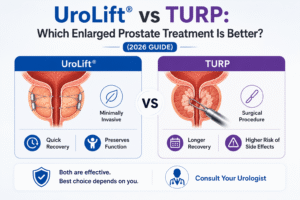
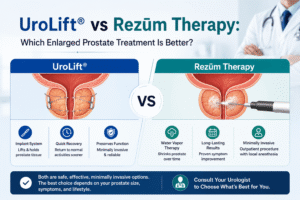
UroLift® System
The UroLift System lifts the enlarged prostate away from the urethra using small implants without removing prostate tissue.
Advantages
✔ Preserves erectile function
✔ Usually preserves ejaculation
✔ No tissue removal
✔ Fast recovery
✔ Outpatient procedure
For many sexually active men with suitable prostate anatomy, UroLift is an excellent option.
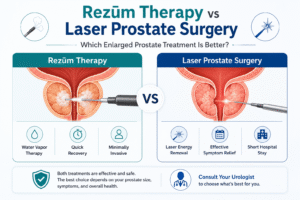
Rezūm™ Water Vapor Therapy
Rezūm uses sterile water vapor to reduce excess prostate tissue.
Benefits
- Significant improvement in urinary symptoms
- No surgical incision
- Low risk of erectile dysfunction
- Most patients maintain sexual function
Temporary urinary symptoms during recovery are common but usually improve within several weeks.
iTind Procedure
The iTind device temporarily reshapes the urinary channel without removing prostate tissue.
Benefits
- Temporary implant
- No permanent device
- Preserves erectile function in most patients
- Short recovery
- Same-day discharge
It is best suited for carefully selected men with mild to moderate BPH.
Prostatic Artery Embolisation (PAE)
PAE reduces blood flow to the enlarged prostate, causing it to shrink gradually.
Advantages
- No surgical incision
- Local anesthesia
- Minimal blood loss
- Short recovery
- Sexual function is generally preserved
Although promising, PAE is not appropriate for every patient and should be performed by experienced specialists.
Laser Prostate Surgery
Laser surgery effectively removes excess prostate tissue while minimizing bleeding.
Compared with traditional surgery, laser procedures generally offer:
- Faster recovery
- Less blood loss
- Excellent urinary improvement
Sexual Function
Most men maintain erectile function after laser surgery, although changes in ejaculation may occur.
TURP (Transurethral Resection of the Prostate)
TURP remains one of the most effective treatments for moderate to severe BPH.
Benefits
- Long-term symptom relief
- Excellent urine flow improvement
- Proven success
Sexual Side Effects
Many men maintain erectile function after TURP.
However, retrograde ejaculation is common, meaning semen flows backward into the bladder instead of exiting through the penis during orgasm.
This is not harmful but may affect fertility.
Aquablation Therapy
Aquablation uses robotic guidance and a high-pressure water jet to remove enlarged prostate tissue with precision.
Advantages
- Heat-free treatment
- Robot-assisted accuracy
- Effective for larger prostates
- Lower risk of sexual side effects in selected patients
- Excellent urinary symptom improvement
Aquablation has become an attractive option for men seeking advanced treatment while aiming to preserve sexual function.
Comparison of BPH Treatments and Sexual Function
| Treatment | Erectile Function | Ejaculation | Recovery |
|---|---|---|---|
| Lifestyle Changes | Preserved | Preserved | Immediate |
| Medications | Usually Preserved | May Be Affected | Ongoing |
| UroLift | Usually Preserved | Usually Preserved | Very Fast |
| Rezūm | Usually Preserved | Usually Preserved | Few Weeks |
| iTind | Usually Preserved | Usually Preserved | Fast |
| PAE | Usually Preserved | Usually Preserved | Fast |
| Laser Surgery | Usually Preserved | May Change | Few Weeks |
| TURP | Usually Preserved | Retrograde Ejaculation Common | Few Weeks |
| Aquablation | Usually Preserved | Better Preservation in Selected Patients | Few Weeks |
Key Takeaways
- Some BPH medications may cause sexual side effects, but many men tolerate them well.
- Alpha-blockers are less likely to cause erectile dysfunction than 5-alpha reductase inhibitors.
- UroLift, Rezūm, iTind, and PAE are designed to provide symptom relief while preserving sexual function for suitable candidates.
- Surgical treatments remain highly effective, though some procedures may affect ejaculation.
- Your treatment choice should be individualized after discussion with a qualified urologist.
How Are BPH and Erectile Dysfunction Diagnosed?
If you’re experiencing both urinary symptoms and erectile dysfunction, your urologist will perform a comprehensive evaluation to determine whether the two conditions are related and to identify the most appropriate treatment.
The diagnosis usually includes your medical history, physical examination, laboratory tests, and imaging studies.
1. Medical History
Your doctor will begin by asking detailed questions about your symptoms.
These may include:
- How often do you urinate during the day?
- Do you wake up at night to urinate?
- Is your urine stream weak?
- Do you have difficulty starting urination?
- Are you able to achieve and maintain an erection?
- Have your symptoms worsened over time?
- What medications are you currently taking?
- Do you have diabetes, hypertension, or heart disease?
Being open about both urinary and sexual symptoms helps your doctor recommend the most suitable treatment.
2. Physical Examination
A physical examination provides valuable information about your prostate and overall health.
It may include:
- Blood pressure measurement
- Abdominal examination
- Genital examination
- Neurological assessment
- Digital Rectal Examination (DRE)
A DRE allows the urologist to estimate the size and consistency of the prostate and identify any abnormalities that require further evaluation.
3. International Prostate Symptom Score (IPSS)
The IPSS questionnaire is widely used to assess the severity of urinary symptoms caused by BPH.
It evaluates:
- Frequency
- Urgency
- Weak stream
- Hesitancy
- Incomplete emptying
- Nocturia
- Quality of life
Based on the score, symptoms are categorized as:
- Mild
- Moderate
- Severe
This helps guide treatment decisions.
4. Erectile Function Assessment
To better understand erectile dysfunction, your doctor may ask about:
- Morning erections
- Sexual desire (libido)
- Relationship concerns
- Stress and anxiety
- Duration of symptoms
- Previous treatments
In some cases, standardized questionnaires such as the International Index of Erectile Function (IIEF) may be used to assess erectile function.
5. Urine Tests
A urine analysis helps rule out conditions that can mimic or worsen BPH symptoms.
It can detect:
- Urinary tract infections
- Blood in the urine
- Kidney problems
- Diabetes-related changes
6. PSA Blood Test
Your doctor may recommend a Prostate-Specific Antigen (PSA) blood test.
PSA does not diagnose BPH, but it helps evaluate prostate health and determine whether further investigation for prostate cancer is needed.
PSA levels may be elevated due to:
- BPH
- Prostate inflammation
- Infection
- Prostate cancer
Results should always be interpreted alongside your symptoms and examination findings.
7. Ultrasound
Ultrasound imaging helps evaluate:
- Prostate size
- Bladder condition
- Residual urine after urination
- Kidney health
This information is important when deciding whether medications or procedures are more appropriate.
8. Uroflowmetry
A uroflowmetry test measures the speed and strength of your urine stream.
Reduced flow rates may indicate bladder outlet obstruction caused by an enlarged prostate.
9. Post-Void Residual (PVR) Measurement
After you urinate, an ultrasound measures how much urine remains in the bladder.
A high residual volume suggests incomplete bladder emptying and may indicate more advanced obstruction.
Can Erectile Dysfunction Improve After BPH Treatment?
Many men notice an improvement in their overall quality of life after effective BPH treatment.
However, whether erectile dysfunction improves depends on its underlying cause.
If ED is mainly related to:
- Poor sleep from nocturia
- Chronic urinary discomfort
- Anxiety
- Stress
- Reduced quality of life
then treating BPH may also improve sexual confidence and erectile performance.
If ED is caused by diabetes, cardiovascular disease, hormonal imbalance, or vascular problems, additional treatment may still be required.
Treatment Options for Men with Both BPH and ED
Managing both conditions often requires a personalized approach.
Your doctor may recommend one or more of the following:
Lifestyle Changes
Healthy habits support both urinary and sexual health.
These include:
- Regular exercise
- Weight management
- Healthy diet
- Smoking cessation
- Limiting alcohol
- Good sleep
- Stress reduction
Medications
Some medications may improve urinary symptoms, while others specifically target erectile dysfunction.
Your doctor will choose medicines that are safe and appropriate based on your medical history and any other medications you take.
Minimally Invasive BPH Procedures
For men who wish to maintain sexual function, procedures such as:
- UroLift®
- Rezūm™
- iTind
- Prostatic Artery Embolisation (PAE)
may provide effective relief while preserving erectile function in many suitable candidates.
Surgical Treatment
When symptoms become severe or complications develop, surgery may offer the best long-term relief.
Available procedures include:
- Laser Prostate Surgery
- TURP
- Aquablation Therapy
Although these procedures are highly effective for improving urine flow, your urologist will discuss potential effects on ejaculation and overall sexual function before treatment.
Can Lifestyle Changes Improve Both BPH and ED?
Yes. Lifestyle changes are an important part of managing both conditions.
Research has shown that healthy habits can improve urinary symptoms, cardiovascular health, and erectile function.
Helpful strategies include:
- Walking for at least 30 minutes most days
- Maintaining a healthy body weight
- Eating a Mediterranean-style or prostate-friendly diet
- Controlling blood sugar and blood pressure
- Avoiding tobacco products
- Reducing excessive alcohol intake
- Practicing stress management techniques
These measures work best when combined with appropriate medical care.
When Should You See a Urologist?
You should consult a urologist if you experience:
- Persistent urinary symptoms
- Difficulty emptying your bladder
- Blood in the urine
- Recurrent urinary tract infections
- Sudden inability to urinate
- Difficulty achieving or maintaining erections
- Ejaculatory concerns
- Reduced quality of life due to urinary or sexual symptoms
Early evaluation allows more treatment options and may help prevent complications.
Tips to Protect Your Prostate and Sexual Health
- Schedule regular health check-ups after age 50 (or earlier if advised by your doctor).
- Stay physically active.
- Maintain a healthy weight.
- Eat a balanced diet rich in vegetables, fruits, and whole grains.
- Drink enough water during the day while limiting fluids close to bedtime.
- Manage diabetes, high blood pressure, and cholesterol.
- Avoid smoking.
- Limit alcohol consumption.
- Seek medical advice if urinary or sexual symptoms develop.
Key Takeaways
- BPH and erectile dysfunction often occur together because they share common risk factors.
- Proper diagnosis includes symptom assessment, physical examination, urine tests, PSA testing, ultrasound, and urine flow studies.
- Effective treatment of BPH may improve quality of life and, in some men, sexual confidence.
- Lifestyle changes, medications, minimally invasive procedures, and surgery all have a role depending on the severity of symptoms and individual needs.
- Early consultation with a urologist helps identify the safest and most effective treatment plan.
Frequently Asked Questions (FAQs)
1. Does an enlarged prostate cause erectile dysfunction?
No. An enlarged prostate (Benign Prostatic Hyperplasia or BPH) does not directly cause erectile dysfunction. However, both conditions often occur together because they share common risk factors such as aging, diabetes, obesity, cardiovascular disease, and hormonal changes. Some BPH medications may also contribute to sexual side effects.
2. Can BPH affect sexual performance?
Yes. Although BPH does not directly prevent erections, urinary symptoms such as frequent urination, poor sleep, urgency, and stress can negatively affect sexual confidence and overall performance.
3. Can BPH medications cause erectile dysfunction?
Some medications used to treat BPH, particularly Finasteride and Dutasteride, may cause erectile dysfunction, reduced libido, or ejaculation problems in some men. Alpha-blockers are generally less likely to affect erections.
4. Which BPH treatment best preserves sexual function?
Minimally invasive treatments such as UroLift®, Rezūm™, iTind, and Prostatic Artery Embolisation (PAE) are designed to relieve urinary symptoms while preserving erectile function in most suitable patients.
5. Does TURP cause erectile dysfunction?
Most men maintain erectile function after TURP. However, retrograde ejaculation is a common side effect, meaning semen flows into the bladder instead of exiting through the penis during orgasm.
6. Can erectile dysfunction improve after BPH treatment?
Yes. If erectile dysfunction is related to poor sleep, urinary discomfort, anxiety, or reduced quality of life caused by BPH, many men notice improvement after successful treatment.
7. Can lifestyle changes improve both BPH and ED?
Yes. Regular exercise, weight management, a healthy diet, quitting smoking, limiting alcohol, and controlling diabetes and blood pressure can help improve both urinary symptoms and erectile function.
8. Is erectile dysfunction always caused by an enlarged prostate?
No. Erectile dysfunction has many possible causes, including cardiovascular disease, diabetes, hormonal imbalance, neurological disorders, stress, anxiety, and certain medications.
9. Can UroLift affect erections?
The UroLift System is specifically designed to preserve erectile function and usually maintains normal ejaculation in appropriately selected patients.
10. When should I see a urologist?
You should consult a urologist if you have persistent urinary symptoms, erectile dysfunction, blood in the urine, recurrent urinary tract infections, urinary retention, or if your symptoms interfere with your daily life.
11. Does age increase the risk of both BPH and ED?
Yes. The risk of both benign prostatic hyperplasia and erectile dysfunction increases with age, particularly after the age of 50.
12. Can diabetes increase the risk of BPH and ED?
Yes. Diabetes can damage blood vessels and nerves, increasing the likelihood of urinary symptoms from BPH as well as erectile dysfunction.
Conclusion
Does enlarged prostate cause erectile dysfunction? In most cases, the enlarged prostate itself is not the direct cause of erectile dysfunction. However, BPH and ED frequently occur together because they share common risk factors such as aging, diabetes, obesity, cardiovascular disease, and hormonal changes.
Some medications used to treat BPH may contribute to sexual side effects, while newer minimally invasive procedures like UroLift®, Rezūm™, iTind, and Prostatic Artery Embolisation (PAE) are designed to relieve urinary symptoms while preserving sexual function for suitable candidates.
If you’re experiencing both urinary symptoms and erectile dysfunction, don’t ignore them. Early evaluation by an experienced urologist can help identify the underlying cause and provide a personalized treatment plan that improves both urinary health and quality of life.
Are you experiencing both urinary problems and erectile dysfunction?
Book a consultation with Dr. Priyaddarshi Ranjan, an experienced urologist specializing in BPH and men’s health. A detailed evaluation can determine whether your symptoms are related to an enlarged prostate and help you choose the most suitable treatment while preserving your sexual function whenever possible.