If you’ve been diagnosed with Benign Prostatic Hyperplasia (BPH), one of the first questions you’ll probably ask is, “Which BPH treatment is best?“ With several treatment options now available—including medications, minimally invasive procedures, and surgery—choosing the right approach can feel overwhelming.
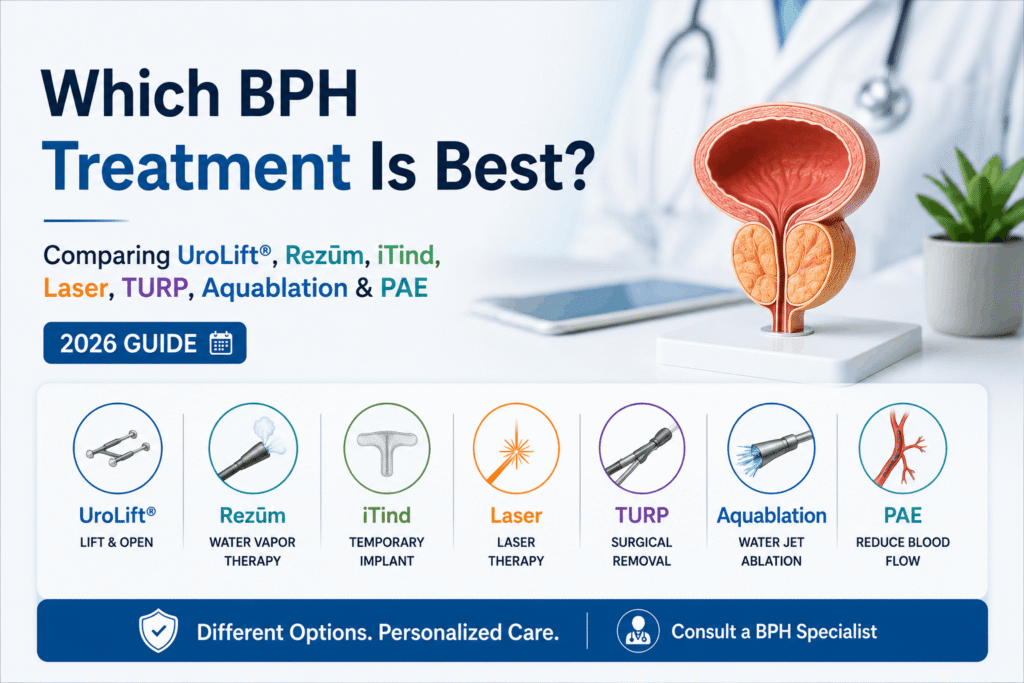
Modern urology has transformed the management of enlarged prostate. Today, treatments such as UroLift®, Rezūm Water Vapor Therapy, iTind, Laser Prostate Surgery, TURP, Aquablation Therapy, and Prostatic Artery Embolization (PAE) offer effective symptom relief for many patients. However, no single treatment is considered the best for everyone.
The ideal treatment depends on multiple factors, including prostate size, symptom severity, age, overall health, treatment goals, and personal preferences. A procedure that is suitable for one patient may not be the most appropriate option for another.
This comprehensive guide compares all major BPH treatment options, explaining how each works, who it may be suitable for, its potential benefits, limitations, recovery expectations, and the factors doctors consider before making a recommendation.
Quick Answer
The most appropriate treatment depends on:
- Prostate size
- Severity of urinary symptoms
- Age
- Overall health
- Presence of other medical conditions
- Desire to preserve sexual function
- Previous treatments
- Lifestyle
- Personal treatment goals
After a detailed evaluation, a qualified urologist may recommend lifestyle changes, medications, minimally invasive procedures, or surgery based on your individual condition.
What Is Benign Prostatic Hyperplasia (BPH)?
Benign Prostatic Hyperplasia (BPH), also known as an enlarged prostate, is a common condition in aging men in which the prostate gland increases in size. Since the prostate surrounds the urethra, enlargement can restrict urine flow and cause troublesome urinary symptoms.
BPH is not prostate cancer, and having BPH does not necessarily mean you will develop prostate cancer. However, untreated BPH can lead to complications such as urinary retention, recurrent urinary tract infections, bladder stones, and, in some cases, kidney damage.
Fortunately, advances in diagnosis and treatment mean that most men can achieve significant symptom relief with appropriate medical care.
Why There Is No Single “Best” BPH Treatment
Patients often search online hoping to find one treatment that works for everyone. In reality, BPH management is highly personalized.
Each treatment has different strengths, limitations, and suitability depending on the patient’s clinical profile.
For example:
- A minimally invasive procedure may be ideal for one patient but unsuitable for another with a much larger prostate.
- Some treatments prioritize faster recovery, while others are selected because they provide durable symptom relief.
- Certain procedures may be preferred for patients with specific medical conditions or those taking blood-thinning medications.
Rather than asking “Which treatment is best?“, a better question is:
“Which BPH treatment is best for my specific condition?“ This patient-centered approach helps ensure treatment decisions are based on medical evidence and individual needs.
Factors Doctors Consider Before Recommending Treatment
A comprehensive evaluation is essential before choosing a BPH treatment. Experienced urologists consider several factors.
1. Prostate Size
The size of the prostate influences which treatments are appropriate.
Some minimally invasive procedures are designed for smaller or medium-sized prostates, while larger prostates may require different approaches. Imaging studies and clinical assessment help determine the most suitable option.
2. Severity of Symptoms
Doctors often assess:
- Urinary frequency
- Nocturia (frequent nighttime urination)
- Weak urine stream
- Urinary urgency
- Difficulty starting urination
- Feeling of incomplete bladder emptying
The severity of these symptoms helps guide treatment recommendations.
3. Age
Age alone does not determine treatment, but it is one of several important considerations.
Younger patients may prioritize preserving quality of life and returning to normal activities quickly, while older adults may have additional health factors that influence treatment selection.
4. Overall Health
Existing medical conditions such as heart disease, diabetes, neurological disorders, or bleeding disorders can influence treatment planning.
A comprehensive health assessment helps ensure the selected treatment is appropriate and safe.
5. Sexual Function
For many men, preserving erectile and ejaculatory function is an important treatment goal.
Different procedures have different risk profiles regarding sexual side effects. Discussing these concerns with your urologist helps ensure your preferences are considered during treatment planning.
6. Previous Treatments
Patients who have previously tried medications or undergone prostate procedures may require a different management strategy than those seeking treatment for the first time.
Treatment history provides valuable information when planning the next step.
7. Lifestyle and Personal Preferences
Some patients prefer:
- Minimally invasive procedures
- Shorter recovery time
- Avoiding hospitalization
- Long-term durability
- Fewer follow-up visits
Understanding these preferences allows doctors to recommend options that align with the patient’s goals while remaining medically appropriate.
Why an Individualized Treatment Plan Matters
The goal of BPH treatment is not simply to improve urine flow but to enhance quality of life while balancing effectiveness, recovery, and potential risks.
An individualized treatment plan considers your symptoms, prostate characteristics, overall health, and expectations to recommend the option most likely to provide meaningful and lasting benefit.
Key Takeaways
- There is no universal best treatment for BPH.
- Treatment recommendations are based on a comprehensive medical evaluation.
- Factors such as prostate size, symptoms, age, health, and patient preferences all influence decision-making.
- Consulting an experienced urologist is essential to selecting the most appropriate treatment.
Comparing the Best BPH Treatment Options
Once a patient has been diagnosed with benign prostatic hyperplasiabph BPH Treatment (BPH), the next step is choosing the most appropriate treatment. Modern urology offers several effective options, each designed for different prostate sizes, symptom severity, and patient preferences.
Below is a detailed comparison of the most commonly recommended enlarged prostate treatments.
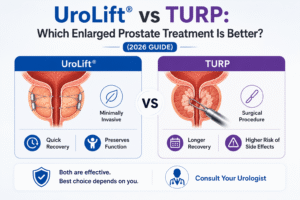
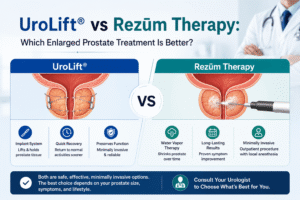
1. UroLift® System
The UroLift System is a minimally invasive procedure that relieves urinary obstruction without cutting, heating, or removing prostate tissue. Tiny implants are placed to hold the enlarged prostate tissue away from the urethra, allowing urine to flow more freely.
How It Works
A specialized device places permanent implants that gently retract the enlarged prostate tissue, opening the urethra without removing prostate tissue.
Best Suitable For
- Mild to moderate BPH
- Small to medium-sized prostates
- Men wishing to preserve sexual function
- Patients seeking rapid recovery
Advantages
- No tissue removal
- No surgical incision
- Usually performed as a day-care procedure
- Fast symptom relief
- Short recovery period
- Lower risk of sexual side effects in appropriately selected patients
Limitations
- Not suitable for every prostate anatomy
- May not be recommended for significantly enlarged prostates
- Careful patient selection is important
Recovery
Most patients resume routine activities within a few days.
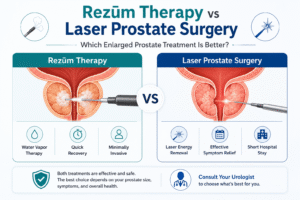
2. Rezūm Water Vapor Therapy
Rezūm Therapy uses controlled water vapor (steam) to destroy excess prostate tissue. Over time, the body naturally absorbs the treated tissue, reducing urinary obstruction.
How It Works
Sterile water vapor is delivered into the enlarged prostate tissue through a specialized device. The targeted cells gradually disappear, improving urine flow.
Best Suitable For
- Moderate BPH
- Men looking for a minimally invasive treatment
- Patients who wish to avoid traditional surgery
Advantages
- No surgical incision
- Outpatient procedure
- Minimal blood loss
- Short recovery
- Preserves erectile function in many patients
Limitations
- Improvement develops gradually
- Temporary urinary catheter may be required
- Mild urinary symptoms may occur during healing
Recovery
Most patients return to daily activities within a few days while symptom improvement continues over several weeks.
3. iTind Procedure
The iTind device temporarily reshapes the bladder neck and prostate to improve urine flow without removing tissue.
How It Works
The device is placed temporarily inside the prostate and removed after several days, allowing gradual remodeling of the urinary passage.
Best Suitable For
- Mild to moderate BPH
- Carefully selected patients
- Individuals preferring a temporary implant
Advantages
- No permanent implant
- No tissue removal
- Minimally invasive
- Short procedure time
- Quick recovery
Limitations
- Not suitable for every patient
- Limited by prostate anatomy
- Requires appropriate patient selection
Recovery
Most men resume normal activities shortly after device removal.
4. Laser Prostate Surgery
Laser surgery uses concentrated laser energy to remove or vaporize enlarged prostate tissue while minimizing bleeding.
How It Works
A laser fiber is inserted through the urethra to precisely remove obstructing prostate tissue.
Best Suitable For
- Moderate to large prostates
- Patients with bleeding concerns
- Men who require significant tissue removal
Advantages
- Reduced bleeding
- Shorter catheterization
- Faster recovery than many traditional procedures
- Short hospital stay
Limitations
- Requires specialized equipment
- Results depend on surgical expertise
Recovery
Most patients return home within one or two days with gradual improvement over the following weeks.
5. TURP (Transurethral Resection of the Prostate)
TURP remains one of the most established surgical treatments for BPH and has been used successfully for many years.
How It Works
Specialized instruments remove enlarged prostate tissue through the urethra without external incisions.
Best Suitable For
- Moderate to severe urinary obstruction
- Patients who do not respond adequately to medication
- Men experiencing BPH-related complications
Advantages
- Proven long-term results
- Significant improvement in urinary flow
- Widely available
- Well-established procedure
Limitations
- Requires anesthesia
- Longer recovery than some minimally invasive options
- Hospital admission is generally required
Recovery
Recovery usually takes several weeks depending on the patient’s overall health.
6. Aquablation Therapy
Aquablation Therapy combines robotic technology with high-pressure water to remove prostate tissue with precision.
How It Works
Real-time imaging guides a robotic system that directs a high-pressure water jet to remove enlarged prostate tissue accurately.
Best Suitable For
- Medium to large prostates
- Patients seeking robot-assisted treatment
- Individuals requiring precise tissue removal
Advantages
- Robot-assisted precision
- No thermal injury to surrounding tissue
- Effective symptom improvement
- Suitable for larger prostates in selected cases
Limitations
- Limited availability
- Requires specialized technology
- May not be offered at every hospital
Recovery
Many patients recover more quickly than with traditional surgery, although recovery varies depending on individual circumstances.
7. Prostatic Artery Embolization (PAE)
PAE is a minimally invasive image-guided procedure performed by an interventional radiologist to reduce the blood supply to the prostate.
How It Works
Tiny particles are introduced into the arteries supplying the prostate, reducing blood flow and causing the gland to shrink gradually.
Best Suitable For
- Selected patients who are not ideal surgical candidates
- Men seeking a non-surgical approach
- Patients with larger prostates after specialist evaluation
Advantages
- No surgical incision
- Minimal blood loss
- Short hospital stay
- Faster recovery for many patients
Limitations
- Not suitable for every patient
- Requires specialist expertise
- Long-term suitability depends on individual clinical factors
Recovery
Most patients resume normal activities within several days.
Comparison Summary
| Treatment | Best For | Hospital Stay | Recovery | Tissue Removal |
|---|---|---|---|---|
| UroLift® | Mild to Moderate BPH | Usually Day Care | Fast | No |
| Rezūm | Moderate BPH | Usually Day Care | Fast | Gradual Tissue Reduction |
| iTind | Mild to Moderate BPH | Usually Day Care | Fast | No |
| Laser Surgery | Moderate to Large BPH | Short Stay | Moderate | Yes |
| TURP | Moderate to Severe BPH | Hospital Admission | Moderate | Yes |
| Aquablation | Medium to Large BPH | Short Stay | Moderate | Yes |
| PAE | Selected Patients | Short Stay | Fast | No Direct Tissue Removal |
Which BPH Treatment Is Best?
The answer depends on your individual medical condition. Factors such as prostate size, urinary symptoms, age, overall health, and treatment goals all play an important role in determining the most appropriate option.
Instead of searching for one universally “best” treatment, patients should work with an experienced urologist to choose the approach that best matches their specific clinical needs.
Which BPH Treatment Is Best? A Detailed Comparison
Choosing the right treatment is not only about relieving urinary symptoms—it is about finding the option that best fits your prostate size, overall health, lifestyle, and long-term expectations. Comparing different treatments side by side can help you understand the advantages and limitations of each approach before discussing them with your urologist.
Comparison Table: Modern BPH Treatments
| Feature | UroLift® | Rezūm | iTind | Laser Surgery | TURP | Aquablation | PAE |
|---|---|---|---|---|---|---|---|
| Minimally Invasive | ✅ | ✅ | ✅ | ✅ | ❌ | ✅ | ✅ |
| Hospital Stay | Usually Same Day | Usually Same Day | Usually Same Day | 1–2 Days | 2–3 Days | 1–2 Days | Usually Same Day |
| Tissue Removal | No | Gradual | No | Yes | Yes | Yes | No |
| Recovery Time | Fast | Fast | Fast | Moderate | Moderate | Moderate | Fast |
| General Anesthesia | Usually No | Usually No | Usually No | Usually Yes | Yes | Yes | Usually No |
| Suitable for Large Prostate | Limited | Selected Cases | Limited | Yes | Yes | Yes | Selected Cases |
| Short Recovery | Excellent | Excellent | Excellent | Good | Moderate | Good | Excellent |
Which Treatment Is Best for Younger Men?
Many younger patients are concerned about returning to work quickly and maintaining their quality of life.
Depending on the clinical evaluation, minimally invasive procedures may be considered because they often involve:
- Faster recovery
- Less discomfort
- Shorter hospital stay
- Earlier return to normal activities
However, treatment recommendations should always be based on prostate size, symptoms, and the advice of an experienced urologist.
Which Treatment Is Best for Older Adults?
Older adults often have additional medical conditions such as:
- Diabetes
- Heart disease
- High blood pressure
- Kidney disorders
- Blood-thinning medications
Doctors consider these factors carefully before recommending treatment.
For some patients, minimally invasive options may be appropriate, while others may benefit from more established surgical procedures depending on their overall health.
Which Treatment Is Best for Large Prostates?
Larger prostates often require treatments capable of relieving significant urinary obstruction.
Depending on the patient’s condition, doctors may consider:
- Laser Prostate Surgery
- TURP (for appropriate prostate sizes)
- Aquablation Therapy
- PAE in selected patients
The decision depends on imaging findings, prostate anatomy, and clinical evaluation rather than prostate size alone.
Which Treatment Is Best for Preserving Sexual Function?
Many patients ask this important question during consultation.
The impact on sexual function varies among treatments and from person to person.
When sexual function is a major concern, the treating urologist will discuss the potential benefits and risks of each option based on current evidence and the patient’s individual situation.
Open communication about treatment goals helps guide the selection process.
Which Treatment Offers the Fastest Recovery?
Recovery depends on:
- Overall health
- Type of procedure
- Prostate size
- Healing response
- Post-treatment care
In general, many minimally invasive procedures allow patients to resume routine activities sooner than traditional surgery, although recovery experiences differ from person to person.
Which Treatment Provides Long-Term Relief?
Several treatments provide durable symptom improvement when patients are appropriately selected.
Long-term success depends on:
- Correct diagnosis
- Proper patient selection
- Surgeon experience
- Regular follow-up
- Lifestyle modifications
- Management of other health conditions
No procedure can guarantee identical outcomes for every patient.
Questions to Ask Your Urologist
Before deciding on treatment, consider discussing the following questions:
- What is the exact cause of my urinary symptoms?
- How large is my prostate?
- Do I need medication or a procedure?
- Which treatment do you recommend and why?
- What benefits can I realistically expect?
- What are the possible risks?
- Will I need a urinary catheter?
- How long will recovery take?
- When can I return to work?
- Will I require future follow-up?
Being informed helps patients make confident treatment decisions.
Common Myths About BPH Treatment
Myth 1: Surgery Is Always Required
Fact: Many men can be managed successfully with lifestyle changes, medications, or minimally invasive procedures.
Myth 2: Every Enlarged Prostate Needs Immediate Treatment
Fact: Mild symptoms may be monitored with regular follow-up if clinically appropriate.
Myth 3: One Treatment Is Best for Everyone
Fact: Treatment is individualized based on clinical findings and patient preferences.
Myth 4: Older Men Cannot Undergo BPH Treatment
Fact: Age alone does not determine treatment suitability. Overall health and medical evaluation are more important.
Myth 5: Internet Reviews Are Enough to Choose Treatment
Fact: Online information can be helpful, but treatment decisions should always be made after consultation with a qualified urologist.
Expert Advice from Dr. Priyaddarshi Ranjan
The best BPH treatment is the one that is most appropriate for your individual condition—not necessarily the newest or most widely advertised procedure.
A detailed evaluation that includes your symptoms, prostate size, medical history, diagnostic findings, and personal preferences helps identify the treatment most likely to provide safe and effective symptom relief.
Patients should focus on choosing an experienced urologist who offers a comprehensive range of treatment options and follows an evidence-based, patient-centered approach.
Key Takeaways
- There is no universal best BPH treatment.
- Every patient requires an individualized treatment plan.
- Modern treatment options include both minimally invasive procedures and surgical techniques.
- The right treatment depends on prostate size, symptoms, overall health, and personal priorities.
- Consulting an experienced urologist is essential for selecting the most appropriate treatment.
Frequently Asked Questions (FAQs)
1. Which BPH treatment is best?
There is no single BPH treatment that is best for everyone. The most appropriate treatment depends on prostate size, urinary symptoms, age, overall health, lifestyle, and personal treatment goals. After a thorough evaluation, a urologist can recommend the option best suited to your condition.
2. Which treatment has the fastest recovery?
Many minimally invasive procedures, such as UroLift®, Rezūm Therapy, iTind, and Prostatic Artery Embolization (PAE), generally allow patients to resume normal activities sooner than traditional surgery. However, recovery varies from person to person.
3. Which BPH treatment is best for preserving sexual function?
Some minimally invasive treatments are designed to reduce the likelihood of affecting sexual function in appropriately selected patients. Your urologist will discuss the benefits and possible risks of each treatment based on your individual situation.
4. Which treatment is recommended for a large prostate?
Treatment selection depends on several factors, including prostate anatomy and overall health. Depending on the clinical evaluation, options such as Laser Prostate Surgery, Aquablation Therapy, TURP, or PAE may be considered for larger prostates.
5. Can BPH be treated without surgery?
Yes. Many men with mild or moderate symptoms benefit from lifestyle changes, medications, or minimally invasive procedures. Surgery is generally considered when symptoms are severe, complications develop, or conservative treatments are no longer effective.
6. Is TURP still considered a good treatment?
Yes. TURP remains one of the most established surgical treatments for BPH and continues to be recommended for selected patients. However, newer minimally invasive procedures may be suitable for others depending on their condition.
7. Is Laser Prostate Surgery better than TURP?
Neither treatment is universally better. Each has advantages and limitations. The most appropriate choice depends on prostate size, medical history, available technology, and the recommendations of an experienced urologist.
8. How long does recovery take after BPH treatment?
Recovery depends on the treatment performed and individual healing. Minimally invasive procedures often involve shorter recovery times, while surgical procedures may require several weeks for complete recovery.
9. Does every patient require hospitalization?
No. Several minimally invasive treatments are commonly performed as day-care or short-stay procedures, while some surgeries may require one or more days of hospitalization.
10. Will I need a catheter after treatment?
Some procedures may require temporary catheterization, while others may not. The duration depends on the type of treatment and your recovery.
11. Can BPH return after treatment?
Many treatments provide long-term symptom relief, but recurrence is possible in some patients. Regular follow-up with your urologist helps monitor prostate health and determine whether additional treatment is needed.
12. How do I know which BPH treatment is right for me?
The best treatment is determined after a comprehensive evaluation that considers your symptoms, prostate size, diagnostic test results, overall health, and personal preferences. A consultation with an experienced urologist is essential for making an informed decision.
Conclusion
Many men ask, “Which BPH treatment is best?”, but the answer is rarely the same for every patient. Modern urology offers several effective options—including medications, minimally invasive procedures, and surgery—each with its own advantages and limitations.
The most appropriate treatment depends on factors such as prostate size, symptom severity, age, medical history, lifestyle, and treatment goals. Rather than focusing on a single “best” procedure, patients should work with an experienced urologist to choose the treatment that best matches their individual needs.
Early diagnosis, accurate evaluation, and personalized treatment planning can significantly improve urinary symptoms, quality of life, and long-term outcomes.
There is no single best treatment for Benign Prostatic Hyperplasia (BPH). The ideal option depends on prostate size, urinary symptoms, age, overall health, and individual treatment goals. Modern treatments such as UroLift®, Rezūm Therapy, iTind, Laser Prostate Surgery, TURP, Aquablation Therapy, and Prostatic Artery Embolization (PAE) each have specific advantages for selected patients. A comprehensive evaluation by an experienced urologist is essential to determine the most appropriate treatment.
Confused About Which BPH Treatment Is Right for You?
Every enlarged prostate is different, and the right treatment should be based on a detailed medical evaluation—not guesswork.
Consult an experienced urologist to understand your diagnosis and explore advanced treatment options such as UroLift®, Rezūm Therapy, iTind, Laser Prostate Surgery, TURP, Aquablation Therapy, and PAE.
Book your consultation today and receive a personalized treatment plan tailored to your needs.