
BPH Causes: What Causes an Enlarged Prostate?
Understanding the Causes of Benign Prostatic Hyperplasia (BPH)
BPH Causes vary from person to person, but ageing remains the most significant contributing factor. Benign Prostatic Hyperplasia (BPH), commonly known as an enlarged prostate, is one of the most common age-related conditions affecting men. While BPH is not cancerous, the enlargement of the prostate gland can cause bothersome urinary symptoms that significantly impact quality of life.
Many men wonder “What causes BPH?” or “Why does the prostate enlarge with age?” Although the exact cause is not fully understood, medical research shows that ageing, hormonal changes, genetics, and certain lifestyle factors all contribute to the development of Benign Prostatic Hyperplasia.
Understanding these causes can help men recognize their risk, adopt healthier habits, and seek timely medical evaluation before symptoms become severe.
If you have urinary symptoms such as frequent urination, weak urine flow, or difficulty emptying your bladder, consult Dr. Priyaddarshi Ranjan for a comprehensive BPH evaluation.
Learning about BPH Causes is the first step toward understanding why the prostate enlarges and how early diagnosis can help prevent complications. Understanding BPH Causes helps men identify their risk factors and seek medical advice before urinary symptoms become more severe.
What Causes BPH?
Benign Prostatic Hyperplasia (BPH) develops due to a combination of biological, hormonal, genetic, and lifestyle factors. Although researchers have not identified a single cause, several well-established risk factors are known to increase the likelihood of prostate enlargement.
Understanding BPH Causes can help men recognize symptoms early, reduce their risk where possible, and seek timely medical evaluation before urinary symptoms become severe.
The following are the most common causes and contributing factors associated with BPH. Although BPH Causes vary between individuals, ageing remains the most significant factor associated with prostate enlargement.
What is Benign Prostatic Hyperplasia (BPH)?
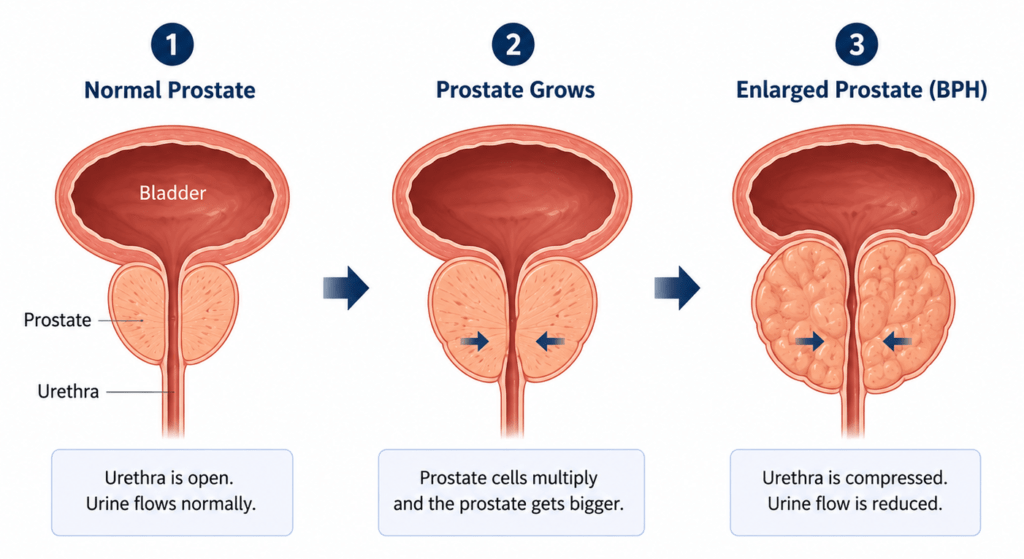
The prostate is a small gland located below the bladder and surrounding the urethra. Its primary function is to produce fluid that nourishes and transports sperm.
As men grow older, the prostate often increases in size. When this enlargement is non-cancerous, it is known as Benign Prostatic Hyperplasia (BPH).
Unlike prostate cancer, BPH does not spread to other parts of the body. However, as the prostate enlarges, it may compress the urethra and interfere with normal urine flow, resulting in Lower Urinary Tract Symptoms (LUTS).
Early diagnosis and appropriate treatment can help prevent complications and improve quality of life
How Does the Prostate Become Enlarged?
The prostate naturally undergoes changes throughout a man’s life.
During puberty, hormones stimulate the prostate to grow. A second phase of growth often begins around the age of 25 and continues slowly throughout adulthood.
In many men, this gradual enlargement eventually narrows the urethra and places pressure on the bladder, making urination increasingly difficult.
Although not every man develops troublesome symptoms, the likelihood of BPH increases steadily with age. Learning about BPH Causes can help patients better understand why urinary symptoms gradually develop over time.
Key Takeaways
BPH is a non-cancerous enlargement of the prostate.
✔ Ageing is the strongest risk factor.
✔ Hormonal changes contribute to prostate growth.
✔ Family history increases the likelihood of developing BPH.
✔ Obesity and metabolic disorders may worsen symptoms.
✔ Early diagnosis allows access to effective treatment options.
Statistics
- Around 50% of men over the age of 50 have evidence of prostate enlargement.
- The prevalence of BPH increases with age and affects up to 80–90% of men over 80 years.
- Not every enlarged prostate causes symptoms, but the risk of bothersome urinary problems rises as the prostate enlarges.
What Are the Main Causes of BPH?
Benign Prostatic Hyperplasia (BPH) develops due to a combination of biological, hormonal, genetic, and lifestyle factors. Although researchers have not identified a single cause, several well-established risk factors are known to increase the likelihood of prostate enlargement.
The following are the most common causes and contributing factors associated with BPH.
1. Ageing – The Biggest Cause of BPH
Age is the strongest risk factor for Benign Prostatic Hyperplasia. As men grow older, the prostate gland naturally enlarges due to long-term hormonal changes.
BPH is uncommon in men younger than 40 years but becomes increasingly common after the age of 50. Among all BPH Causes, ageing continues to be the strongest and most consistently recognized risk factor.
| Age Group | Approximate Prevalence |
|---|---|
| Under 40 Years | Rare |
| 40–49 Years | Around 20% |
| 50–59 Years | Around 40–50% |
| 60–69 Years | Around 60% |
| 70 Years and Above | More than 80% |
2. Hormonal Changes
Hormonal changes that occur naturally with ageing are believed to play a major role in the development of BPH.
As testosterone levels gradually decline, the balance between testosterone, dihydrotestosterone (DHT), and estrogen changes. These hormonal shifts may stimulate continued growth of prostate tissue.
Although hormones are essential for normal prostate function, changes in hormone levels over time may contribute to prostate enlargement in susceptible individuals.
3. Increased Dihydrotestosterone (DHT)
Dihydrotestosterone (DHT) is a hormone derived from testosterone and plays an important role in prostate development.
In some men, DHT continues to accumulate within the prostate as they age. This ongoing exposure may encourage prostate cells to grow, resulting in enlargement of the gland.
Several medications used to treat BPH work by reducing the effects of DHT on the prostate.
4. Family History and Genetics
Genetics also plays a significant role in the development of BPH.
Men who have a father or brother with an enlarged prostate are more likely to develop the condition themselves. In some families, BPH tends to appear at a younger age and may progress more rapidly.
While genetics cannot be changed, knowing your family history allows for earlier screening and timely medical evaluation.
5. Obesity and Excess Body Weight
Obesity has been linked to a higher risk of developing enlarged prostate symptoms.
Excess body fat can contribute to hormonal imbalance, chronic inflammation, and metabolic changes that may influence prostate growth.
Maintaining a healthy body weight through regular exercise and a balanced diet may help improve overall urinary health and reduce symptom progression.
6. Diabetes and Metabolic Syndrome
Men with diabetes are more likely to experience urinary symptoms associated with BPH.
High blood sugar levels can affect bladder function, while insulin resistance and metabolic syndrome may contribute to prostate enlargement.
Proper management of diabetes and maintaining a healthy lifestyle are important components of long-term prostate health.
7. Lack of Physical Activity
A sedentary lifestyle is associated with several health conditions, including obesity and metabolic disorders, which may indirectly increase the risk of BPH.
Regular physical activity supports healthy circulation, weight management, and overall urinary health.
Simple activities such as walking, swimming, cycling, and light strength training can contribute to better prostate health.
8. Chronic Inflammation
Some studies suggest that long-term inflammation within the prostate may contribute to tissue enlargement in certain individuals.
Although research is ongoing, reducing lifestyle factors associated with chronic inflammation—such as smoking, obesity, and poor diet—may benefit overall prostate health.
9. Unhealthy Lifestyle Habits
Certain lifestyle habits may worsen urinary symptoms associated with BPH.
These include:
- Excessive alcohol consumption
- High caffeine intake
- Smoking
- Poor dietary habits
- Chronic stress
- Lack of sleep
While these factors may not directly cause BPH, they can aggravate urinary symptoms and reduce quality of life. Several lifestyle-related BPH Causes may influence symptom severity, making healthy habits an important part of long-term prostate care.
10. Can Stress Cause BPH?
Stress does not directly cause Benign Prostatic Hyperplasia.
However, chronic stress can increase muscle tension around the bladder, alter urinary habits, and make existing BPH symptoms feel worse.
Managing stress through regular exercise, adequate sleep, relaxation techniques, and healthy lifestyle habits may help improve urinary comfort.
10. Can Stress Cause BPH?
Stress does not directly cause Benign Prostatic Hyperplasia.
However, chronic stress can increase muscle tension around the bladder, alter urinary habits, and make existing BPH symptoms feel worse.
Managing stress through regular exercise, adequate sleep, relaxation techniques, and healthy lifestyle habits may help improve urinary comfort.
Quick Summary Table
| Risk Factor | Can It Increase BPH Risk? |
|---|---|
| Ageing | ✅ Yes |
| Hormonal Changes | ✅ Yes |
| High DHT Levels | ✅ Yes |
| Family History | ✅ Yes |
| Obesity | ✅ Yes |
| Diabetes | ✅ Yes |
| Physical Inactivity | ✅ Yes |
| Chronic Inflammation | Possible |
| Smoking | May Worsen Symptoms |
| Alcohol | May Worsen Symptoms |
| Stress | May Worsen Symptoms |
Doctor's Expert Advice
Not every man with these risk factors will develop BPH, and not every man with BPH will have severe symptoms. However, if you are over the age of 50, have a family history of prostate enlargement, or notice changes in your urinary habits, an evaluation by a urologist can help identify the cause and guide the most appropriate treatment.
Who Is Most at Risk of Developing BPH?
Although Benign Prostatic Hyperplasia (BPH) can affect many men as they age, some individuals have a significantly higher risk of developing prostate enlargement and bothersome urinary symptoms.
Understanding these risk factors can help men recognize their chances of developing BPH and encourage earlier screening and treatment.
The following groups are at the highest risk:
Men Over the Age of 50
The likelihood of developing BPH increases steadily after the age of 50. As men grow older, hormonal changes and natural prostate growth make enlargement more common.
Men With a Family History of BPH
If your father or brother has been diagnosed with an enlarged prostate, your risk of developing BPH is higher than average.
Men With Diabetes
Diabetes is associated with changes in bladder function and metabolism that may increase the severity of urinary symptoms.
Overweight or Obese Men
Excess body weight contributes to hormonal imbalance, chronic inflammation, and metabolic syndrome, all of which are associated with prostate enlargement.
Men With a Sedentary Lifestyle
Limited physical activity has been linked to poorer urinary health and an increased risk of developing bothersome BPH symptoms.
Men With High Blood Pressure or Metabolic Syndrome
Cardiovascular disease, hypertension, and metabolic syndrome frequently occur alongside BPH and may contribute to worsening urinary symptoms.
Can BPH Be Prevented?
There is currently no guaranteed way to prevent Benign Prostatic Hyperplasia, because ageing and hormonal changes cannot be avoided.
However, adopting healthy lifestyle habits may help reduce the severity of symptoms and support better prostate health.
Healthy Habits That May Help
✔ Maintain a healthy weight
✔ Exercise regularly
✔ Eat a balanced diet rich in fruits and vegetables
✔ Stay well hydrated during the day
✔ Reduce caffeine and alcohol intake, especially in the evening
✔ Avoid smoking
✔ Manage diabetes and blood pressure
✔ Schedule regular prostate check-ups after the age of 50
Although these measures cannot completely prevent prostate enlargement, they can contribute to better urinary health and overall well-being. While some BPH Causes cannot be changed, maintaining a healthy lifestyle may help reduce symptom progression.
Does Lifestyle Affect BPH?
Yes. Lifestyle does not directly cause BPH, but it can significantly influence the severity of urinary symptoms.
Healthy Lifestyle
- Regular physical activity
- Healthy body weight
- Balanced diet
- Good sleep
- Stress management
These habits may help improve bladder function and reduce urinary discomfort.
Unhealthy Lifestyle
- Smoking
- Excess alcohol
- High caffeine intake
- Processed foods
- Obesity
- Physical inactivity
These factors may worsen urinary symptoms and negatively affect prostate health.
Lifestyle Comparison Table
| Healthy Lifestyle | Unhealthy Lifestyle |
|---|---|
| Regular exercise | Sedentary lifestyle |
| Healthy weight | Obesity |
| Balanced diet | Processed foods |
| Adequate hydration | Excess sugary drinks |
| Good sleep | Poor sleep |
| Stress management | Chronic stress |
| Limited alcohol | Heavy alcohol intake |
| No smoking | Smoking |
Common Myths About BPH Causes
Many misconceptions exist regarding enlarged prostate. Understanding the facts can help men make informed decisions about their health.
Myth 1: BPH Is the Same as Prostate Cancer
Fact: BPH is a non-cancerous enlargement of the prostate. It does not become prostate cancer, although both conditions can occur in the same individual.
Myth 2: Every Older Man Will Develop Severe BPH
Fact: While prostate enlargement becomes more common with age, not every man develops bothersome symptoms or requires treatment.
Myth 3: Sexual Activity Causes BPH
Fact: There is no scientific evidence that sexual activity causes Benign Prostatic Hyperplasia.
Myth 4: Drinking Less Water Will Cure Frequent Urination
Fact: Severely reducing fluid intake can lead to dehydration and does not treat the underlying cause of BPH.
Myth 5: Surgery Is the Only Treatment for BPH
Fact: Many men benefit from lifestyle modifications, medications, or minimally invasive procedures such as UroLift®, Rezūm™, and iTind®, depending on their symptoms and clinical evaluation.
Research Highlights
Recent clinical research has improved our understanding of Benign Prostatic Hyperplasia.
Studies have shown that:
- Age remains the strongest predictor of prostate enlargement.
- Obesity is associated with larger prostate volume and more severe urinary symptoms.
- Diabetes and metabolic syndrome may contribute to worsening Lower Urinary Tract Symptoms (LUTS).
- Early evaluation allows more treatment options before complications develop.
- Minimally invasive therapies have expanded treatment choices for appropriately selected patients.
Research in this field continues to evolve, helping doctors provide more personalized treatment strategies.
Quick Facts About BPH
| Question | Answer |
|---|---|
| Is BPH cancer? | No |
| Is BPH common? | Yes, especially after age 50 |
| Can young men develop BPH? | Rarely |
| Is age the biggest risk factor? | Yes |
| Can lifestyle affect symptoms? | Yes |
| Can BPH be treated? | Yes |
| Does everyone need surgery? | No |
When Should You Consult a Urologist?
You should consult a urologist if you notice:
- Frequent urination
- Difficulty starting urination
- Weak urine stream
- Waking up multiple times at night to urinate
- Feeling that the bladder is not empty
- Blood in urine
- Pain while urinating
- Sudden inability to pass urine
Early diagnosis can help identify the cause of your symptoms and determine the most appropriate treatment.
Doctor's Advice
Many men wait until urinary symptoms become severe before seeking medical attention. However, early evaluation often allows for simpler treatment options and may reduce the risk of complications. If you notice persistent urinary changes, consulting a urologist can help you understand the cause and discuss the treatments that are most appropriate for your individual situation.
Can the Causes of BPH Be Treated?
Although the natural ageing process cannot be stopped, the symptoms caused by Benign Prostatic Hyperplasia (BPH) can be effectively managed. Treatment focuses on relieving urinary symptoms, improving bladder function, and preventing complications.
The most appropriate treatment depends on:
- Severity of symptoms
- Prostate size
- Age and overall health
- Lifestyle
- Patient preferences
An experienced urologist will recommend a personalized treatment plan after evaluating your condition.
Treatment Options for BPH
1. Lifestyle Changes
Men with mild symptoms may benefit from simple lifestyle modifications, such as:
- Reducing caffeine and alcohol intake
- Avoiding excessive fluids before bedtime
- Maintaining a healthy weight
- Exercising regularly
- Managing diabetes and blood pressure
- Practicing bladder training techniques
Lifestyle changes may improve symptom control but do not reduce the size of the prostate.
2. Medications
For moderate symptoms, medications may help by:
- Relaxing the muscles around the prostate and bladder neck
- Reducing prostate enlargement in selected patients
- Improving urine flow and reducing urinary symptoms
Medication should only be taken under medical supervision, as not every patient responds in the same way.
3. Minimally Invasive Treatments
For patients with persistent or bothersome symptoms, minimally invasive procedures can provide effective relief while reducing recovery time.
UroLift®
A tissue-lifting procedure that opens the blocked urethra without removing prostate tissue. It is suitable for selected patients and is designed to preserve sexual function.
Rezūm™ Water Vapor Therapy
A minimally invasive treatment that uses controlled water vapor to reduce excess prostate tissue over time, improving urinary flow.
iTind®
A temporary implant that reshapes the prostate opening to improve urine flow without permanent implants or tissue removal.
4. Surgical Treatment
When the prostate is significantly enlarged or complications develop, surgery may be recommended.
Surgical options include procedures such as laser prostate surgery or TURP (Transurethral Resection of the Prostate), depending on individual patient needs.
Treatment Comparison
| Treatment | Best For | Hospital Stay | Recovery |
|---|---|---|---|
| Lifestyle Changes | Mild symptoms | Not required | Immediate |
| Medication | Mild to Moderate | Not required | Ongoing |
| UroLift® | Selected patients | Usually day care | Fast |
| Rezūm™ | Moderate symptoms | Usually day care | Short |
| iTind® | Selected patients | Usually day care | Fast |
| Surgery | Severe cases | May require admission | Longer |
Frequently Asked Questions
What are the main BPH Causes?
The exact cause is not fully understood, but ageing and hormonal changes are considered the primary contributors. Genetics, obesity, diabetes, and lifestyle factors may also increase the risk.
Can stress cause BPH?
Stress does not directly cause BPH, but it may worsen urinary symptoms in men who already have an enlarged prostate.
Does obesity increase the risk of BPH?
Yes. Research suggests that obesity is associated with larger prostate size and more severe urinary symptoms.
Can diabetes cause an enlarged prostate?
Diabetes does not directly cause BPH, but it is associated with urinary symptoms and may contribute to the progression of prostate enlargement.
Is BPH hereditary?
A family history of BPH increases the likelihood of developing an enlarged prostate, particularly at an earlier age.
Can exercise reduce the risk of BPH?
Regular physical activity supports overall prostate health and may help reduce the severity of urinary symptoms, although it cannot completely prevent BPH.
Can diet influence BPH?
A balanced diet rich in vegetables, fruits, whole grains, and healthy fats supports overall health and may help manage urinary symptoms. Limiting excessive caffeine and alcohol may also improve comfort.
Does every man with BPH need surgery?
No. Many patients are successfully managed with lifestyle changes, medications, or minimally invasive procedures. Surgery is considered only when appropriate based on symptom severity and clinical findings.
Identifying BPH Causes is the first step toward choosing the most appropriate treatment.
Conclusion
Understanding BPH Causes allows men to recognize their risk factors and seek timely medical advice before symptoms affect their quality of life. Benign Prostatic Hyperplasia is a common age-related condition with multiple contributing factors, including ageing, hormonal changes, genetics, obesity, diabetes, and lifestyle habits. While these factors cannot always be controlled, early recognition and timely medical evaluation can help manage symptoms effectively and reduce the risk of complications.
If you are experiencing urinary symptoms or believe you may be at risk of BPH, consult an experienced urologist for a comprehensive assessment and personalized treatment plan. Understanding BPH Causes empowers men to recognize risk factors early and make informed decisions about diagnosis and treatment.
A New Era in Healthcare
- BPH Symptoms
- BPH Diagnosis
- BPH Treatment
- UroLift Treatment
- Rezum Therapy
- iTind Treatment
- BPH Diet
- BPH Exercise
- BPH Recovery
- Contact Dr. Priyaddarshi Ranjan
Practicing At
Prostate Excellence centre, Meliora Institute of kidney, Urology and Men’s health, SCO-152, Ground Floor, Sector 24 D, Chandigarh
Concerned About the Causes of BPH?
If you are concerned about BPH Causes or are experiencing urinary symptoms, schedule a consultation with Dr. Priyaddarshi Ranjan for a detailed prostate evaluation.
If you are concerned about BPH Causes or have symptoms of an enlarged prostate, schedule a consultation with Dr. Priyaddarshi Ranjan for expert evaluation and personalized care.