
Aquablation Therapy: Advanced Robot-Assisted Waterjet Treatment for Enlarged Prostate (BPH)
Precision Treatment for Enlarged Prostate with Advanced Waterjet Technology
Benign Prostatic Hyperplasia (BPH), commonly known as an enlarged prostate, can lead to urinary symptoms such as frequent urination, weak urine flow, urgency, incomplete bladder emptying, and interrupted sleep.
Aquablation Therapy is an advanced, robot-assisted treatment that combines real-time imaging with a high-pressure waterjet to remove enlarged prostate tissue. The procedure is designed to improve urinary flow while allowing precise treatment planning based on the patient’s anatomy.
Aquablation may be recommended for selected men after a detailed evaluation by a qualified urologist.
What Is Aquablation Therapy?
Aquablation Therapy is a robot-assisted surgical treatment for Benign Prostatic Hyperplasia (BPH). It combines real-time ultrasound imaging with a high-pressure waterjet to remove enlarged prostate tissue, helping improve urinary flow while allowing the surgeon to plan the treatment with precision.
Key Takeaways
- Aquablation Therapy is a robot-assisted surgical treatment for enlarged prostate (BPH).
- It combines real-time ultrasound imaging with a high-pressure waterjet to remove enlarged prostate tissue.
- The procedure is performed without an external incision.
- Many patients experience improved urinary flow and relief from BPH symptoms after recovery.
- The most appropriate treatment should be selected after a comprehensive evaluation by an experienced urologist.
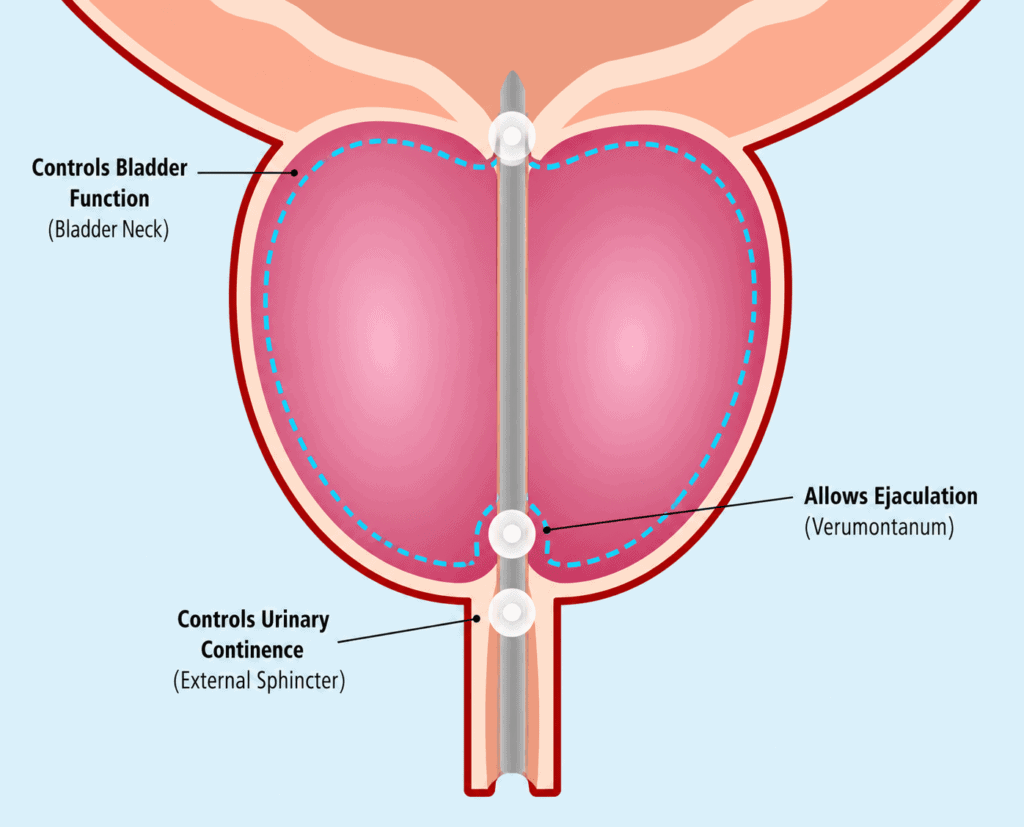
How Does Aquablation Therapy Work?
Step 1
Comprehensive urological evaluation
↓
Step 2
Diagnosis of enlarged prostate (BPH)
↓
Step 3
Real-time ultrasound imaging
↓
Step 4
Personalized treatment planning
↓
Step 5
Robot-assisted waterjet tissue removal
↓
Step 6
Improved urinary flow and symptom relief
Who Is a Good Candidate for Aquablation Therapy?
Aquablation Therapy may be recommended for men who:
- Have moderate to severe urinary symptoms caused by BPH
- Have not achieved adequate symptom relief with medication
- Are looking for an advanced surgical treatment option
- Have prostate anatomy considered suitable after evaluation
- Wish to discuss modern treatment options with their urologist
Not every patient with BPH is a suitable candidate. Individual assessment is essential before choosing treatment.
Benefits of Aquablation Therapy
Potential benefits include:
- Robot-assisted precision
- Personalized treatment planning
- Removal of enlarged prostate tissue
- No external surgical incision
- Improved urinary flow
- Relief from bothersome urinary symptoms
- Advanced technology designed for consistent treatment planning
Individual outcomes vary depending on patient characteristics and clinical findings.
Why Choose Aquablation Therapy?
Aquablation offers an innovative approach to BPH treatment by combining advanced imaging and robotic technology.
Your urologist may recommend Aquablation if:
- Your symptoms significantly affect your quality of life.
- Medication has not provided adequate relief.
- Your prostate anatomy is appropriate for the procedure.
- An advanced surgical treatment is considered suitable after evaluation.
The best treatment decision should always be based on a comprehensive medical assessment.
Doctor's Expert Advice
Aquablation Therapy combines robotic technology, real-time imaging, and waterjet precision to treat enlarged prostate. The best results are achieved through careful patient selection and treatment planning by an experienced urologist.
How Is Aquablation Therapy Performed?
Aquablation Therapy is performed by a qualified urologist using an advanced robotic system that combines real-time ultrasound imaging with a high-pressure waterjet.
Unlike traditional prostate surgery, Aquablation allows the surgeon to create a personalized treatment plan using detailed imaging before removing enlarged prostate tissue.
The procedure is performed through the urethra without making an external skin incision.
Step 1: Comprehensive Evaluation
Before recommending Aquablation Therapy, your urologist may perform:
- Complete medical history
- Physical examination
- Digital Rectal Examination (DRE)
- PSA Blood Test (when appropriate)
- Urine analysis
- Ultrasound or MRI (if required)
- Uroflowmetry
- Post Void Residual (PVR) Test
- Kidney function tests
- IPSS Symptom Score
These investigations help determine whether Aquablation is an appropriate treatment option.
Step 2: Preparation Before Aquablation Therapy
Before the procedure, your doctor may advise you to:
- Avoid eating or drinking for several hours before surgery.
- Review all current medications.
- Temporarily stop blood-thinning medicines if medically appropriate.
- Complete pre-anesthesia evaluation.
- Arrange transportation after discharge.
Always follow your surgeon’s instructions.
Step 3: Aquablation Procedure
During the procedure:
- The patient receives spinal or general anesthesia.
- Real-time ultrasound imaging maps the prostate.
- The surgeon creates a personalized treatment plan.
- A robot-assisted high-pressure waterjet removes the enlarged prostate tissue.
- The urinary passage becomes wider, improving urine flow after healing.
The procedure is performed without an external incision.
Step 4: Recovery
Following Aquablation Therapy:
- A urinary catheter is usually placed temporarily.
- Patients are monitored after surgery.
- Hospital stay depends on recovery and the treating surgeon’s assessment.
- Follow-up visits help evaluate urinary improvement and healing.
How Long Does Aquablation Therapy Take?
Most Aquablation procedures are completed within 45–90 minutes, depending on:
- Prostate size
- Individual anatomy
- Surgical complexity
- Treatment planning
Procedure time varies between patients.
Recovery After Aquablation Therapy
Recovery differs for every patient.
Many patients gradually notice improvement in urinary symptoms during the weeks after surgery.
Temporary symptoms may include:
- Mild burning during urination
- Small amounts of blood in urine
- Increased urinary frequency
- Temporary urinary urgency
- Mild pelvic discomfort
These symptoms usually improve as healing progresses.
Recovery Timeline
| Time | Recovery Progress |
|---|---|
| Day 1 | Hospital observation and catheter care |
| Days 2–7 | Catheter removal (if advised) and early recovery |
| Weeks 2–4 | Gradual improvement in urinary symptoms |
| Weeks 4–8 | Continued healing and improved urinary flow |
| Long-Term | Regular follow-up with your urologist |
Benefits of Aquablation Therapy
Potential benefits include:
- Robot-assisted precision
- Personalized treatment planning
- Real-time ultrasound guidance
- Removal of enlarged prostate tissue
- No external surgical incision
- Improvement in urinary flow
- Relief from bothersome urinary symptoms
Treatment outcomes vary from person to person.
Possible Risks and Side Effects
Like any surgical procedure, Aquablation Therapy carries potential risks.
Temporary side effects may include:
- Burning during urination
- Blood in urine
- Increased urinary frequency
- Temporary urinary urgency
- Mild pelvic discomfort
Less common complications can occur. Your surgeon will explain the expected benefits and possible risks before treatment.
Who May Not Be Suitable for Aquablation Therapy?
Aquablation may not be appropriate for every patient.
Suitability depends on:
- Prostate size
- Prostate anatomy
- Overall health
- Bleeding risk
- Previous prostate surgery
- Individual treatment goals
A comprehensive evaluation by an experienced urologist is essential before deciding on treatment.
Success of Aquablation Therapy
Clinical studies have shown that many appropriately selected patients experience significant improvement in urinary symptoms and quality of life after Aquablation Therapy.
Treatment success depends on:
- Appropriate patient selection
- Prostate anatomy
- Surgical planning
- Overall health
- Surgeon’s experience
- Follow-up care
Every patient’s outcome is unique.
When Should You Contact Your Doctor?
Seek medical advice immediately if you experience:
- Fever
- Severe pain
- Heavy bleeding
- Inability to urinate
- Large blood clots
- Signs of urinary tract infection
Prompt evaluation helps reduce the risk of complications.
Recovery Tips After Aquablation Therapy
To support recovery:
- Drink adequate fluids unless advised otherwise.
- Avoid heavy lifting during recovery.
- Take prescribed medications exactly as directed.
- Attend all follow-up appointments.
- Avoid straining during bowel movements.
- Contact your doctor if symptoms worsen.
Doctor's Expert Advice
Aquablation Therapy combines advanced robotic technology with real-time ultrasound imaging to provide precise treatment for selected men with BPH. The best outcomes are achieved through careful patient selection, detailed treatment planning, and experienced surgical care.
Is Aquablation Therapy Better Than Other BPH Treatments?
There is no single treatment that is ideal for every man with Benign Prostatic Hyperplasia (BPH). The most appropriate treatment depends on prostate size, urinary symptoms, overall health, anatomy, medical history, and personal treatment goals.
Aquablation Therapy is one of several advanced treatment options available for BPH. Depending on individual circumstances, some patients may benefit more from Aquablation, while others may be better suited for TURP, Laser Prostate Surgery, UroLift®, Rezūm™, iTind®, or Prostatic Artery Embolization (PAE).
The final treatment decision should always be based on a detailed evaluation by a qualified urologist.
Aquablation Therapy vs Other BPH Treatments
| Feature | Aquablation | TURP | Laser Surgery | PAE | UroLift® | Rezūm™ |
|---|---|---|---|---|---|---|
| Removes Prostate Tissue | ✅ Yes | ✅ Yes | ✅ Yes | ❌ No | ❌ No | Tissue gradually shrinks |
| Robot-Assisted | ✅ Yes | ❌ No | ❌ No | ❌ No | ❌ No | ❌ No |
| Real-Time Ultrasound Guidance | ✅ Yes | ❌ No | ❌ No | ❌ No | ❌ No | ❌ No |
| External Incision | ❌ No | ❌ No | ❌ No | ❌ No | ❌ No | ❌ No |
| Hospital Stay | Usually Short | Usually Short | Usually Short | Same day or short stay | Usually Day Care | Usually Day Care |
| Recovery | Moderate | Moderate | Moderate | Gradual | Fast | Gradual |
Is Aquablation Therapy Painful?
Aquablation Therapy is performed under spinal or general anesthesia, so patients should not experience pain during the procedure.
During recovery, temporary symptoms may include:
- Mild burning during urination
- Small amounts of blood in urine
- Increased urinary frequency
- Temporary urinary urgency
- Mild pelvic discomfort
These symptoms usually improve as healing progresses.
Does Aquablation Therapy Affect Sexual Function?
Aquablation Therapy is designed to precisely remove enlarged prostate tissue using a robot-assisted waterjet under real-time imaging guidance.
The potential effects on sexual or ejaculatory function vary between patients. Your urologist will discuss the expected outcomes, possible risks, and available treatment alternatives before the procedure.
How Successful Is Aquablation Therapy?
Clinical studies have shown that many appropriately selected patients experience significant improvement in urinary symptoms and quality of life after Aquablation Therapy.
Treatment success depends on:
- Appropriate patient selection
- Prostate size
- Surgical planning
- Overall health
- Surgeon’s experience
- Follow-up care
Every patient responds differently, and outcomes vary.
How Long Do Aquablation Results Last?
Many patients continue to experience long-term improvement in urinary symptoms after Aquablation Therapy.
Long-term outcomes depend on:
- Individual anatomy
- Severity of BPH
- Overall health
- Disease progression
- Follow-up care
Some patients may require additional treatment in the future if symptoms recur.
Can Aquablation Replace Traditional Surgery?
Aquablation is an advanced surgical option, but it is not suitable for every patient.
Treatment selection depends on:
- Prostate size
- Symptom severity
- Overall health
- Bleeding risk
- Anatomical considerations
- Individual treatment goals
Some patients may benefit more from TURP, Laser Surgery, PAE, UroLift, Rezūm, or iTind after specialist evaluation.
Who Should Consider Aquablation Therapy?
Aquablation Therapy may be considered for men who:
- Have moderate to severe urinary symptoms due to BPH
- Have not achieved adequate relief with medication
- Are looking for an advanced robot-assisted treatment
- Have suitable prostate anatomy
- Are considered appropriate candidates after evaluation by a urologist
Every treatment decision should be individualized.
Common Myths About Aquablation Therapy
Myth 1: Aquablation Is Better Than Every Other Treatment
Fact: No single treatment is best for every patient. The right option depends on individual clinical findings and treatment goals.
Myth 2: Aquablation Requires an External Incision
Fact: Aquablation is performed through the urethra without making an external surgical incision.
Myth 3: Recovery Takes Several Months
Fact: Recovery varies, but many patients gradually return to normal daily activities within a few weeks, following their surgeon’s advice.
Myth 4: Every Patient with BPH Can Have Aquablation
Fact: Suitability depends on prostate anatomy, symptom severity, overall health, and evaluation by a qualified urologist.
Questions to Ask Your Doctor Before Aquablation Therapy
Before choosing treatment, consider asking:
- Am I a suitable candidate for Aquablation?
- Why do you recommend Aquablation over other treatments?
- What benefits can I realistically expect?
- What are the possible risks?
- How long will recovery take?
- Will I need a urinary catheter after surgery?
- What follow-up care will be required?
Who Should Not Delay Treatment?
Seek prompt medical evaluation if you experience:
- Inability to urinate
- Recurrent urinary tract infections
- Blood in the urine
- Bladder stones
- Kidney problems caused by urinary obstruction
- Rapid worsening of urinary symptoms
Early diagnosis and treatment may help prevent complications.
When Will I See Results after Aquablation Therapy?
Many patients begin noticing improvement in urinary flow after the catheter is removed and healing progresses.
The recovery timeline depends on:
- Individual healing response
- Prostate size
- Overall health
- Surgical planning
- Follow-up care
Regular follow-up visits help monitor progress and long-term outcomes.
Doctor's Expert Advice
Aquablation Therapy combines robotic precision, real-time ultrasound imaging, and waterjet technology to treat enlarged prostate. The best results are achieved when treatment is carefully planned and performed for appropriately selected patients.
Frequently Asked Questions About Aquablation Therapy
1. What is Aquablation Therapy?
Aquablation Therapy is an advanced robot-assisted surgical treatment for Benign Prostatic Hyperplasia (BPH). It combines real-time ultrasound imaging with a high-pressure waterjet to remove enlarged prostate tissue and improve urinary flow.
2. Who is a good candidate for Aquablation Therapy?
Aquablation Therapy may be recommended for men with moderate to severe urinary symptoms due to BPH who have not achieved adequate relief with medication and are considered suitable candidates after evaluation by a qualified urologist.
3. Is Aquablation an open surgery?
No. Aquablation Therapy is performed through the urethra without making an external skin incision.
4. How long does Aquablation Therapy take?
The procedure usually takes 45–90 minutes, depending on prostate size, anatomy, and treatment planning.
5. Is hospitalization required?
Yes. Most patients require a short hospital stay after the procedure. The exact duration depends on recovery and the treating surgeon’s recommendation.
6. How long is recovery after Aquablation Therapy?
Recovery varies from person to person. Many patients gradually return to normal daily activities within several weeks, while urinary symptoms continue to improve during healing.
7. Does Aquablation remove prostate tissue?
Yes. Aquablation Therapy removes the enlarged prostate tissue responsible for urinary obstruction using a robot-assisted high-pressure waterjet.
8. Does Aquablation affect sexual function?
The potential effects on sexual and ejaculatory function vary between patients. Your urologist will explain the expected outcomes, potential risks, and alternative treatment options before the procedure.
9. Are Aquablation results long-lasting?
Many appropriately selected patients experience long-term improvement in urinary symptoms after Aquablation Therapy. Individual outcomes depend on prostate anatomy, overall health, disease progression, and follow-up care.
10. Is Aquablation better than TURP?
Both Aquablation and TURP are effective treatment options for BPH. The most appropriate choice depends on prostate size, symptom severity, medical history, anatomy, and specialist evaluation.
11. What are the possible side effects?
Temporary side effects may include:
- Burning during urination
- Blood in urine
- Increased urinary frequency
- Temporary urinary urgency
- Mild pelvic discomfort
Most symptoms improve as healing progresses.
12. When should I consult a urologist?
Consult a qualified urologist if urinary symptoms interfere with your daily life, sleep, or work, or if you develop urinary retention, recurrent urinary tract infections, bladder stones, or blood in the urine.
Why Choose Dr. Priyaddarshi Ranjan for Aquablation Therapy?
Choosing an experienced urologist is important for selecting the most appropriate treatment for enlarged prostate.
Dr. Priyaddarshi Ranjan provides comprehensive evaluation and personalized treatment planning for men with Benign Prostatic Hyperplasia (BPH). Treatment recommendations are based on clinical findings, patient preferences, and current evidence-based practices.
Why Patients Trust Him
- Experienced Consultant Urologist
- Expertise in Advanced BPH Management
- Robotic & Minimally Invasive Urology
- Personalized Treatment Planning
- Comprehensive Diagnostic Evaluation
- Patient-Centered Care
- Long-Term Follow-up Support
Conclusion
Aquablation Therapy is an advanced robot-assisted treatment for Benign Prostatic Hyperplasia (BPH) that combines real-time ultrasound imaging with a high-pressure waterjet to remove enlarged prostate tissue with precision.
For appropriately selected patients, Aquablation can improve urinary flow and reduce bothersome urinary symptoms. However, the best treatment depends on prostate size, symptom severity, overall health, and a detailed evaluation by a qualified urologist.
If you are experiencing persistent symptoms of an enlarged prostate, consult an experienced urologist to determine whether Aquablation Therapy or another BPH treatment is the most suitable option for you.
A New Era in Healthcare
Practicing At
Prostate Excellence centre, Meliora Institute of kidney, Urology and Men’s health, SCO-152, Ground Floor, Sector 24 D, Chandigarh
Looking for Advanced Aquablation Therapy?
If frequent urination, weak urine flow, urgency, or incomplete bladder emptying is affecting your quality of life, schedule a consultation with Dr. Priyaddarshi Ranjan.
Receive a comprehensive evaluation and personalized treatment plan to determine whether Aquablation Therapy is the right option for your condition.