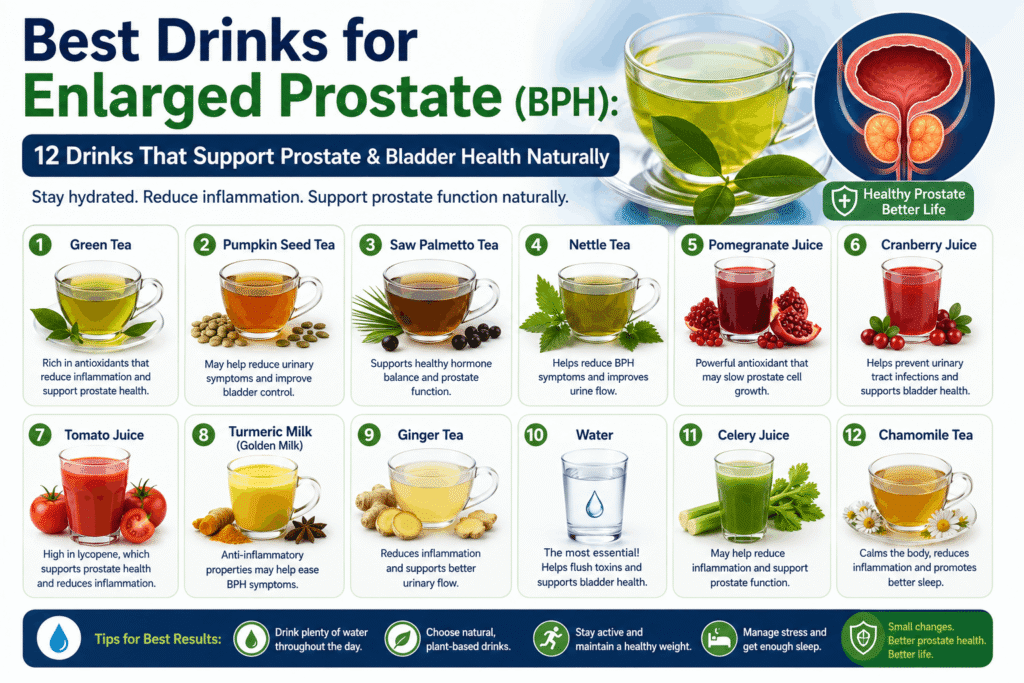
Best Drinks for Enlarged Prostate are an important part of managing the symptoms of Benign Prostatic Hyperplasia (BPH). While no beverage can cure an enlarged prostate, choosing the right drinks can help support bladder function, improve hydration, reduce irritation, and ease common urinary symptoms such as frequent urination, urgency, weak urine flow, and nighttime bathroom visits.
Many men focus on the foods they eat but overlook the impact of beverages on prostate and bladder health. Drinks high in caffeine, sugar, or alcohol can irritate the bladder and worsen symptoms. On the other hand, staying hydrated with water and nutrient-rich beverages may help improve overall urinary health and complement medical treatment for BPH.
In this guide, you’ll discover the 12 best drinks for enlarged prostate, learn how they support prostate health, and find out which beverages you should limit or avoid.
Best Drinks for Enlarged Prostate can help support bladder health, maintain hydration, and improve urinary comfort when combined with a healthy lifestyle.
The best drinks for enlarged prostate include:
- Water
- Tomato juice
- Green tea
- Pomegranate juice
- Cranberry juice
- Coconut water
- Herbal tea
- Lemon water
- Vegetable juice
- Barley water
- Pumpkin seed milk
- Aloe vera juice (only under medical guidance)
These drinks help maintain hydration, provide antioxidants, reduce inflammation, and support bladder and prostate health. Avoid sugary soft drinks, excessive caffeine, alcohol, and energy drinks, as they may worsen BPH symptoms.
Why Hydration Matters for Men with BPH
Proper hydration is essential for everyone, but it is especially important for men with an enlarged prostate. Drinking enough fluids helps dilute urine, reduces bladder irritation, and supports normal urinary function.
Some men mistakenly reduce their water intake because they experience frequent urination. However, dehydration can make urine more concentrated, which may irritate the bladder and worsen urinary symptoms.
Instead of drinking less water, focus on drinking the right amount at the right time of day.
Benefits of proper hydration include:
- Supports healthy bladder function
- Helps flush bacteria from the urinary tract
- Reduces urine concentration
- Promotes kidney health
- Supports overall prostate health
How Drinks Affect an Enlarged Prostate
Not all beverages affect the body in the same way.
Some drinks:
- Reduce inflammation
- Provide antioxidants
- Improve hydration
- Support immune health
Others may:
- Irritate the bladder
- Increase urine production
- Trigger urinary urgency
- Worsen nighttime urination
- Increase inflammation
Choosing bladder-friendly drinks can make a noticeable difference in your day-to-day comfort.
12 Best Drinks for Enlarged Prostate
Here are the best drinks for enlarged prostate that doctors and nutrition experts commonly recommend for men with BPH.
1. Water – The Best Drink for Enlarged Prostate
Water is the healthiest and most important beverage for men with BPH. Proper hydration supports kidney function, keeps urine diluted, and helps maintain a healthy urinary system.
Benefits
- Keeps urine diluted
- Reduces bladder irritation
- Supports kidney health
- Helps prevent dehydration
- Improves overall urinary health
Daily Recommendation
Aim for approximately 2–2.5 litres of water per day, unless your doctor advises otherwise. Drink consistently throughout the day and reduce fluid intake 2–3 hours before bedtime if nighttime urination is a problem.
2. Tomato Juice
Tomatoes are naturally rich in lycopene, a powerful antioxidant that has been studied for its role in supporting prostate health.
Benefits
- Rich source of lycopene
- Supports prostate health
- Provides vitamin C
- Helps reduce oxidative stress
Tip
Choose unsalted, fresh tomato juice without added sugar or preservatives.
3. Green Tea
Green tea contains catechins and other antioxidants that may support overall health. While it contains caffeine, moderate consumption may still provide benefits. Men who are sensitive to caffeine can opt for decaffeinated green tea.
Benefits
- Rich in antioxidants
- Supports immune health
- May reduce inflammation
- Supports overall wellness
Best Choice
Choose decaffeinated green tea if regular green tea worsens urinary urgency.
4. Pomegranate Juice
Pomegranate juice is packed with antioxidants that help protect cells from oxidative damage and support cardiovascular health.
Benefits
- High in antioxidants
- Supports healthy circulation
- Provides vitamin C
- Supports overall wellness
Choose Carefully
Select 100% pure pomegranate juice with no added sugar.
5. Cranberry Juice
Cranberry juice is commonly associated with urinary tract health. While it does not treat BPH, it may help support urinary health, especially in men prone to recurrent urinary tract infections.
Benefits
- Supports urinary tract health
- Rich in antioxidants
- May help reduce bacterial adhesion in the urinary tract
- Supports hydration
Important Note
Choose unsweetened cranberry juice, as sweetened varieties can contain large amounts of added sugar.
6. Coconut Water
Natural coconut water is an excellent hydrating drink that provides electrolytes such as potassium and magnesium.
Benefits
- Excellent hydration
- Rich in natural electrolytes
- Low in fat
- Supports overall health
Best Option
Choose fresh coconut water without added sugar or artificial flavors.
7. Herbal Tea
Herbal teas are naturally caffeine-free and can be a soothing alternative to coffee or regular tea. Certain herbal teas may help maintain hydration without irritating the bladder.
Benefits
- Naturally caffeine-free
- Helps maintain hydration
- Gentle on the bladder
- Supports relaxation and better sleep
Good Options
- Chamomile tea
- Peppermint tea
- Ginger tea
- Hibiscus tea (if suitable for you)
Tip: Avoid adding excessive sugar or sweeteners.
8. Lemon Water
Lemon water is a refreshing way to stay hydrated while providing a small amount of vitamin C. It can encourage regular water intake throughout the day.
Benefits
- Promotes hydration
- Low in calories
- Contains vitamin C
- Supports overall wellness
Best Time to Drink
Drink a glass of lemon water in the morning or between meals. If citrus worsens your bladder symptoms, switch to plain water.
9. Fresh Vegetable Juice
Fresh vegetable juices provide vitamins, minerals, and antioxidants without the added sugars found in many packaged drinks.
Healthy Choices
- Tomato
- Carrot
- Beetroot
- Spinach
- Cucumber
- Celery
Benefits
- Rich in antioxidants
- Supports immunity
- Helps maintain hydration
- Provides essential nutrients
Choose freshly prepared juices without added salt or sugar.
10. Barley Water
Barley water is a traditional drink that helps keep the body hydrated and provides soluble fiber and essential minerals.
Benefits
- Supports hydration
- Gentle on the urinary system
- May aid digestion
- Low in fat
Tip
Drink homemade barley water without added sugar for the best nutritional value.
11. Pumpkin Seed Milk
Pumpkin seeds contain zinc, magnesium, and healthy fats that are associated with prostate health. Pumpkin seed milk is a dairy-free option that can be included as part of a balanced diet.
Benefits
- Rich in zinc and magnesium
- Supports prostate health
- Dairy-free alternative
- Provides healthy fats
Choose unsweetened pumpkin seed milk whenever possible.
12. Aloe Vera Juice (With Medical Advice)
Some people consume aloe vera juice for digestive health. However, scientific evidence supporting its role in BPH management is limited.
Benefits
- Supports hydration
- May aid digestion
- Contains antioxidants
Important
Drink aloe vera juice only under the guidance of a healthcare professional, as some products may cause digestive side effects or interact with medications.
Drinks to Avoid with Enlarged Prostate
Certain beverages may worsen urinary symptoms by irritating the bladder or increasing urine production. Even if you regularly consume the best drinks for enlarged prostate, avoiding bladder-irritating beverages is equally important.
Limit or avoid:
- Alcohol
- Coffee
- Strong black tea
- Energy drinks
- Sugary soft drinks
- Sweetened fruit drinks
- Carbonated beverages
- Excessive sports drinks with added sugar
Reducing these drinks may help improve urinary urgency, frequency, and nighttime urination.
Best Time to Drink Water
The timing of fluid intake can help reduce urinary symptoms.
Morning
Drink one or two glasses of water after waking up to rehydrate your body.
Afternoon
Continue drinking water regularly to stay hydrated.
Evening
Reduce large amounts of fluid 2–3 hours before bedtime if you frequently wake up to urinate.
During Exercise
Drink water before, during, and after physical activity to replace lost fluids.
Nighttime Hydration Tips
Many men with BPH struggle with nocturia (frequent nighttime urination). These habits may help:
- Drink most fluids earlier in the day.
- Limit caffeine after lunch.
- Avoid alcohol in the evening.
- Empty your bladder before going to bed.
- Reduce large amounts of water immediately before sleeping.
Sample Daily Hydration Plan
Morning
- 2 glasses of water
- Herbal tea or lemon water
Mid-Morning
- Coconut water
Lunch
- 1 glass of water with your meal
Afternoon
- Fresh vegetable juice
Evening
- Water in moderation
Dinner
- Small glass of water
Before Bed
Only sip water if you feel thirsty.
Best Indian Drinks for Men with BPH
Several traditional Indian beverages can support hydration when prepared without excess sugar.
Healthy options include:
- Fresh coconut water
- Unsweetened chaas (buttermilk)
- Lemon water
- Barley water
- Fresh tomato juice
- Fresh vegetable juice
- Herbal tea
- Plain water
Avoid packaged beverages with added sugar or preservatives whenever possible.
Tips for Choosing Healthy Drinks
✔ Read nutrition labels carefully.
✔ Choose beverages without added sugar.
✔ Limit caffeine intake.
✔ Avoid artificial colors and preservatives.
✔ Drink water consistently throughout the day.
✔ Prefer fresh, homemade drinks over packaged products.
Can Drinking More Water Cure an Enlarged Prostate?
No. Drinking more water alone cannot cure benign prostatic hyperplasia (BPH) or shrink the prostate gland.
However, proper hydration can:
- Improve bladder function
- Prevent dehydration
- Dilute urine
- Support kidney health
- Help reduce bladder irritation
Water should be part of a comprehensive BPH management plan that includes a healthy diet, regular exercise, and medical treatment when needed.
What Does Research Say About Drinks and BPH?
Research suggests that while no single drink can cure Benign Prostatic Hyperplasia (BPH), healthy beverage choices may help reduce bladder irritation, support hydration, and improve overall urinary health.
Studies indicate that diets rich in antioxidants, vitamins, and plant-based nutrients may help reduce oxidative stress and inflammation, both of which are associated with aging and prostate health. Hydration also plays an important role in maintaining normal bladder function and preventing concentrated urine, which can irritate the urinary tract.
Healthcare professionals generally recommend limiting beverages that irritate the bladder—such as alcohol, sugary soft drinks, and excessive caffeine—while encouraging adequate water intake and a balanced diet.
Can Drinks Shrink an Enlarged Prostate?
This is one of the most common questions men ask after being diagnosed with BPH.
The simple answer is No.
No drink has been scientifically proven to shrink an enlarged prostate on its own. However, healthy beverages can help:
- Support bladder health
- Reduce dehydration
- Improve urinary comfort
- Lower bladder irritation
- Complement medical treatment
Think of healthy drinks as part of an overall prostate-friendly lifestyle rather than a standalone treatment.
Common Drinking Mistakes Men with BPH Should Avoid
Many urinary symptoms worsen because of everyday drinking habits rather than the amount of fluid consumed.
1. Drinking Too Much Coffee
Coffee is one of the biggest bladder stimulants because of its caffeine content.
Excess coffee may:
- Increase urinary urgency
- Increase urinary frequency
- Trigger nighttime urination
- Irritate the bladder
If you enjoy coffee, limit your intake and avoid drinking it in the evening.
2. Drinking Large Amounts Before Bed
Many men drink several glasses of water after dinner, only to wake up multiple times during the night.
Instead:
- Drink more fluids during the daytime.
- Reduce fluid intake 2–3 hours before bedtime.
- Empty your bladder before sleeping.
3. Choosing Sugary Drinks Every Day
Soft drinks, packaged juices, flavored beverages, and sweetened teas often contain large amounts of sugar.
Regular consumption may:
- Promote weight gain
- Increase inflammation
- Raise the risk of diabetes
- Negatively affect bladder health
Replace sugary drinks with water, herbal tea, or fresh vegetable juice.
4. Ignoring Hydration
Some men purposely drink less water because they fear frequent urination.
Unfortunately, dehydration can:
- Concentrate urine
- Irritate the bladder
- Increase burning sensations
- Worsen urinary discomfort
Proper hydration is still important—it simply needs to be managed wisely.
5. Excess Alcohol Consumption
Alcohol increases urine production and can irritate the bladder lining.
Limiting alcohol often helps reduce:
- Nighttime urination
- Urinary urgency
- Sleep disruption
Lifestyle Habits That Work Alongside Healthy Drinks
Healthy beverages provide the greatest benefit when combined with good lifestyle habits.
Exercise Regularly
Aim for at least 150 minutes of moderate exercise each week, such as:
- Walking
- Swimming
- Cycling (if comfortable)
- Yoga
- Pelvic floor exercises
- Stretching
Regular physical activity helps improve circulation, maintain a healthy weight, and support urinary health.
Maintain a Healthy Weight
Excess body weight has been linked to more severe lower urinary tract symptoms.
Losing weight may help:
- Improve bladder emptying
- Reduce urinary urgency
- Lower inflammation
- Improve sleep quality
Eat a Balanced Diet
Healthy drinks should complement a nutritious diet that includes:
- Fruits
- Vegetables
- Whole grains
- Lean protein
- Legumes
- Healthy fats
Avoid relying on beverages alone for prostate health.
Sleep Well
Poor sleep and frequent nighttime urination often create a cycle of fatigue and stress.
Good sleep habits include:
- Limiting evening fluids
- Avoiding caffeine late in the day
- Maintaining a regular bedtime
- Creating a relaxing sleep environment
Manage Stress
Stress may increase bladder sensitivity and worsen urinary urgency.
Helpful techniques include:
- Meditation
- Deep breathing
- Mindfulness
- Yoga
- Spending time outdoors
When Should You See a Urologist?
Healthy drinks and lifestyle changes may help mild symptoms, but medical evaluation is essential if symptoms persist or worsen.
Consult a urologist if you experience:
- Weak urine stream
- Difficulty starting urination
- Frequent urination
- Nighttime urination
- Urinary urgency
- Blood in the urine
- Pain while urinating
- Recurrent urinary tract infections
- Inability to urinate
Early diagnosis allows treatment before complications develop.
Medical Treatments for Enlarged Prostate
If lifestyle changes alone are not enough, your doctor may recommend additional treatment based on your prostate size, symptoms, and overall health.
Medications
Medicines may help:
- Relax the muscles around the prostate.
- Improve urine flow.
- Reduce prostate enlargement over time.
Minimally Invasive Procedures
Modern minimally invasive treatments include:
These procedures often provide symptom relief with shorter recovery times than traditional surgery.
Surgical Treatments
For moderate to severe BPH, surgery may be recommended.
Common options include:
Your urologist will recommend the most suitable treatment based on your individual condition.
Key Takeaways
- Water remains the best drink for enlarged prostate and should be your primary source of hydration.
- Antioxidant-rich beverages such as tomato juice, pomegranate juice, and fresh vegetable juice may support overall prostate health.
- Limit alcohol, sugary drinks, energy drinks, and excessive caffeine to reduce bladder irritation.
- Healthy drinks work best when combined with a balanced diet, regular exercise, weight management, and appropriate medical care.
- Consult a urologist if urinary symptoms interfere with your daily life or continue to worsen.
Frequently Asked Questions (FAQs)
1. What are the best drinks for an enlarged prostate?
The best drinks for an enlarged prostate include water, tomato juice, green tea, pomegranate juice, cranberry juice, coconut water, herbal tea, lemon water, vegetable juice, barley water, pumpkin seed milk, and unsweetened buttermilk. These drinks help support hydration and overall prostate health.
2. Can drinking more water help with BPH?
Yes. Drinking enough water keeps urine diluted, supports bladder health, and helps reduce irritation. However, drinking large amounts just before bedtime may increase nighttime urination.
3. Is coffee bad for an enlarged prostate?
Coffee contains caffeine, which may irritate the bladder and increase urinary urgency, frequency, and nocturia in some men with BPH. Limiting coffee intake may help reduce symptoms.
4. Is green tea good for prostate health?
Green tea contains antioxidants that may support prostate health. If caffeine worsens your symptoms, choose decaffeinated green tea.
5. Is coconut water good for BPH?
Yes. Natural coconut water helps maintain hydration and provides electrolytes without caffeine or added sugar, making it a healthy beverage choice for many men with BPH.
6. Which drinks should I avoid with an enlarged prostate?
Avoid or limit alcohol, energy drinks, sugary soft drinks, excessive coffee, strong tea, and sweetened beverages because they may worsen urinary symptoms.
7. Can juices improve prostate health?
Fresh tomato juice, pomegranate juice, cranberry juice, and vegetable juices provide antioxidants and nutrients that support overall prostate health as part of a balanced diet.
8. Does alcohol make BPH worse?
Alcohol increases urine production and may irritate the bladder, leading to increased urinary frequency, urgency, and nighttime urination.
9. Can drinks shrink an enlarged prostate?
No. No drink has been scientifically proven to shrink an enlarged prostate. Healthy beverages can support urinary health but should not replace medical treatment.
10. What is the best time to drink water with BPH?
Drink most of your fluids during the morning and afternoon. Reduce fluid intake 2–3 hours before bedtime to help reduce nighttime urination.
11. Are herbal teas safe for men with BPH?
Most caffeine-free herbal teas, such as chamomile or peppermint tea, are generally good alternatives to caffeinated drinks. If you have other medical conditions or take medications, consult your healthcare provider about specific herbal products.
12. When should I see a doctor for BPH symptoms?
Consult a urologist if you have persistent urinary symptoms, difficulty urinating, blood in the urine, recurrent urinary tract infections, or sudden inability to pass urine.
Choosing the best drinks for enlarged prostate can help support bladder function, maintain proper hydration, and reduce urinary irritation. Water should remain your primary beverage, while antioxidant-rich drinks such as tomato juice, pomegranate juice, and fresh vegetable juice can be included as part of a healthy diet.
Avoiding sugary beverages, excessive caffeine, and alcohol may help reduce urinary urgency, frequency, and nighttime urination. For persistent symptoms, seek advice from a qualified urologist.
Conclusion
Making the best drinks for enlarged prostate part of your daily routine may help improve hydration and support better urinary health over time.
The best drinks for enlarged prostate include water, herbal tea, coconut water, tomato juice, pomegranate juice, and other antioxidant-rich beverages that support prostate and bladder health.
While healthy drinks may help manage symptoms, they are not a cure for Benign Prostatic Hyperplasia (BPH). If your symptoms continue or become more severe, consult a urologist to discuss the most appropriate treatment options, including medications and minimally invasive procedures.
If lifestyle changes and the best drinks for enlarged prostate are not providing enough relief, consult an experienced urologist for personalized treatment.
Experiencing frequent urination, weak urine flow, or other symptoms of an enlarged prostate?
Schedule a consultation with Dr. Priyaddarshi Ranjan, an experienced urologist, for a comprehensive evaluation and personalized BPH treatment plan. Early diagnosis and timely treatment can help improve your urinary health and quality of life.