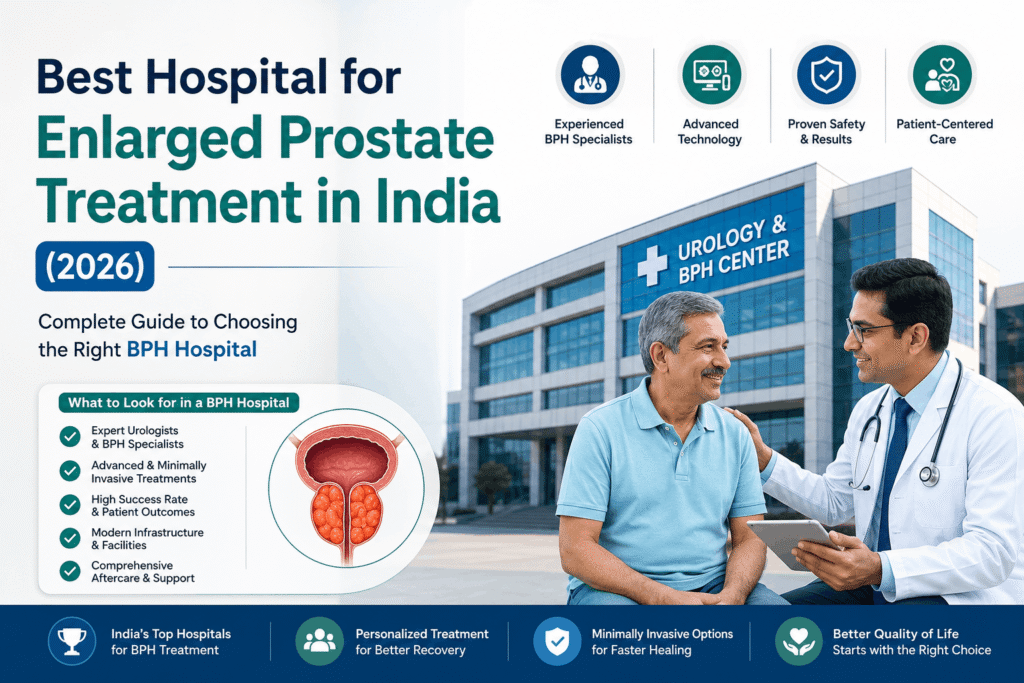
Finding the best hospital for enlarged prostate treatment in India is one of the most important decisions for men experiencing symptoms of Benign Prostatic Hyperplasia (BPH). While medications may help in the early stages, many patients eventually require specialized evaluation and advanced treatment from an experienced urology team.
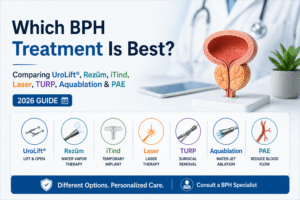
Today, India offers world-class hospitals equipped with modern diagnostic facilities and minimally invasive BPH treatments such as UroLift®, Rezūm Therapy, iTind, Laser Prostate Surgery, TURP, Aquablation Therapy, and Prostatic Artery Embolization (PAE). Choosing the right hospital involves much more than selecting the nearest healthcare facility—it requires evaluating medical expertise, available technology, patient safety, treatment options, and long-term follow-up care.
This comprehensive guide explains everything you need to know before selecting a hospital for enlarged prostate treatment in India, including the features of a high-quality urology center, the latest treatment technologies, questions to ask your doctor, and how to make an informed treatment decision.
Choosing the best hospital for enlarged prostate treatment in India involves more than selecting a well-known name. Patients should look for experienced urologists, comprehensive diagnostic services, modern minimally invasive treatments, high standards of patient safety, and structured follow-up care. Hospitals offering multiple BPH treatment options can provide personalized recommendations based on prostate size, symptom severity, and overall health, helping patients achieve better long-term outcomes.
Quick Answer
The best hospital for enlarged prostate treatment in India is one that provides:
- Experienced urologists specializing in BPH treatment
- Comprehensive prostate evaluation and diagnostic facilities
- Access to both surgical and non-surgical treatment options
- Advanced minimally invasive technologies
- Personalized treatment plans
- High standards of patient safety
- Transparent treatment discussions
- Long-term follow-up care
- Modern operation theatres and emergency support
- Strong patient education and rehabilitation services
Rather than choosing a hospital based only on reputation, patients should select a center that offers the most appropriate treatment for their specific prostate size, symptoms, age, and overall health.
What Is an Enlarged Prostate (BPH)?
Benign Prostatic Hyperplasia (BPH), commonly known as an enlarged prostate, is a non-cancerous increase in the size of the prostate gland. The prostate surrounds the urethra, the tube through which urine leaves the body. As the gland enlarges, it can compress the urethra and interfere with normal urine flow.
BPH is one of the most common age-related conditions affecting men, particularly those over the age of 50. Although it is not prostate cancer, untreated BPH can significantly affect quality of life and, in some cases, lead to complications such as urinary retention, recurrent urinary tract infections, bladder stones, or kidney damage.
Fortunately, advances in medical technology have made it possible to manage BPH with a range of effective treatment options, many of which are minimally invasive and offer faster recovery than traditional surgery.
Common Symptoms of Enlarged Prostate
Symptoms of BPH can develop gradually and may worsen over time if left untreated. Common symptoms include:
- Frequent urination, especially at night (Nocturia)
- Difficulty starting urination
- Weak or interrupted urine stream
- Feeling that the bladder does not empty completely
- Urgency to urinate
- Straining during urination
- Dribbling after urination
- Sudden inability to urinate (acute urinary retention)
If these symptoms begin to interfere with your daily routine, sleep, work, or overall quality of life, it is important to consult a qualified urologist for a comprehensive evaluation.
Why Choose the Best Hospital for Enlarged Prostate Treatment in India?
Many patients focus only on finding an experienced doctor, but the quality of the hospital is equally important. A well-equipped hospital provides access to advanced diagnostic tools, modern treatment technologies, trained nursing staff, anesthesia specialists, emergency support, and comprehensive post-treatment care.
Choosing the right hospital can help ensure:
- Accurate diagnosis using advanced investigations
- Availability of multiple treatment options under one roof
- Reduced risk of complications
- Faster recovery through minimally invasive procedures
- Better infection prevention and patient safety protocols
- Coordinated care from a multidisciplinary team
- Reliable follow-up and long-term monitoring
Hospitals that regularly manage prostate conditions often have greater experience in handling both routine and complex BPH cases.
When Should You Visit a Hospital for BPH?
Many men ignore urinary symptoms for months or even years, assuming they are a normal part of aging. However, delaying evaluation can increase the risk of complications.
You should consider visiting a hospital if you experience:
- Persistent urinary symptoms despite medication
- Increasing difficulty passing urine
- Recurrent urinary tract infections
- Blood in the urine
- Bladder stones
- Urinary retention requiring catheterization
- Declining kidney function related to urinary obstruction
- Significant disruption of daily activities or sleep due to urinary symptoms
Early evaluation allows doctors to recommend the most appropriate treatment before complications develop.
What Makes a Hospital the Best for Enlarged Prostate Treatment?
When comparing hospitals, look beyond advertisements or popularity. A quality hospital should provide evidence-based care, experienced specialists, and access to the latest treatment options.
Key factors include:
Experienced Urologists
Hospitals with dedicated urology departments and specialists experienced in treating BPH can provide accurate diagnosis and individualized treatment recommendations.
Comprehensive Diagnostic Services
Look for hospitals that offer essential investigations such as:
- PSA testing
- Digital Rectal Examination (DRE)
- Ultrasound of the prostate
- Uroflowmetry
- Post-Void Residual (PVR) measurement
- Urine analysis
- Cystoscopy (when required)
Availability of Multiple Treatment Options
Every patient is different. The ideal hospital should provide access to a range of treatments rather than recommending only one procedure.
Modern Technology
Advanced equipment and minimally invasive technologies can improve precision, reduce hospital stay, and support faster recovery.
Personalized Care
Treatment decisions should be based on prostate size, symptom severity, overall health, age, and patient preferences—not a one-size-fits-all approach.
Advanced Enlarged Prostate (BPH) Treatments Available at the Best Hospitals in India
One of the biggest advantages of choosing the best hospital for enlarged prostate treatment in India is access to multiple treatment options under one roof. Every patient has different symptoms, prostate size, age, and overall health, so the ideal treatment varies from person to person.
Leading hospitals offer comprehensive evaluation before recommending the most suitable treatment. Below are the most commonly available advanced BPH treatment options.
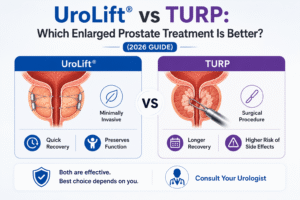
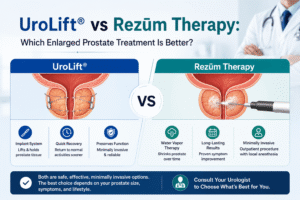
1. UroLift® System
The UroLift System is a minimally invasive procedure designed to relieve urinary obstruction caused by an enlarged prostate without removing prostate tissue. Small permanent implants are placed to hold the enlarged prostate tissue away from the urethra, allowing urine to flow more freely.
Best Suitable For
- Mild to moderate BPH
- Men with smaller to medium-sized prostates
- Patients wishing to preserve sexual function
- Individuals seeking a quicker recovery
Benefits
- No cutting or removal of tissue
- Usually performed as a day-care procedure
- Rapid symptom improvement
- Minimal recovery time
- Lower risk of sexual side effects
Limitations
- Not suitable for every prostate size or anatomy
- Some patients may require future treatment depending on disease progression
Recovery
Most patients return to normal activities within a few days, although mild urinary discomfort may occur temporarily.
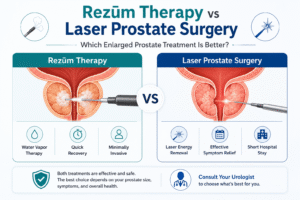
2. Rezūm Water Vapor Therapy
Rezūm Therapy uses the natural energy stored in water vapor (steam) to reduce excess prostate tissue responsible for urinary obstruction. Over time, the treated tissue is absorbed by the body, improving urine flow.
Best Suitable For
- Moderate BPH
- Patients wanting a minimally invasive treatment
- Men looking to avoid major surgery
Benefits
- Minimally invasive
- No surgical incision
- Preserves erectile function in many patients
- Outpatient procedure
- Long-lasting symptom relief for appropriately selected patients
Limitations
- Improvement develops gradually over several weeks
- Temporary catheterization may be required after the procedure
Recovery
Most patients resume routine activities within a few days while continuing follow-up with their urologist.
3. iTind Procedure
The iTind device temporarily reshapes the prostate and bladder neck to improve urine flow. It is inserted for a few days and then removed without permanent implants.
Best Suitable For
- Mild to moderate urinary symptoms
- Carefully selected patients based on prostate anatomy
Benefits
- No tissue removal
- Temporary implant
- Short procedure time
- Minimal downtime
Limitations
- Not appropriate for all prostate sizes
- Requires careful patient selection
Recovery
Most patients experience gradual improvement in urinary symptoms following device removal.
4. Laser Prostate Surgery
Laser procedures use concentrated laser energy to remove or vaporize enlarged prostate tissue while minimizing bleeding.
Several laser techniques may be available depending on hospital expertise and equipment.
Best Suitable For
- Moderate to large prostates
- Patients taking blood thinners (in selected cases)
- Men at higher risk of bleeding
Benefits
- Less bleeding than conventional surgery
- Shorter hospital stay
- Faster catheter removal in many cases
- Faster recovery
Limitations
- Requires specialized equipment
- Results depend on surgeon experience
Recovery
Many patients return home within one or two days and recover more quickly than after conventional surgery.
5. TURP (Transurethral Resection of the Prostate)
TURP has been one of the most established surgical treatments for BPH for decades. During the procedure, excess prostate tissue is removed through the urethra using specialized instruments.
Best Suitable For
- Moderate to severe urinary obstruction
- Patients who have not improved with medication
- Men experiencing complications of BPH
Benefits
- Well-established procedure
- Significant improvement in urine flow
- Effective long-term symptom relief
Limitations
- Requires anesthesia
- Hospital stay is usually longer than minimally invasive procedures
- Recovery takes longer compared with newer therapies
Recovery
Most patients recover over several weeks with regular follow-up.
6. Aquablation Therapy
Aquablation Therapy combines robotic technology, real-time imaging, and a high-pressure water jet to remove enlarged prostate tissue with precision.
Best Suitable For
- Medium to large prostates
- Patients requiring accurate tissue removal
- Men seeking a modern, minimally invasive option
Benefits
- Robot-assisted precision
- Consistent tissue removal
- Reduced risk of thermal injury
- Effective symptom improvement
Limitations
- Availability may be limited to advanced centers
- Requires specialized technology and trained surgical teams
Recovery
Recovery is generally faster than many traditional surgeries, though individual outcomes vary.
7. Prostatic Artery Embolization (PAE)
PAE is a minimally invasive procedure performed by an interventional radiologist. Tiny particles are used to reduce blood flow to the prostate, causing it to shrink gradually.
Best Suitable For
- Patients who may not be ideal surgical candidates
- Individuals with larger prostates in selected cases
- Patients preferring a non-surgical option after evaluation
Benefits
- No surgical incision
- Minimal blood loss
- Short hospital stay
- Faster recovery for many patients
Limitations
- Not appropriate for everyone
- Requires careful imaging and specialist assessment
- Long-term suitability depends on individual clinical factors
Recovery
Most patients resume normal activities within a few days while continuing follow-up.
Which Treatment Is Right for You?
There is no single treatment that is best for every patient. The right option depends on several factors, including:
- Prostate size
- Severity of urinary symptoms
- Age
- Overall health
- Presence of other medical conditions
- Previous treatments
- Lifestyle and personal preferences
- Desire to preserve sexual function
- Individual treatment goals
A detailed evaluation by an experienced urologist helps determine the most appropriate treatment plan.
Why Leading Hospitals Offer Multiple Treatment Options
Hospitals that provide a wide range of BPH treatments can tailor care to each patient’s needs rather than relying on a single procedure. This comprehensive approach allows specialists to recommend treatment based on clinical findings, patient preferences, and the latest evidence.
Choosing a hospital with expertise in both minimally invasive and surgical treatments gives patients access to personalized care and flexibility if their treatment needs change over time.
How to Find the Best Hospital for Enlarged Prostate Treatment in India
Choosing the best hospital for enlarged prostate treatment in India is about much more than selecting a well-known name. A high-quality hospital combines experienced specialists, advanced technology, patient safety, and comprehensive follow-up care to ensure the best possible outcomes.
Below are the most important factors every patient should consider before making a decision.
1. Experience of the Urologist
The expertise of the treating urologist is one of the biggest factors influencing treatment success.
An experienced urologist can:
- Accurately diagnose the cause of urinary symptoms
- Recommend the most appropriate treatment
- Manage complex BPH cases
- Reduce the risk of complications
- Provide better long-term outcomes
When evaluating a hospital, ask whether the urologist regularly performs procedures such as:
- UroLift®
- Rezūm Therapy
- iTind
- Laser Prostate Surgery
- TURP
- Aquablation Therapy
- Prostatic Artery Embolization (PAE)
Hospitals with dedicated urology departments often have greater expertise in managing both simple and complex BPH cases.
2. Availability of Advanced Technology
Modern hospitals use advanced equipment to improve diagnosis, precision, and patient safety.
Look for hospitals that offer:
- High-resolution ultrasound
- Uroflowmetry testing
- Flexible cystoscopy
- Digital imaging systems
- Modern operation theatres
- Laser technology
- Endoscopic equipment
- Advanced anesthesia facilities
Access to modern technology allows doctors to select the most appropriate treatment while reducing recovery time and improving patient comfort.
3. Comprehensive Diagnostic Facilities
A reliable hospital should provide all necessary diagnostic services in one place.
These may include:
- PSA (Prostate-Specific Antigen) testing
- Digital Rectal Examination (DRE)
- Urine analysis
- Urine culture
- Kidney function tests
- Ultrasound of the prostate and bladder
- Post-Void Residual (PVR) measurement
- Uroflowmetry
- MRI (when clinically indicated)
- Cystoscopy (if required)
Having these facilities available under one roof helps ensure a faster and more coordinated diagnostic process.
4. Access to Multiple Treatment Options
Not every patient requires surgery.
The best hospital for enlarged prostate treatment in India should offer a range of treatment options so care can be tailored to individual needs.
These may include:
- Lifestyle modifications
- Medications
- UroLift
- Rezūm Therapy
- iTind
- Laser Prostate Surgery
- TURP
- Aquablation Therapy
- Prostatic Artery Embolization (PAE)
Hospitals that provide several treatment options can recommend the most appropriate approach rather than relying on a single procedure.
5. NABH Accreditation and Quality Standards
Hospitals accredited by recognized quality organizations generally follow standardized protocols for:
- Patient safety
- Infection prevention
- Surgical care
- Emergency response
- Medication management
- Equipment maintenance
Accreditation reflects a commitment to quality, although it should be considered alongside the experience of the treating team and the hospital’s overall capabilities.
6. Infection Prevention and Patient Safety
Hospital-acquired infections can delay recovery after any medical procedure.
Ask about:
- Sterilization practices
- Operation theatre standards
- Infection control protocols
- Antibiotic stewardship
- Nursing care
- Postoperative monitoring
Hospitals with strong infection-control systems help reduce treatment-related risks.
7. ICU and Emergency Support
Although many minimally invasive BPH procedures are routine, hospitals should still have:
- 24/7 emergency services
- Intensive Care Unit (ICU)
- Blood bank access
- Experienced anesthesiologists
- Critical care specialists
- Emergency surgical backup
These services provide additional reassurance if unexpected medical situations arise.
8. Personalized Treatment Planning
Every enlarged prostate patient is different.
The ideal hospital develops an individualized treatment plan after evaluating:
- Age
- Prostate size
- Severity of symptoms
- General health
- Current medications
- Lifestyle
- Personal preferences
- Future expectations
Personalized care often leads to better patient satisfaction and more appropriate treatment decisions.
9. Follow-Up Care
BPH treatment does not end after the procedure.
High-quality hospitals provide structured follow-up that may include:
- Recovery assessment
- Medication review
- Repeat uroflowmetry
- PSA monitoring (when indicated)
- Lifestyle guidance
- Long-term symptom evaluation
Ongoing follow-up helps ensure sustained improvement and early identification of any concerns.
10. Insurance and Cashless Facilities
Before undergoing treatment, confirm:
- Whether your health insurance is accepted
- Availability of cashless treatment
- Coverage for investigations
- Coverage for procedures
- Estimated out-of-pocket expenses
- Documentation requirements
Understanding these details in advance can make the treatment process smoother.
Questions to Ask Before Choosing a Hospital
Preparing questions before your consultation can help you make an informed decision.
Consider asking:
- What is causing my urinary symptoms?
- Do I need treatment now, or can I continue with medication?
- Which treatment is most suitable for my prostate size?
- What are the expected benefits and possible risks?
- How long is the hospital stay?
- What is the expected recovery time?
- Will I need a urinary catheter?
- How many follow-up visits are required?
- Are there lifestyle changes that can improve my symptoms?
- What should I expect after the procedure?
Open communication with your healthcare team can improve understanding and confidence throughout the treatment journey.
Common Mistakes Patients Make
Many men delay treatment or choose a hospital based solely on cost or convenience.
Some common mistakes include:
- Ignoring persistent urinary symptoms
- Self-medicating without medical advice
- Choosing a hospital based only on advertisements
- Not asking about available treatment options
- Focusing only on price instead of overall quality of care
- Skipping recommended follow-up appointments
- Assuming every patient requires surgery
Avoiding these mistakes can lead to earlier diagnosis and more appropriate treatment.
Expert Advice from Dr. Priyaddarshi Ranjan
Choosing the right hospital is an important step in managing an enlarged prostate. The goal is not simply to undergo a procedure but to receive comprehensive care based on an accurate diagnosis and an individualized treatment plan.
Modern hospitals equipped with experienced urologists and a full range of treatment options can help patients receive care that matches their specific condition, lifestyle, and long-term health goals.
Key Takeaways
- Choose a hospital with experienced urologists.
- Ensure advanced diagnostic facilities are available.
- Look for access to multiple BPH treatment options.
- Consider quality standards and patient safety practices.
- Ask detailed questions before deciding on treatment.
- Follow your urologist’s recommendations for long-term care.
Frequently Asked Questions (FAQs)
1. Which is the best hospital for enlarged prostate treatment in India?
The best hospital for enlarged prostate treatment in India is one that offers experienced urologists, advanced diagnostic facilities, multiple treatment options, modern technology, personalized care, and comprehensive follow-up. Rather than focusing only on reputation, patients should choose a hospital that provides the most appropriate treatment for their individual condition.
2. Which doctor should I consult for an enlarged prostate?
You should consult a qualified urologist, a specialist trained in diagnosing and treating urinary tract conditions and prostate disorders, including Benign Prostatic Hyperplasia (BPH).
3. What treatments are available at leading BPH hospitals?
Leading hospitals may offer:
- Lifestyle modifications
- Medications
- UroLift®
- Rezūm Water Vapor Therapy
- iTind
- Laser Prostate Surgery
- TURP
- Aquablation Therapy
- Prostatic Artery Embolization (PAE)
The most appropriate treatment depends on your prostate size, symptoms, age, overall health, and clinical evaluation.
4. Is surgery always required for an enlarged prostate?
No. Many patients can be managed with lifestyle changes or medications, especially in the early stages. Surgery or minimally invasive procedures are generally considered when symptoms become severe, complications develop, or medications no longer provide adequate relief.
5. How do hospitals determine the right treatment?
Doctors usually perform a comprehensive evaluation that may include:
- Medical history
- Physical examination
- PSA test
- Urine analysis
- Ultrasound
- Uroflowmetry
- Post-Void Residual (PVR)
- Cystoscopy (when required)
Treatment recommendations are based on these findings and the patient’s overall health.
6. Are minimally invasive BPH treatments available in India?
Yes. Many hospitals offer minimally invasive treatments such as UroLift®, Rezūm Therapy, iTind, Aquablation Therapy, and Prostatic Artery Embolization (PAE), depending on the patient’s condition and the hospital’s facilities.
7. How long does recovery take after BPH treatment?
Recovery varies according to the treatment performed. Minimally invasive procedures often allow patients to resume routine activities sooner than conventional surgery. Your treating urologist will provide personalized recovery guidance.
8. Is enlarged prostate treatment covered by health insurance?
Many health insurance policies cover medically necessary BPH treatment, subject to the insurer’s terms, hospital network, and policy conditions. Patients should verify coverage before treatment.
9. Can an enlarged prostate come back after treatment?
Some treatments provide long-term symptom relief, while others may require future evaluation if symptoms recur. Regular follow-up with a urologist helps monitor prostate health and address any changes promptly.
10. What questions should I ask before selecting a hospital?
Consider asking about:
- Experience of the treating urologist
- Available treatment options
- Expected recovery time
- Hospital stay
- Possible risks and benefits
- Follow-up care
- Insurance coverage
- Emergency support facilities
11. Is age an important factor when choosing treatment?
Yes. Age, overall health, prostate size, symptom severity, and personal preferences all influence the most suitable treatment approach. A personalized evaluation is essential.
12. Benefits of Choosing the Best Hospital for Enlarged Prostate Treatment in India
Early diagnosis and timely treatment can help relieve urinary symptoms, improve quality of life, and reduce the risk of complications such as urinary retention, bladder stones, recurrent infections, and kidney problems.
Conclusion
Choosing the Best Hospital for Enlarged Prostate Treatment in India requires careful evaluation of the hospital’s expertise, technology, treatment options, and patient care. A qualified urologist can help determine the most appropriate treatment plan based on your individual condition.
Rather than choosing a hospital based solely on reputation or cost, patients should look for comprehensive evaluation, evidence-based treatment recommendations, and access to both minimally invasive and surgical options. Every individual has unique medical needs, and the most appropriate treatment depends on a detailed clinical assessment.
If you are experiencing persistent urinary symptoms, consult an experienced urologist without delay. Early evaluation can help identify the most suitable treatment and improve your overall quality of life.
Looking for Expert Enlarged Prostate Treatment?
If you are experiencing symptoms of an enlarged prostate, schedule a consultation with an experienced urologist to receive a comprehensive evaluation and personalized treatment plan.
Whether your condition is suitable for lifestyle changes, medication, or advanced procedures such as UroLift®, Rezūm Therapy, iTind, Laser Prostate Surgery, TURP, Aquablation Therapy, or PAE, expert guidance can help you make an informed decision based on your specific needs.
Book your consultation today to explore the most appropriate treatment options for your condition.