BPH Simplified
Advanced, Minimally Invasive Solutions for Prostate Health

Understanding BPH
Benign Prostatic Hyperplasia (BPH): A Progressive Prostate Condition
Benign Prostatic Hyperplasia (BPH) is an age-related enlargement of the prostate gland that commonly affects men over 40. The condition results from hyperplasia of prostatic stromal and epithelial cells, leading to compression of the prostatic urethra and bladder outlet obstruction.
In its early stages, BPH appears mild and manageable. Many men experience occasional urinary symptoms and assume it is simply part of ageing.
However, BPH is a growing concern.
The Natural Journey of BPH
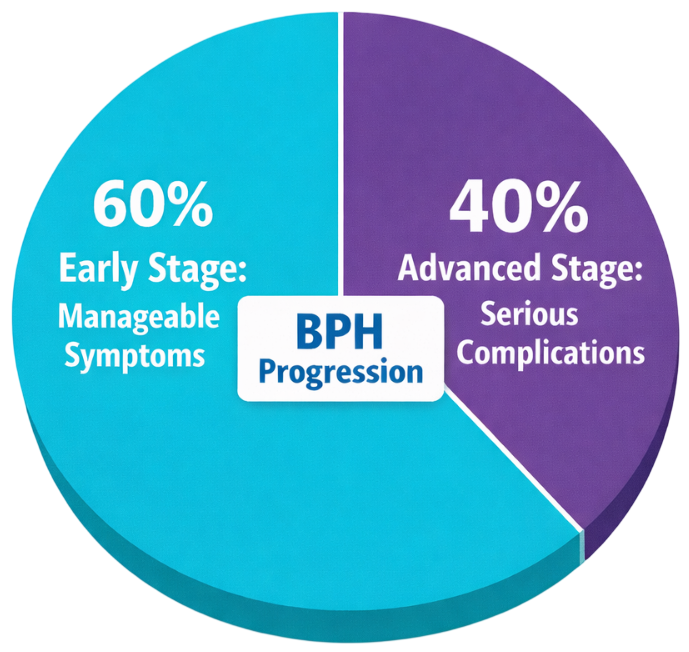
In approximately the first 60% of its course, BPH behaves as a bothersome but largely benign condition:
During this stage, symptoms fluctuate and may respond temporarily to medication.
But in the later 30-40% of the disease progression, untreated or poorly monitored BPH can lead to serious and sometimes irreversible complications, including:
- Permanent bladder damage
- Bladder diverticulum formation
- Recurrent urinary infections
- Acute urinary retention
- Kidney dysfunction or kidney failure
- Severe infections and septicaemia
What begins as a lifestyle inconvenience can evolve into a life-threatening condition.
Disease Progression and Cancer Considerations
BPH is not prostate cancer. It is a benign enlargement related to ageing and hormonal influences. However, prostate cancer and BPH may coexist in some individuals, which makes specialist evaluation essential. It is equally important to understand that BPH remains a progressive disease even when a patient is on medication. Medicines may relieve symptoms but do not necessarily halt structural progression. Over time, obstruction can silently worsen and lead to bladder dysfunction, kidney impairment or infections. Early and structured monitoring prevents irreversible damage and ensures timely intervention.

Why Does the Prostate Enlarge?
- Age-related hormonal changes
- Dihydrotestosterone (DHT) mediated growth
- Androgen receptor stimulation
- Stromal-epithelial cellular interaction
Key Symptoms of Progressive BPH
- Weak or slow urinary stream
- Hesitancy or difficulty initiating urination
- Interrupted or stop-start flow
- Feeling of incomplete bladder emptying
- Frequent urination, especially at night
- Sudden urgency with fear of leakage
Sexual Function & BPH
- Decreased libido
- Erectile dysfunction
- Ejaculatory disturbances
Conventional surgical procedures, such as TURP and some laser treatments, may impact ejaculation due to retrograde flow.
Modern ejaculation-preserving procedures are specifically designed to reduce this risk while effectively relieving obstruction.
When Should You See a Urologist?
- Persistent or worsening urinary symptoms
- Sleep disruption due to nocturia
- Difficulty passing urine
- Urinary retention
- Blood in urine
- Recurrent urinary infections
Early evaluation allows for minimally invasive treatment options before complications develop.

How is BPH Evaluated?
- Symptom scoring (IPSS)
- Digital Rectal Examination
- PSA testing
- Ultrasound
- Uroflowmetry
- Post-void residual urine measurement
- Cystoscopy in selected cases
A structured and evidence-based assessment may include a thorough evaluation to determine the stage of the disease and help prevent complications.

Modern Approach to BPH Management
- Timely intervention
- Preventing disease progression
- Preserving bladder health
- Protecting kidney function
- Maintaining sexual function
- Improving quality of life

Expert BPH Care in India
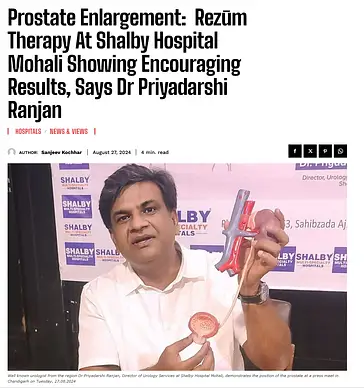
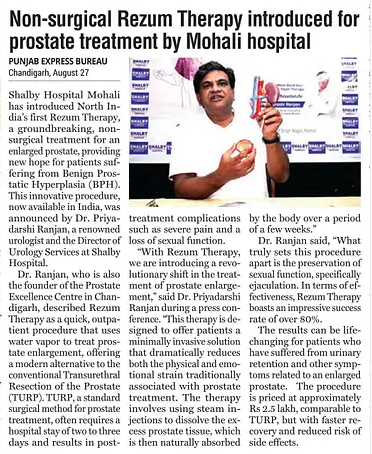
Dr. Priyaddarshi Ranjan is a renowned urologist with over 20 years of experience in advanced prostate care. He is among the early pioneers in India to adopt minimally invasive therapies such as UroLift, Rezum and iTind, bringing internationally recognised ejaculation-preserving techniques to the region. His approach focuses on precise evaluation, early intervention and long-term preservation of urinary and sexual health.
With advanced training at Johns Hopkins in the United States and Birmingham NHS in the United Kingdom, Dr Ranjan has consistently introduced global standards of prostate care to his practice. His expertise in minimally invasive prostate surgery and complex robotic urological procedures has established him as a leading authority in progressive BPH management.
Media Coverage
Featured in Leading Publications